
Financial Guidance
50+ Layoff Recovery When Age Discrimination Strikes

Getting laid off after 50 feels different than losing a job in your twenties or thirties. I’ve seen how age discrimination can turn what should be routine restructuring into a devastating blow that impacts not just your immediate finances, but your entire retirement timeline. If you suspect your layoff wasn’t just about company downsizing but involved age-related bias, you’re facing a complex situation that requires both immediate action and strategic planning.
Key Takeaways
- Age discrimination during layoffs is illegal under federal law, but proving it requires understanding legal standards and documenting red flags
- Workers 40 and older face unique challenges, including age bias, longer job searches, and potential financial devastation closer to retirement
- Recovery strategies must address both immediate financial needs and long-term career pivoting, often requiring legal consultation and specialized support
Understanding Age Discrimination in Layoffs

The Age Discrimination in Employment Act (ADEA) protects workers who are 40 years of age and older from discriminatory employment decisions. However, recognizing when a layoff crosses the line from legitimate business restructuring to illegal age discrimination isn’t always straightforward.
Common Red Flags of Age-Based Discrimination
When employers decide to downsize, they should base employment decisions on legitimate business factors, not age stereotypes. Watch for these warning signs that your layoff might involve discriminatory intent:
Disproportionate Impact on Older Workers If the layoff disproportionately affects employees aged 40 or older while younger colleagues with similar qualifications keep their positions, this creates a disparate impact that violates federal law. The Equal Employment Opportunity Commission (EEOC) looks closely at demographic data to identify patterns where older employees are unfavorably treated.
Timing and Performance Reviews Sudden negative performance reviews following years of positive evaluations, especially when they coincide with company culture shifts favoring younger workers, can indicate age-related bias. If your job performance was satisfactory until the company started emphasizing “fresh perspectives” or “digital natives,” document these changes.
Comments About Age or Retirement Direct comments about “gray hair,” being “set in your ways,” or suggestions that you should consider retirement constitute evidence of age stereotypes influencing employment decisions. Even seemingly innocent remarks about bringing in “new blood” or hiring workers with “less experience” can support an age discrimination claim.
Legal Framework and Your Rights
The federal Age Discrimination in Employment Act applies to employers with 20 or more employees and protects workers similarly situated to younger counterparts. However, employers can defend their decisions using “reasonable factors other than age” (RFOA), meaning they must prove legitimate business reasons unrelated to age bias.
Understanding this legal standard helps you evaluate whether you have a strong case. Employment lawyers specializing in discrimination cases can analyze your situation and determine if the adverse employment action violated federal and state laws that provide age discrimination protections.
Unique Challenges Facing Workers 50+
Financial Impact Amplification
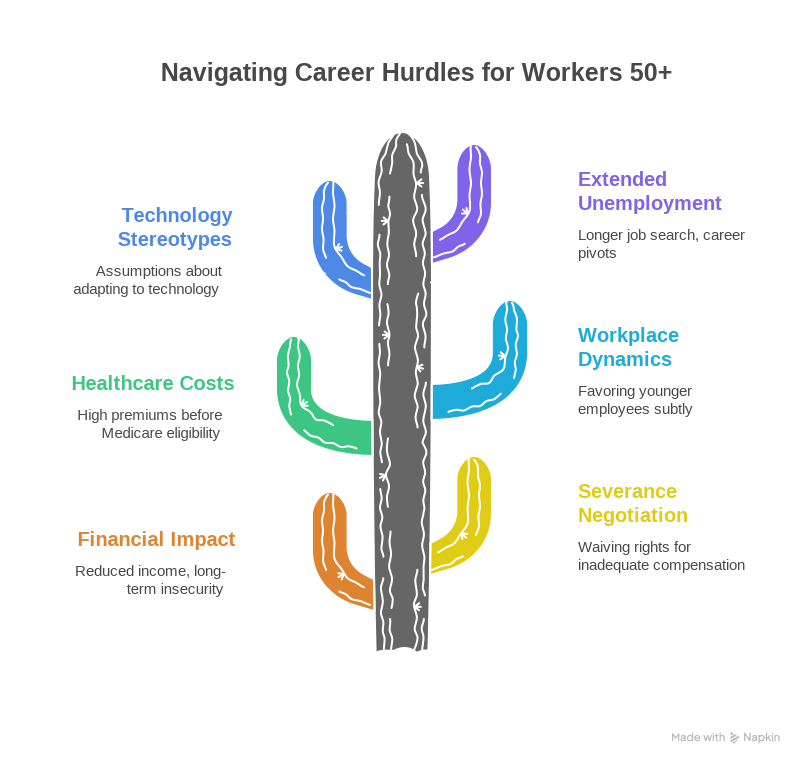
Layoffs hit older workers differently than younger employees. At 45 days into unemployment, younger workers might still have decades to recover financially, but if you’re 60 or approaching retirement, every month without income dramatically impacts your long-term security.
Severance Package Negotiations Older workers often receive severance packages with release agreements that waive their right to file age discrimination complaints. Before signing anything, understand that federal law gives you specific timeframes to consider these agreements. Employment attorneys can review these documents to ensure you’re not giving up valuable rights for inadequate compensation.
Healthcare and Benefits Continuation Losing employer-sponsored healthcare closer to Medicare eligibility creates unique pressures. The gap between your layoff and age 65 can mean paying substantial premiums for individual coverage, making financial planning even more critical.
Workplace Dynamics and Job Search Challenges
The modern workplace often favors younger employees through organizational culture, technology adoption, and hiring practices that, while not explicitly discriminatory, create barriers for experienced workers.
Technology and Skill Stereotypes Despite often having stronger work ethics and institutional knowledge, older employees face assumptions about their ability to adapt to new technology or company culture changes. These age stereotypes can make job searching particularly challenging, even when your qualifications exceed those of younger candidates.
Extended Unemployment Periods Research consistently shows that older workers experience longer periods of unemployment following layoffs. This extended timeline requires different financial planning and often necessitates considering career pivots that younger workers might not need to explore.
Strategic Recovery Approaches
Immediate Legal Assessment
If you suspect age discrimination played a role in your layoff, schedule an appointment with employment lawyers within your state’s filing deadlines. Even if you ultimately don’t pursue legal action, understanding your rights helps you make informed decisions about severance agreements and future planning.
EEOC Complaint Process Filing with the Equal Employment Opportunity Commission preserves your right to pursue legal remedies while you focus on job searching. The EEOC investigates workplace policies and practices that might violate anti-discrimination laws, potentially uncovering patterns that strengthen your case.
Documentation and Evidence Gather performance reviews, emails, organizational charts showing age demographics of laid-off versus retained employees, and any communications that might reveal discriminatory intent. This evidence becomes crucial if you decide to pursue legal action.
Financial Stabilization Strategy
Comprehensive Benefits Review Review your severance package, unemployment benefits, COBRA options, and any retirement account access. Understanding your complete financial picture helps you make strategic decisions about how aggressively to pursue immediate employment versus taking time for career planning.
Bridge Planning to Medicare and Social Security If you’re close to Medicare eligibility or Social Security benefits, factor these timelines into your recovery strategy. Sometimes it makes more sense to focus on consulting or part-time work while bridging to these benefits rather than pursuing full-time employment that might be temporary anyway.
Career Transition and Opportunity Identification

Leveraging Experience as an Asset Rather than competing with younger workers on their terms, position your experience as a valuable asset. Many organizations need institutional knowledge, mentoring capabilities, and the stability that experienced workers provide.
Consulting and Contract Work The gig economy offers opportunities for older workers to monetize their expertise without facing the same age bias present in traditional hiring. Consulting arrangements often value experience over age, making this an viable path for many professionals.
Industry Pivots and Skill Enhancement Consider industries that specifically value experience, such as education, consulting, or roles requiring regulatory knowledge. Strategic skill enhancement in areas like project management or industry-specific certifications can make you more competitive.
Building Your Support Network
Professional Resources
Legal Consultation Even if you don’t pursue litigation, consulting with attorneys who specialize in age discrimination helps you understand your options and make informed decisions about your recovery strategy.
Career Transition Specialists Working with professionals who understand the unique challenges facing older workers can accelerate your job search and help you navigate age bias in the hiring process.
Financial Planning Expertise Given the compressed timeline for financial recovery, specialized financial guidance becomes crucial for making optimal decisions about retirement accounts, benefits, and career planning.
Personal Support Systems
Recovery from age discrimination layoffs often involves emotional challenges that younger workers don’t face. Building strong personal support networks helps you maintain confidence and perspective throughout the process.
Moving Forward with Confidence
Age discrimination in layoffs represents a serious violation of your rights as a worker, but it doesn’t have to define your career trajectory. By understanding the legal framework, recognizing discriminatory patterns, and implementing strategic recovery approaches, you can turn this challenge into an opportunity for career reinvention.
The key lies in taking immediate action to protect your rights while simultaneously planning for both short-term financial stability and long-term career success. Whether that involves pursuing legal remedies, negotiating better severance terms, or pivoting to new opportunities that value your experience, you have more options than the situation might initially appear to offer.
Remember that age discrimination cases often reveal broader patterns affecting multiple employees. Your actions might not only benefit your own recovery but also help protect other older workers from similar treatment.
FAQs
How do I prove my layoff involved age discrimination rather than legitimate business reasons?
Look for patterns like disproportionate impact on workers 40 and older, comments about age or retirement, sudden performance issues after positive reviews, and whether younger employees with similar or lesser qualifications were retained. Document everything and consult with employment attorneys who can evaluate your specific situation.
What should I do if I already signed a severance agreement waiving my rights?
The ADEA provides specific protections for older workers regarding severance agreements. Depending on the circumstances and timeline, you might still have options. Contact an employment lawyer immediately to review your agreement and discuss potential remedies.
How long do I have to file an EEOC complaint for age discrimination?
Generally, you have 180 days from the discriminatory action to file with the EEOC, though some states extend this to 300 days. Don’t wait—start the process early to preserve your rights while focusing on your job search and financial planning.
Can I collect unemployment benefits while pursuing an age discrimination claim?
Yes, pursuing legal action doesn’t typically affect your eligibility for unemployment benefits. However, be honest about your job search efforts and availability for work as required by your state’s unemployment system.
What if my company had legitimate business reasons for the layoff but I still suspect age bias influenced the selection process?
Even during legitimate restructuring, employers cannot use age as a factor in deciding which employees to lay off. The existence of business reasons doesn’t automatically shield employers from discrimination claims if age bias influenced their selection criteria.
Conclusion
Recovering from age discrimination layoffs requires both immediate action and strategic planning. You don’t have to navigate this complex situation alone—the right guidance can help you protect your rights while building a stronger financial future.
At Layoff Lifeline, we understand the unique challenges you’re facing and can provide personalized support for every aspect of your transition. From understanding your legal options to developing comprehensive recovery strategies, expert guidance makes all the difference in turning this setback into your next opportunity. Schedule a consultation today.
Keep Reading
More practical guidance for the financial, career and emotional side of a layoff.


