
Job Assistance
90 Day Job Search Plan: Career Recovery

When severance becomes your unexpected safety net, I’ve learned that having a structured 90 day job search plan transforms what feels like chaos into opportunity. Instead of panicking about your next move, this comprehensive roadmap helps you methodically approach your job hunt while maximizing every day of your severance period. Let me walk you through the ultimate 30-60-90 day plan that turns job seekers into confident candidates.
Key Takeaways
- Structure your search with a 30-60-90 day framework that maximizes your severance period and builds momentum toward your next role
- Focus the first month on foundation-building, including LinkedIn profile optimization, personal website creation, and market research
- Track your progress weekly using actionable milestones and performance goals to maintain accountability throughout your job hunt
The Foundation for Your Job Search: Why 90 Days Matter

Your severance period isn’t just a financial cushion—it’s your strategic advantage in today’s competitive job market. While most job searches take 5 months, a well-structured 90-day plan can significantly improve your outcomes, making your severance timeline perfect for a thorough, methodical approach.
The beauty of a structured 90-day action plan lies in its psychological benefits. Rather than feeling overwhelmed by the endless possibilities ahead, you’ll have clear weekly milestones and specific learning goals that keep you focused and motivated.
Days 1-30: Building Your Foundation
Week 1: Assessment and Planning
Your first week sets the tone for everything that follows. I recommend starting with a comprehensive skills assessment and market research. This isn’t about diving headfirst into applications—it’s about understanding your unique value proposition and how it aligns with current market demands.
Create your job search tracker during this first week. A simple spreadsheet works perfectly, but there are also specialized apps designed specifically for job hunters. Your tracker should include company names, contact information, application dates, and follow-up schedules.
Week 2-3: Digital Presence Optimization
Your LinkedIn profile becomes your digital business card, so invest serious time in making it compelling. Use keywords from job descriptions in your target field, but make sure they flow naturally within your experience descriptions. Many hiring managers start their candidate research here, so treat it as your first impression opportunity.
Consider building a personal website if you don’t already have one. This doesn’t need to be elaborate—a clean, professional site showcasing your portfolio, testimonials, and contact information can set you apart from other candidates.
Week 4: Network Activation and Research
The fourth week focuses on reactivating your professional network and researching target companies. Reach out to former colleagues, industry contacts, and anyone who might provide insights into your target roles or companies.
Networking is crucial for accessing the hidden job market. Don’t approach this as asking for favors—frame conversations around learning about industry trends and company culture.
Days 31-60: Active Engagement and Applications
Week 5-6: Strategic Applications
Now you’re ready to start applying, but strategically. Rather than spraying applications everywhere, focus on 10-15 carefully selected opportunities that align with your research from the first month.
Customize each application based on the specific job description and company culture you’ve researched. Generic applications rarely make it past initial screening, but tailored ones demonstrate genuine interest and attention to detail.
Week 7-8: Networking and Relationship Building
This period emphasizes building relationships within your target companies and industry. Attend virtual networking events, join professional associations, and engage meaningfully with content from your target companies on social media.
Consider reaching out to current employees at companies where you’ve applied. LinkedIn makes this relatively easy, and most professionals are willing to share insights about their workplace culture and hiring process.
Days 61-90: Interview Preparation and Follow-Through
Week 9-10: Interview Readiness
If you’ve been following the plan consistently, interview requests should start arriving around this time. Use these weeks to perfect your interview skills and prepare compelling stories that demonstrate your value.
Practice common interview questions, but also prepare thoughtful questions about the role, team dynamics, and company goals. Remember, interviews are two-way conversations—you’re evaluating them as much as they’re evaluating you.
Week 11-12: Follow-Up and Decision Making
The final weeks focus on follow-up strategies and decision-making frameworks. Send thank-you notes within 24 hours of each interview, and don’t be afraid to follow up if you haven’t heard back within their stated timeline.
If you receive multiple offers, have a clear framework for evaluation that goes beyond salary. Consider factors like growth opportunities, company stability, team dynamics, and alignment with your long-term career goals.
Essential Tools for Your 90-Day Journey
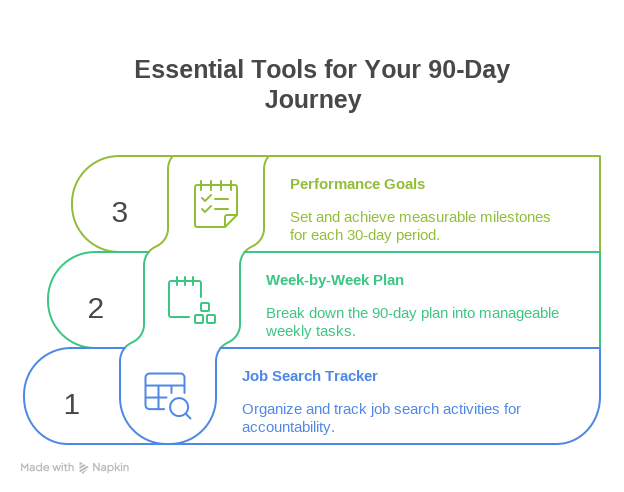
Job Search Tracker and Templates
A well-organized tracking system keeps you accountable and helps identify patterns in your search. Track application dates, follow-up schedules, interview feedback, and networking contacts. Many successful job seekers use color-coding systems to quickly visualize their pipeline status.
Week-by-Week Action Plan Template
Break down your 90-day plan into weekly action items. This might include “apply to 3-5 positions,” “reach out to 5 networking contacts,” or “attend 2 industry events.” Specific, measurable goals keep you moving forward even when motivation wanes.
Performance Goals and Milestones
Set measurable milestones for each 30-day period. Examples might include “optimize LinkedIn profile and receive 10 profile views weekly,” “build list of 50 target companies,” or “schedule 5 informational interviews.” These benchmarks help you track your progress and adjust your approach as needed.
Refining Your Approach: Learning from Feedback
Your job search strategy should evolve based on market feedback. If you’re not getting interview requests, revisit your application materials and target company list. If interviews aren’t converting to offers, analyze your interview performance and seek feedback when possible.
The job market changes constantly, so staying flexible and responsive to feedback ensures your approach remains relevant throughout your 90-day sprint.
Maximizing Your Severance Period: Beyond the Basics
Skill Development and Learning Goals
Use slower periods in your search for professional development. Online courses, industry certifications, or skill-building workshops can strengthen your candidacy and demonstrate commitment to growth.
Building Your Professional Brand
Consistent engagement with industry content, thoughtful commentary on LinkedIn posts, and sharing relevant insights helps establish your professional brand. This long-term thinking often pays dividends even after you’ve landed your next role.
Maintaining Momentum
Job searching can be emotionally challenging, especially during a longer search. Build in regular check-ins with mentors, maintain a routine that includes physical activity and social connection, and celebrate small wins along the way.
FAQs
What if I don’t find a job within 90 days?
Extend your plan in 30-day increments, analyzing what’s working and what needs adjustment. Many successful searches take longer, especially for senior roles or career transitions.
Should I consider contract or temporary work during my search?
Contract work can provide income and networking opportunities while you search for permanent roles. Just ensure any temporary position allows time for continued job searching.
How many applications should I submit per week?
Quality over quantity. 3-5 highly customized applications typically yield better results than 20 generic ones. Focus on roles that genuinely match your skills and interests.
When should I start following up after applying?
Wait one week after the application deadline or two weeks if no deadline is specified. Follow up once via email or LinkedIn, then move on unless they respond positively.
Is it worth working with a recruiter during my search?
Recruiters can be valuable allies, especially for specialized roles or industries. Build relationships with 2-3 reputable recruiters in your field, but don’t rely solely on them for your search success.
Conclusion
Your layoff doesn’t define you—how you respond to it does. This 90-day framework gives you the structure and confidence to turn an unexpected setback into a career breakthrough. Remember, the goal isn’t just to find any job; it’s to position yourself for long-term success and growth.
If you’re feeling overwhelmed by this process or want personalized guidance tailored to your specific situation, don’t go it alone. Layoff Lifeline specializes in helping professionals navigate exactly this transition. We’ll help you create a customized action plan and provide the support you need to land not just any job, but the right job for your career trajectory.
Keep Reading
More practical guidance for the financial, career and emotional side of a layoff.


