
Emotional Support
Breaking Free from Layoff Shame and Stigma

Getting laid off can feel like carrying a mark of shame that everyone sees. I’ve watched talented professionals shrink from LinkedIn, avoid former colleagues, and question their self-worth after job loss. But here’s the truth: the stigma surrounding layoffs is outdated, especially when thousands of workers face the same situation. Let me show you how to manage these feelings and move forward with confidence.
Key Takeaways
- Layoff shame is common but misplaced—job loss reflects business decisions, not personal failure
- Managing stigma requires reframing your narrative and connecting with others who understand
- Taking action through networking, updating your resume, and seeking support helps rebuild confidence
Understanding the Layoff Stigma

The job market has changed dramatically, yet many of us still internalize outdated beliefs about unemployment. For instance, when tech companies laid off millions of people between 2020 and 2024, something shifted. What once felt like personal failure became a shared experience across the workforce.
The pandemic reshaped how we view job loss. Companies like Meta, Lyft, and countless others made mass layoffs business headlines, not individual failures. Despite this visibility, feelings of shame persist because we tie our identity and self-worth to our employment status.
Why the Stigma Persists
Society has long equated unemployment with inadequacy. Even when recession hits or inflation forces companies to merge and downsize, we struggle to separate business decisions from our professional value. Hiring managers and recruiters know that being let go happens to exceptional talent, yet job seekers still feel ashamed when updating their resume or explaining gaps.
The isolation that comes with job loss amplifies these negative feelings. When you’re unemployed, watching former colleagues post about projects on social media platforms while you’re looking for work creates distance. This separation feeds the stigma of being let go, making the healing process harder.
Recognizing Your Feelings Are Valid
Before we tackle managing layoff shame and stigma, acknowledge that your emotions make sense. Losing your job disrupts your routine, income, and professional identity. Whether you were part of mass layoffs or a single termination, the impact on your self-awareness and confidence is real.
I’ve seen professionals from marketing agencies to tech startups process what happened in vastly different ways. Some immediately dive into their job search, while others need time to understand their personal experiences. Neither approach is wrong—resilience looks different for everyone.
The key is recognizing that feeling vulnerable doesn’t mean you’ve failed. When Elon Musk’s companies made headlines with layoffs, thousands of talented individuals suddenly faced the same uncertainty. Your response to job loss doesn’t define your worth as a professional.
Strategies for Managing Layoff Shame
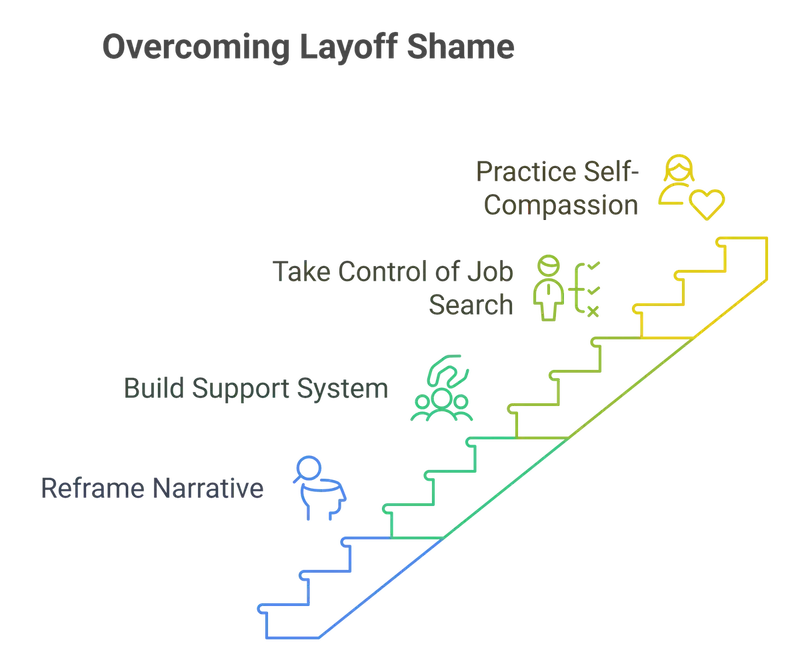
Reframe Your Narrative
The story you tell yourself matters more than you realize. Instead of viewing your layoff as rejection, recognize it as a business decision driven by factors beyond your control. Several companies have laid off entire departments not because of performance issues, but due to economic conditions, strategic pivots, or market pressures.
When updating your LinkedIn profile or speaking with recruiters and hiring managers, focus on what you accomplished rather than how it ended. Your professional network wants to help others succeed, and most have either experienced job loss themselves or know someone who has.
Build Your Support System
Isolation makes the stigma surrounding unemployment feel heavier. Connect with support groups specifically for laid-off professionals. These communities provide camaraderie and practical advice from people who understand your situation.
Your professional network extends beyond former colleagues. Reach out to a mentor who can offer perspective and potentially help you find new opportunities. Don’t underestimate the power of empathetic connections during this transition.
Social media platforms, particularly LinkedIn, have become spaces where professionals share their layoff experiences. Reading these posts reminds you that you’re not alone and helps normalize what you’re going through.
Take Control of Your Job Search
Action counteracts shame. While processing your emotions matters, creating a structured job search plan helps you regain a sense of control. Update your resume to highlight achievements and skills that transfer to new jobs. Even if you’re not ready to get hired immediately, keeping your materials current builds confidence.
Research shows that referrals significantly improve your chances with future employers. Let your network know you’re exploring job opportunities. Many people want to help but don’t know you’re looking for work until you tell them.
Set realistic goals for your job search. Apply to positions that genuinely interest you rather than every opening you find. Quality applications to roles where you can contribute meaningfully feel more purposeful than desperate mass submissions.
Practice Self-Compassion
You wouldn’t judge a friend harshly for being let go during mass layoffs, so extend that same empathy to yourself. The mark of shame you feel often exists more in your mind than in others’ perceptions. Recruiters understand that employment gaps happen, especially given the volatility.
Focus on personal growth during this transition. Perhaps there are skills you’ve wanted to develop or certifications that would strengthen your candidacy for new opportunities. Investing in yourself demonstrates resilience to hiring managers while rebuilding your confidence.
Moving Past the Stigma
Sharing Your Story
When you do secure interviews, you’ll need to discuss your job loss. Practice framing it honestly but neutrally. “The company underwent restructuring and eliminated several positions including mine” conveys what happened without defensiveness or shame.
Some laid-off professionals have found that sharing their experiences publicly on social media helps move past negative feelings. These posts often go viral because they resonate with millions of people navigating similar challenges. You’re not required to share publicly, but doing so can transform your perspective from victimhood to agency.
Finding New Opportunities
The job market constantly evolves, creating openings in unexpected places. The same economic forces that led to your layoff also create demand in other sectors. Tech companies may have reduced headcount, but other industries actively recruit talent with your skills.
Consider opportunities you might have overlooked before. A different industry might value your background in fresh ways. The severance period, if you received one, provides breathing room to explore thoughtfully rather than accepting the first offer out of desperation.
Helping Others Heal
Once you’ve processed your own experience, consider how you might help others facing job loss. Mentoring someone through their transition or participating in support groups builds camaraderie and reinforces how far you’ve come. Your personal experiences become valuable guidance for job seekers earlier in their journey.
This doesn’t mean you need to have everything figured out. Sometimes the most empathetic support comes from people still navigating their own uncertainty. We help others and ourselves simultaneously when we share authentic experiences about managing stigma and shame.
Building Long-Term Resilience

The workforce will continue changing. Building resilience means accepting that job security isn’t what it once was—and developing the self-awareness to adapt when circumstances shift again.
Diversify your professional identity beyond a single employer. Maintain your network even when employed. Stay current with industry trends so you’re never starting from scratch if you lose your job again. These practices don’t reflect pessimism; they demonstrate wisdom about modern employment.
Your worth extends beyond your job title. While work matters, defining yourself solely through employment makes you vulnerable to the same shame and stigma you’re working to overcome now. Cultivate interests, relationships, and accomplishments outside work that remind you of your multifaceted value.
FAQs
How long does layoff shame typically last?
The duration varies for everyone, but most people find that negative feelings diminish within a few months, especially once they engage actively in their job search. The healing process accelerates when you connect with others, reframe your narrative, and take concrete steps toward new opportunities. If shame persists beyond six months and significantly impacts your mental health, consider speaking with a professional counselor who specializes in career transitions.
Should I hide my layoff on LinkedIn?
Absolutely not. Recruiters and hiring managers expect to see employment changes, and attempting to hide a layoff often backfires. Instead, update your profile professionally, highlight your accomplishments from previous roles, and consider posting about what you’re looking for next. Transparency demonstrates confidence and helps your professional network understand how they might help you find new jobs.
How do I explain my layoff in interviews?
Keep it brief, factual, and forward-focused. Mention that the company made business decisions to reduce headcount, then pivot to what you learned in that role and why you’re excited about the opening you’re interviewing for. Future employers care more about what you’ll contribute to them than the circumstances of your previous departure. Practice this explanation until it feels natural rather than defensive.
Is it normal to feel like I’ve lost my identity after a layoff?
Yes, especially if you strongly identified with your role or employer. Many professionals experience a sense of disorientation when the structure of work suddenly disappears. This feeling reflects how deeply work connects to our identity and self-worth, but it also presents an opportunity to develop a more resilient sense of self that isn’t entirely dependent on employment status. Use this transition to reconnect with interests and values beyond your job title.
How can I support a colleague who was laid off?
Reach out directly rather than waiting for them to ask for help. Offer specific assistance like reviewing their resume, making introductions to your network, or simply listening as they process what happened. Avoid platitudes like “everything happens for a reason” and instead acknowledge that job loss is difficult while expressing confidence in their abilities. If you know of relevant job opportunities, share them. Sometimes the most valuable support is simply maintaining the relationship and not letting the layoff create distance.
Conclusion
Managing layoff shame and stigma starts with recognizing that job loss doesn’t define your professional value. The feelings are real, but they don’t reflect the truth about your capabilities or future potential. By reframing your narrative, connecting with others, and taking purposeful action, you move past the stigma and toward new opportunities.
You don’t have to navigate this transition alone. Layoff Lifeline provides personalized guidance to help you regain control of your finances and career during this challenging time. Schedule a consultation to explore your options and create a roadmap forward that addresses your unique situation. Let’s turn this unexpected change into your next opportunity.
Keep Reading
More practical guidance for the financial, career and emotional side of a layoff.


