
Job Assistance
Building a New Career After Layoff at 55 Is Possible

Getting laid off at 55 can feel like the ground has shifted beneath you. I understand that uncertainty—the questions about health insurance, retirement savings, and whether anyone will hire you again. But here’s the truth: this moment, as difficult as it is, can become the catalyst for building something better. Thousands of professionals in their 50s and 60s are successfully pivoting to new careers, and with the right approach, you can too.
Key Takeaways
- Losing your job at 55 isn’t the end—it’s a chance to reassess your skills, explore new industries, and build a second career that aligns with your values and experience.
- Successful career transitions require strategic planning, including skills assessment, financial preparation, and understanding how to navigate age discrimination while leveraging your expertise.
- Multiple pathways exist for older workers, from consulting and entrepreneurship to retraining programs and mission-driven work, each offering unique opportunities for reinvention and growth.
Career Assessment and Skills Inventory

The first step in finding a new career after layoff at 55 is understanding what you bring to the table. When you lose your job in your late-career years, it’s tempting to immediately start firing off applications to anything that looks remotely familiar. But taking time for honest self-assessment can mean the difference between landing another job you tolerate and discovering work you genuinely enjoy.
Taking Stock of Your Professional Experience
Start by creating a comprehensive inventory of your skills, accomplishments, and expertise accumulated over decades. This isn’t just about listing job titles—it’s about identifying the transferable skills that make you valuable across industries. Your ability to manage complex projects, mentor team members, navigate organizational politics, and solve problems didn’t disappear when you got laid off.
I recommend developing a spreadsheet that categorizes each skill and responsibility from your past roles as “energizing,” “neutral,” or “draining.” This exercise helps you identify not just what you’re good at, but what you actually want to do in your next chapter. For example, if you spent 20 years in senior roles managing large teams but found the administrative burden exhausting, you might explore consulting opportunities where you can mentor without the daily management headaches.
Identifying Transferable Skills That Matter
Older workers often underestimate how valuable their soft skills are in today’s job market. Your decades of experience have given you expertise in communication, problem-solving, stakeholder management, and strategic thinking that younger candidates simply haven’t developed yet. The key is learning how to articulate these transferable skills in the language of your target industry.
If you’re over 50 and considering a pivot from one sector to another, study job postings in your desired field carefully. Notice which skills appear repeatedly in job descriptions, then map your existing experience to those requirements. For instance, project management skills from healthcare operations translate directly to program management roles in technology companies.
Retraining and Education Options
Deciding whether to pursue additional education or certification after losing your job in your 50s requires careful consideration of time, money, and career goals. The right training can open doors to new industries and demonstrate your commitment to growth, but you want to invest wisely in programs that deliver actual employability rather than just credentials.
Evaluating Which Skills Need Development
Before enrolling in any program, identify specific skill gaps preventing you from pursuing your target career. Review job postings for positions you want and note recurring requirements you don’t currently possess. This focused approach ensures you’re upskilling strategically rather than collecting random certifications that won’t move the needle on your job searches.
Some skills gaps can be filled quickly through online courses, workshops, or boot camps lasting weeks or months. Technical skills like data analysis, digital marketing, or project management software often fall into this category. Other career changes might require more substantial commitments like associate degrees, professional certifications, or specialized training programs designed specifically for career changers.
Cost-Effective Training Programs
Many older Americans worry about depleting retirement savings or taking on student debt when they should be saving for retirement. Fortunately, numerous affordable and even free training options exist for workers navigating late-career transitions. Community colleges offer certificate programs at a fraction of university costs, and online platforms like Coursera, edX, and LinkedIn Learning provide access to courses from top institutions often for minimal fees.
Don’t overlook workforce development programs available through your state unemployment office. Some states offer retraining grants or subsidized education for workers who lost jobs due to layoffs, particularly if you’re transitioning from a declining industry. Additionally, if you received a severance package, designating a portion specifically for skills development can be one of the smartest investments you make.
Entrepreneurship Opportunities for 55+
Starting a business after a late-career layoff might sound risky, but data shows that founders over 50 actually have higher success rates than younger entrepreneurs. Your decades of industry knowledge, professional network, and business acumen provide significant advantages when launching a venture. Plus, if you’re worried about finding another job due to age discrimination, creating your own opportunity puts you in control.
Turning Industry Expertise Into a Business
The most successful second-act entrepreneurs typically build businesses around expertise they’ve spent years developing. Consider what problems you know how to solve better than most people, what industry knowledge you possess that others would pay for, and what unmet needs you’ve observed throughout your career.
For example, if you spent 25 years in human resources, you could launch an HR consulting practice serving small businesses that can’t afford full-time HR staff. If you worked in supply chain management, you might help companies optimize their logistics or train their teams on best practices. The beauty of building from existing expertise is that you already understand your target customer, have credibility in the space, and can generate revenue quickly without extensive startup costs.
Low-Risk Business Models
You don’t need venture capital or substantial financial resources to start a business in your 50s or 60s. Many profitable business models require minimal upfront investment and can be launched while you’re still collecting unemployment benefits or working part-time. Service-based businesses—consulting, coaching, training, freelance writing, bookkeeping—often need little more than a laptop and professional website to get started.
Consider testing your business idea through a side venture before fully committing. This approach lets you validate whether customers will pay for your services, refine your offering, and build revenue without the pressure of making ends meet entirely through your new business.
Consulting and Freelance Strategies
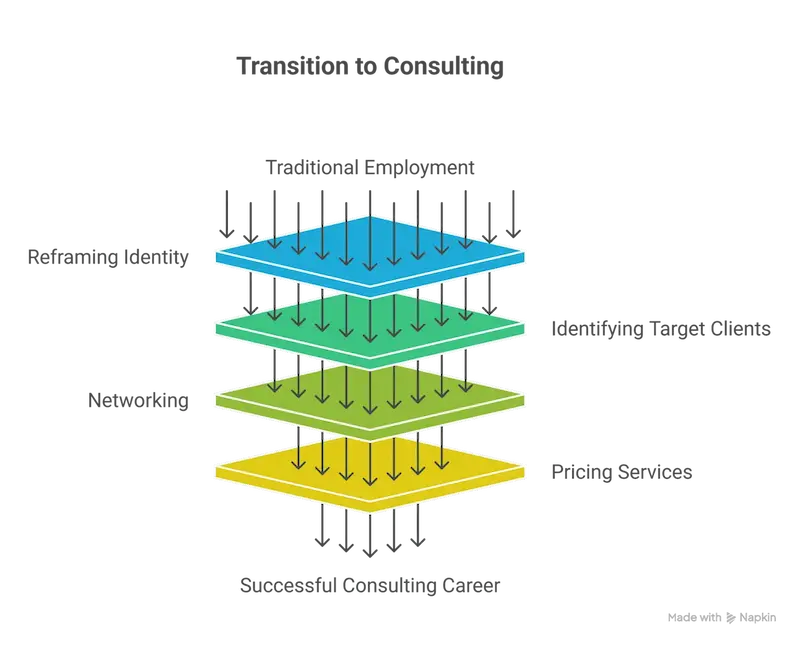
Transitioning from traditional employment to consulting or freelance work represents one of the most accessible paths for professionals starting a new career after layoff at 55. This model lets you leverage existing expertise, maintain flexibility, and potentially earn more than you did as an employee—all while avoiding many barriers older workers face in traditional hiring processes.
Building a Consulting Practice
The shift from employee to consultant begins with reframing how you think about your professional identity. Instead of defining yourself by your last job title, position yourself as someone who solves specific problems for specific types of clients. Your LinkedIn profile, professional website, and networking conversations should communicate your unique value proposition clearly.
Start by identifying 10-12 companies where you’d like to consult. These might include former employers, competitors in your industry, or organizations in adjacent sectors that could benefit from your knowledge. Reach out to your professional network and let people know you’re available for project-based work, interim leadership roles, or specialized consulting.
Pricing Your Services and Managing Client Relationships
One of the biggest challenges when transitioning to consulting is determining what to charge. Research typical rates for your expertise level and industry through professional associations, freelancer communities, and conversations with others doing similar work. Remember that your consulting rate should reflect not just your time but also your expertise, the value you deliver, and business expenses like health insurance and retirement savings that employers previously covered.
Start with project-based pricing rather than hourly rates when possible. This approach rewards your efficiency and expertise rather than penalizing you for solving problems quickly.
Non-Profit and Mission-Driven Career Transitions
Many professionals experiencing a late-career layoff discover they’re ready to prioritize purpose over paycheck. The nonprofit sector actively seeks experienced professionals who bring business acumen, leadership skills, and strategic thinking developed in the private sector. While salaries may be lower than corporate positions, the personal fulfillment and sense of impact often more than compensate for the financial difference.
Identifying Causes That Align With Your Values
The first step toward mission-driven work is getting clear about what matters to you. Perhaps you’ve always cared about education, environmental conservation, healthcare access, or community development but never had time to act on those interests while building your career. Losing your job in your 50s creates space to explore whether you can align your next chapter with causes you genuinely care about.
Research organizations working on issues you’re passionate about and examine their websites, annual reports, and job postings to understand what roles they typically need to fill. You might be surprised to discover that nonprofits need the same skills you developed in the private sector—financial management, marketing, operations, fundraising, strategic planning, and program management.
Transitioning Your Skills to the Social Sector
Making the pivot from corporate work to nonprofits requires translating your experience into the language of social impact. When updating your resume and LinkedIn profile for nonprofit positions, emphasize how your skills can advance an organization’s mission rather than just drive profit. Highlight any volunteer work, board service, or community involvement that demonstrates your commitment to the sector.
Part-Time and Flexible Work Arrangements
Not everyone wants or needs full-time employment after a late-career layoff. Part-time work, contract positions, or flexible arrangements can provide income while preserving time for other priorities like family, hobbies, or gradual transition toward retirement. This approach also reduces pressure on your job search and opens opportunities that might not exist in traditional full-time roles.
Evaluating Your Financial Needs
Before committing to part-time work, honestly assess your financial situation. Calculate your essential expenses, review your retirement savings, and determine how much income you actually need to cover your costs. If you received a severance package, understand how long those funds will last and whether you can afford to accept lower-earning opportunities that offer other benefits like flexibility or skill development.
Meet with a financial advisor if you’re unsure whether part-time work makes sense for your situation. They can help you model different scenarios—working part-time until Medicare eligibility at 65, drawing from retirement accounts to supplement part-time income, or using part-time work to delay claiming Social Security and increase your eventual benefit.
Finding Quality Part-Time Opportunities
The challenge with part-time work is that many available positions offer low pay, minimal responsibility, and little use for your professional expertise. However, a growing number of companies recognize the value of experienced part-time workers and create roles specifically designed for professionals who want reduced schedules. Industries like education, healthcare, and professional services frequently offer part-time positions that utilize advanced skills.
Job boards increasingly include filters for part-time, contract, and flexible arrangements, making these opportunities easier to identify. Networking remains crucial—many part-time professional roles aren’t advertised publicly but are filled through referrals and connections.
Managing Financial Transitions
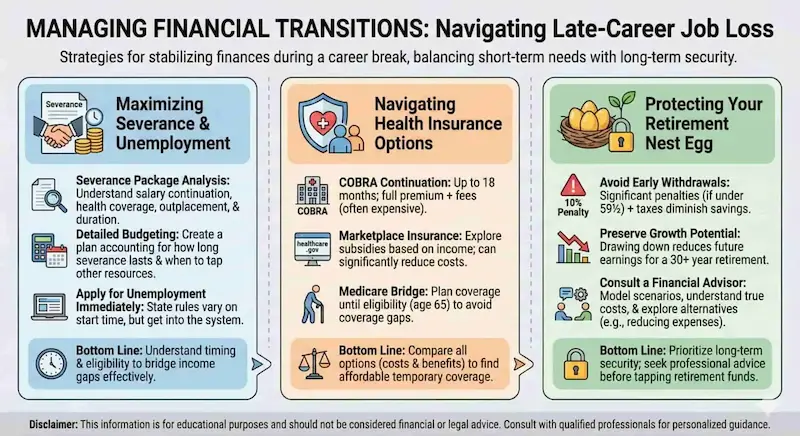
One of the most stressful aspects of losing your job in your late-career is managing finances while finding your next opportunity. Between health insurance, retirement savings, and daily expenses, the financial pressure can feel overwhelming. However, with proper planning and risk management, you can navigate this transition without derailing your long-term financial security.
Understanding Your Severance and Unemployment Benefits
If you received a severance package, understand exactly what it includes and how long it will support you. Some packages provide several months of salary continuation, health insurance coverage, outplacement services, or other benefits that give you breathing room during your transition. Create a detailed budget that accounts for how long your severance will last and when you’ll need to tap other financial resources.
Apply for unemployment benefits immediately, even if you received severance. Rules vary by state regarding when benefits begin if you received severance, but starting the application process ensures you’re in the system when you become eligible.
Health Insurance Options
Losing employer-sponsored health insurance is often the most urgent concern after a late-career layoff. COBRA allows you to continue your previous employer’s insurance for up to 18 months, but you’ll pay the full premium plus administrative fees, which can be shockingly expensive. If your severance package includes health insurance coverage for a defined period, that provides temporary relief, but you’ll need a plan for what comes next.
Explore marketplace insurance options through healthcare.gov if COBRA costs are unaffordable. Depending on your income during unemployment, you might qualify for subsidies that significantly reduce premium costs. If you’re close to 65, understanding the gap between now and Medicare eligibility is critical.
Protecting Retirement Savings
The temptation to tap retirement accounts when cash flow is tight can be strong, but early withdrawals come with significant penalties and tax consequences. If you’re not yet 59½, withdrawals from 401k or IRA accounts typically incur a 10% penalty plus income taxes, severely diminishing your nest egg. Even if you’re over 59½ and avoid penalties, drawing down retirement savings reduces the growth potential of those funds and may leave you with insufficient resources for a retirement that could last 30+ years.
Work with a financial advisor to model different scenarios and understand the true cost of various decisions. They can help you determine whether it makes sense to draw from retirement accounts, take Social Security early, reduce expenses, or pursue other strategies to make ends meet during your transition.
Navigating Age Discrimination and the Job Market

Finding a new job after losing your job at 55 requires a different approach than job searches earlier in your career. You’re competing against younger candidates who may have more recent degrees or technical skills, but you bring depth of experience, professional maturity, and networks they can’t match. Success requires playing to your strengths while addressing concerns employers might have about hiring older workers.
Modernizing Your Application Materials
Your resume and LinkedIn profile are often the first impression you make on potential employers, so they need to position you as current and relevant rather than outdated. Focus on accomplishments from the last 10-15 years rather than providing your entire career history. Use language from target job descriptions to describe your experience, ensuring your materials pass through applicant tracking systems that screen resumes before human eyes ever see them.
Update your LinkedIn profile with a headline that highlights your skills and value proposition rather than just listing your most recent job title. Share content related to your target industry, engage with posts from companies you’re interested in, and join LinkedIn groups where hiring managers and recruiters in your field are active.
Leveraging Your Professional Network
At 55, you likely have a network built over decades of professional relationships. This network is your single most valuable asset in your job search. Reach out to former colleagues, industry contacts, clients, and anyone who knows your work and can speak to your capabilities. Be specific about what you’re looking for and how they might help—whether that’s making an introduction, providing insight about a company, or alerting you to opportunities in their organization.
Addressing Age Discrimination
Age discrimination is real, even though it’s illegal. Some employers worry that older workers will be expensive, resistant to change, or likely to retire soon. Your job is to counter these stereotypes proactively through how you present yourself and communicate your value.
Emphasize your adaptability by highlighting examples of how you’ve embraced change, learned new technologies, or successfully navigated industry disruptions throughout your career. Address longevity concerns by expressing enthusiasm for building something over the long term and growing with an organization.
FAQs
Is 55 too old to start a new career?
No, 55 is not too old to start a new career. Many professionals successfully transition to new fields in their 50s and 60s, bringing valuable experience and perspective that younger workers lack. Focus on industries that value experience, emphasize your transferable skills, and network strategically to find opportunities where your age is an asset.
How long does it take to find a job after being laid off at 55?
Job searches for older workers often take several months to over a year depending on your industry and location. Rather than focusing on timeline, concentrate on using this time productively—upskilling, networking, and exploring multiple pathways including traditional employment, consulting, and entrepreneurship. Leveraging your professional network significantly increases your chances of finding opportunities faster.
Should I take Social Security early if I’m laid off at 55?
You cannot claim Social Security until age 62 at the earliest. If you’re laid off at 55, you’ll need other income sources for at least seven years. Even at 62, claiming benefits early permanently reduces your monthly payment compared to waiting until full retirement age or age 70. Work with a financial advisor to determine the best strategy for your situation.
What should I do about health insurance after losing my job at 55?
You have several options after a late-career layoff. COBRA lets you continue your previous employer’s coverage for up to 18 months, though you’ll pay the full premium. Marketplace insurance through healthcare.gov may offer more affordable options, particularly if your income qualifies you for subsidies. If you’re close to 65, plan carefully for the gap until Medicare eligibility.
How can I avoid age discrimination when looking for a new job?
While you can’t eliminate age discrimination entirely, you can minimize its impact through strategic positioning. Update your resume and LinkedIn to focus on recent accomplishments and current skills. Emphasize your adaptability and familiarity with current technologies. Network extensively since referrals bypass many biases. Consider consulting or entrepreneurship as alternatives where age may be less of a barrier.
Conclusion
Starting a new career after layoff at 55 isn’t just possible—it’s an opportunity to build something more aligned with who you’ve become and what matters most to you now. You have experience, skills, and wisdom that took decades to develop, and the right next step is out there waiting for you to find it. Whether you choose traditional employment, consulting, entrepreneurship, or mission-driven work, success comes from strategic planning, honest self-assessment, and persistence through the inevitable challenges of career transition.
If you’re feeling overwhelmed by the financial and practical decisions ahead, you don’t have to navigate this alone. Layoff Lifeline provides the expert guidance and comprehensive support you need to turn this career challenge into your next opportunity. Schedule a consultation today to explore your options and create a personalized plan for moving forward with confidence.
Keep Reading
More practical guidance for the financial, career and emotional side of a layoff.


