
Job Assistance
Career Transition After Layoff: Your Industry Pivot Guide

That sinking feeling when the layoff news hits, followed by the overwhelming question: “What’s next?” After helping hundreds of professionals navigate career transitions following unexpected job loss, I’ve learned that the most successful recoveries aren’t just about finding any new job—they’re about making strategic moves toward recession-proof sectors where your skills can thrive.
Key Takeaways
- Transferable skills are your career currency – Communication, project management, and analytical thinking can unlock opportunities across multiple recession-proof industries.
- Strategic industry pivots beat random job searches – Focus on healthcare, cybersecurity, essential services, and green technology where demand remains strong during economic downturns.
- Professional networking accelerates career transitions – Leveraging existing relationships and building new connections can reduce your job search timeline by up to 70%.
Understanding the Current Job Market Landscape

The reality is stark: layoffs continue affecting significant numbers of professionals, with major companies like Meta, Amazon, Google, and Microsoft conducting multiple rounds of workforce reductions throughout 2024 and into 2025. However, this challenging landscape also presents unique opportunities for those willing to think strategically about their next move.
Certain industries remain resilient during economic uncertainty, including healthcare, essential services, cybersecurity, and utilities. The key is understanding how your existing skill set can translate into these stable sectors rather than waiting for your previous industry to recover.
The Power of Strategic Industry Pivoting
Why Industry Pivots Work
Most individuals throughout their careers are building skill sets that are incredibly transferable. The challenge isn’t having relevant skills—it’s recognizing them and positioning yourself effectively in new sectors.
I’ve witnessed marketing professionals successfully transition into healthcare administration, retail managers excel in cybersecurity project coordination, and teachers thrive in corporate training roles. The common thread? They understood that a career transition after a layoff isn’t about starting over—it’s about strategic repositioning.
Identifying Your Transferable Skills
Transferable skills are qualities that can transfer from one job to another, such as strong leadership, critical thinking, communication, problem-solving, teamwork, and analytical thinking. Here’s how to conduct your own skills audit:
Communication and Relationship Building: If you’ve managed client relationships, led meetings, or coordinated between departments, you possess valuable skills for sectors like healthcare administration, financial services, or project management roles in tech companies.
Project Management and Organization: Experience coordinating timelines, managing budgets, or leading cross-functional teams translates directly to opportunities in construction, renewable energy projects, or healthcare system implementation.
Analytical and Problem-Solving Skills: Many industries and roles now utilize data on a daily basis, making analytical skills an essential part of your transferable skills toolkit. These capabilities open doors in cybersecurity analysis, healthcare data management, or financial risk assessment.
Technical Proficiency: Basic digital literacy, software knowledge, or process improvement experience can position you for roles in emerging sectors like green technology or renewable energy operations.
Recession-Proof Sectors: Where to Focus Your Pivot
Healthcare and Wellness
The healthcare industry is one of the few that people consider to be recession-proof. Post-pandemic, there has been significant growth in telemedicine, mental health services, and preventive care.
Entry Points for Career Changers:
- Healthcare administration (perfect for those with project management or customer service experience)
- Medical technology support (ideal for those with IT or technical backgrounds)
- Patient advocacy and care coordination (suits professionals with strong communication skills)
- Healthcare data analysis (excellent for those with analytical experience)
Cybersecurity and Information Security
Information security careers become increasingly secure and positions valued as uncertainty grows in the enterprise. As long as there is technology, there will be attempts to breach, harm or damage these technologies.
Transition Opportunities:
- Security compliance and risk assessment (great for detail-oriented professionals)
- Incident response coordination (perfect for those with crisis management experience)
- Security awareness training (ideal for those with training or education backgrounds)
- Vendor security management (suits those with procurement or relationship management experience)
Essential Services and Utilities
Essential services that people rely on no matter what, like utilities and public safety, tend to remain in demand regardless of economic climate.
Pivot Possibilities:
- Utility operations and maintenance coordination
- Emergency services administration
- Infrastructure project management
- Regulatory compliance roles
Green Technology and Renewable Energy
Renewable energy creates new jobs even during tough economic times. Infrastructure spending creates construction jobs.
Career Transition Paths:
- Solar and wind project coordination
- Energy efficiency consulting
- Environmental compliance and reporting
- Sustainable technology implementation
Developing Recession-Proof Skills
Technical Skills That Transfer Across Industries
The best tech skills in 2025 include information security, data management, cloud computing, and artificial intelligence literacy. You don’t need to become a programmer, but developing familiarity with these areas can significantly expand your opportunities.
Quick-Win Skill Development:
- Data Analysis: Learn basic Excel, Google Analytics, or introductory SQL. These skills apply everywhere from healthcare to renewable energy.
- Digital Marketing: Every business needs customers online. Social media management pays well. Content creation helps companies stay visible.
- Project Management: Consider certifications like PMP or Agile, which transfer across all industries.
- Basic Cybersecurity Awareness: Understanding security principles makes you valuable in any role involving data or technology.
Soft Skills That Never Go Out of Demand
Communication, critical thinking, collaboration, and digital fluency are helpful across industries and roles. Focus on strengthening:
- Adaptability: Demonstrate your ability to learn new systems and processes quickly
- Emotional Intelligence: Show how you build relationships and navigate workplace dynamics
- Creative Problem-Solving: Highlight instances where you’ve found innovative solutions to challenges
- Leadership and Mentoring: Even if you weren’t in management, showcase times you guided teammates or trained colleagues
Strategic Job Search Tactics for Career Transitions
Networking with Purpose
Your network often matters more than your skills during tough times. I recommend a focused approach:
Immediate Circle Activation: Start with former colleagues, industry contacts, and personal connections. Let them know about your pivot intentions and ask for informational interviews in target sectors.
Strategic Networking: Attend in-person or virtual networking events through Meetup or Eventbrite. Explore alternative professional communities, such as GitHub, Behance, or Discord groups.
Value-First Approach: Instead of immediately asking for help, share industry insights, make introductions, and offer assistance. This builds stronger relationships that lead to better opportunities.
Crafting Your Transition Story
When explaining your career transition after layoff, focus on growth rather than circumstance. Here’s a framework I recommend:
- Acknowledge the transition briefly: “After my role was eliminated due to company restructuring…”
- Highlight the opportunity: “I decided to leverage this time to explore sectors where my skills could have a greater impact…”
- Show proactive growth: “I’ve been developing expertise in [target area] through [specific actions]…”
- Connect to their needs: “I’m excited about how my background in [your experience] can bring fresh perspectives to [target industry challenges]…”
Resume and LinkedIn Optimization
Transferable skills play an essential role in helping you make career switches. Your resume should tell a story of capability and adaptability:
Skills-Forward Format: Lead with a professional summary highlighting your most transferable capabilities rather than your most recent job title.
Achievement Translation: Your resume should show results, not just job duties. Use numbers whenever possible. Transform industry-specific accomplishments into universal success metrics.
Keywords Matter: Research job descriptions in your target sectors and incorporate their language into your materials. This helps with both applicant tracking systems and human reviewers.
Financial Planning During Your Transition
Creating Your Runway
Career transition after layoff requires financial planning to reduce pressure and allow for strategic decision-making. Create a timeline that estimates how long your savings last if you don’t find work right away and eliminate non-essential expenses.
Emergency Expense Audit: Distinguish between essential costs (housing, utilities, food, insurance) and discretionary spending (entertainment, subscriptions, dining out).
Income Bridge Options: Consider freelance work, consulting in your previous field, or part-time roles that provide income while you pivot.
Skill Development Investment: Budget for certifications, courses, or training programs that accelerate your transition into recession-proof sectors.
Building Long-Term Career Resilience
Continuous Learning Mindset
In fast-moving fields like tech, continuous learning isn’t just helpful, it’s expected. Develop habits that keep you adaptable:
- Subscribe to industry publications in your target sectors
- Take online courses through platforms like Coursera, LinkedIn Learning, or industry-specific training providers
- Attend webinars and virtual conferences in recession-proof industries
- Join professional associations in your target fields
Diversifying Your Professional Portfolio
The professionals who weather economic uncertainty best aren’t just good at one thing—they’re adaptable across multiple areas. Consider developing:
Complementary Skill Sets: If you’re moving into healthcare, also develop basic project management skills. If you’re entering cybersecurity, strengthen your communication abilities for client interaction.
Multiple Network Threads: Build relationships across several recession-proof industries rather than focusing on just one.
Flexible Value Propositions: Practice articulating how your background applies to different scenarios within your target sectors.
Overcoming Common Transition Challenges
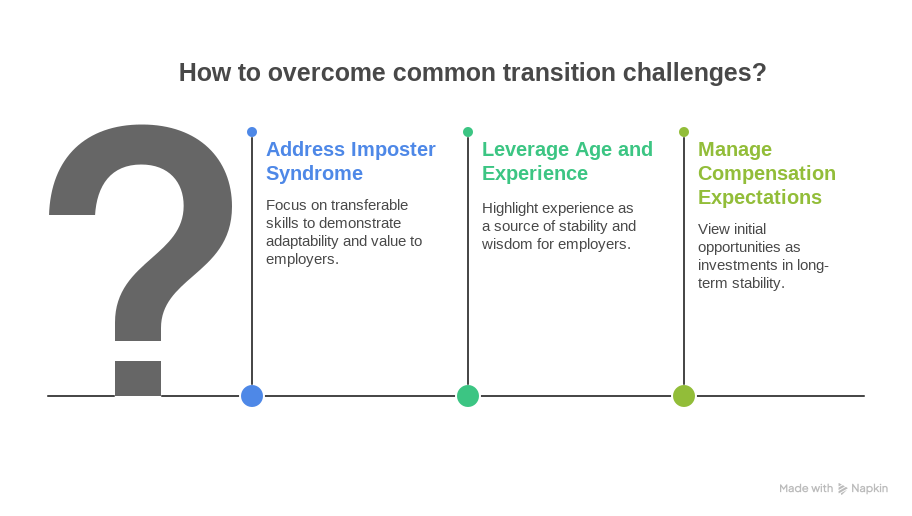
Imposter Syndrome in New Industries
It’s natural to feel uncertain when pivoting industries. Remember that employers seek out transferable skills because they demonstrate your ability to adapt, learn, and contribute effectively, making you a strong candidate even in unfamiliar fields.
Age and Experience Concerns
Laid-off employees in certain age ranges may have more difficulty finding their next job, but experienced professionals with excellent qualifications bring valuable perspective that many employers appreciate. Focus on how your experience provides stability and wisdom rather than viewing it as a liability.
Compensation Expectations
Career pivots sometimes involve temporary income adjustments, but recession-proof jobs offer more than just job security; they give you a foundation to grow and adapt, building a future that can withstand economic swings. View initial opportunities as investments in long-term stability rather than permanent salary reductions.
FAQs
How long does a successful career transition after layoff typically take?
According to the U.S. Bureau of Labor Statistics, the average time required to find a job after a layoff is 8.3 weeks, but strategic industry pivots may take 3-6 months as you develop new skills and networks. The investment in time typically pays off with better long-term job security and growth potential.
Can I transition into tech or cybersecurity without a technical background?
Absolutely. Plenty of tech jobs exist within the tech industry that do not require technical coding skills, including project management, business analysis, client success, and cybersecurity compliance roles. Focus on developing foundational knowledge and highlighting your transferable skills.
Should I take any available job or hold out for opportunities in recession-proof sectors?
Balance is key. If financial pressure is significant, consider bridge employment that provides income while you continue developing skills for your target industry. Part-time or contract work can provide financial stability while preserving time for strategic career development.
How do I explain my layoff positively in interviews?
Develop a brief narrative about your experience that emphasizes what you’ve learned and how you’re using this transition as an opportunity for growth. Focus on the proactive steps you’ve taken rather than the circumstances that led to the layoff.
What if I don’t have enough transferable skills for recession-proof industries?
You are likely more adaptable if you have transferable skills because you can apply your previous experience and knowledge to new situations. Start by conducting a thorough skills audit—you probably have more relevant capabilities than you realize. Then, identify the 1-2 most critical gaps and focus your development efforts there.
Conclusion
Your career transition after layoff isn’t just about recovery—it’s about building something stronger. By strategically pivoting to recession-proof sectors and leveraging your transferable skills, you’re not just finding your next job; you’re investing in long-term career resilience. The professionals who emerge strongest from layoffs are those who use the transition as a catalyst for strategic growth rather than a setback to overcome.
Ready to transform your career transition into your next opportunity? Layoff Lifeline provides the personalized roadmap and expert guidance you need to navigate this pivotal moment. Our comprehensive approach helps you identify your strongest transferable skills, target the right recession-proof sectors, and accelerate your transition with confidence. Don’t navigate this journey alone; schedule your consultation with Layoff Lifeline today and take the first step toward your stronger professional future.
Keep Reading
More practical guidance for the financial, career and emotional side of a layoff.


