
Financial Guidance
Director Severance Negotiation Tips That Triple Your Payout

When a director gets handed a severance agreement, most accept whatever’s on paper. I’ve watched talented leaders walk away with three months of pay when they could have secured nine or more. The difference isn’t luck—it’s knowing which leverage points matter and how to use them before you sign anything. This article breaks down the exact tactics that help clients triple their severance package, and how you can apply the same strategy to your situation.
Key Takeaways
- Directors who negotiate severance using documented legal leverage—not past performance—can often triple their initial offer by targeting adjustable terms like equity acceleration, non-compete buyouts, and deferred compensation clauses
- Garden leave provisions, non-solicitation buyouts, and Section 409A-compliant acceleration clauses represent the most underutilized negotiation points for L7+ executives facing termination
- Working with legal counsel to identify contractual rights and potential legal claims creates immediate pressure on employers to revisit standard severance terms and offer higher compensation packages
Why Most Directors Leave Money on the Table

The biggest mistake in director severance negotiations isn’t asking for more money. It’s believing your employer will offer a fair executive severance package because of your contributions. Companies don’t calculate severance based on loyalty or track record. They respond to legal risk, contractual obligations, and the potential cost of litigation.
Most directors assume there’s no room to negotiate because the initial offer looks “standard.” But standard doesn’t mean final. Severance agreements typically include baseline terms designed to minimize company liability, not reflect your actual value. When you negotiate a severance package, you’re forcing the employer to weigh what they might lose in a legal dispute against what they’d pay to make you go away quietly.
Executives who rely on goodwill or past job performance rarely get meaningful improvements to their severance terms. What works is identifying leverage—potential legal claims, contractual violations, or reputational concerns—and presenting them strategically through legal counsel. That’s what separates a three-month payout from a nine-month one.
Director Severance Secrets: The Case That Tripled the Payout
I worked with a director who received a termination notice with a severance offer of three months’ base salary. The company framed it as generous, pointing to years of service and a smooth transition. But when we analyzed the situation, several leverage points immediately stood out.
First, the employment agreement included vague language about bonus eligibility and equity vesting that could be interpreted multiple ways. Second, the termination timing coincided with a performance review cycle where bonus payments were about to vest. Third, the severance agreement included a broad non-compete clause that would severely limit employment options for two years without any compensation for that restriction.
Building the Negotiation Strategy
Rather than accept the offer or make vague requests for “more money,” build a demand letter that frames the negotiation around specific legal and contractual issues. Document the director’s contributions—not as a plea for fairness, but as evidence that the company was attempting to avoid paying earned compensation.
Point out that the non-compete clause, as written, would prevent the director from working in their industry without additional consideration. In some jurisdictions, non-compete agreements require adequate compensation to be enforceable, and garden leave provisions—where the company continues paying salary during the restriction period—are often necessary to make these clauses legally defensible.
We also identified deferred compensation that would be forfeited under the initial severance terms. Many executive severance packages include stock options, restricted stock units, or bonus structures governed by Section 409A regulations. Acceleration clauses in these agreements can sometimes be negotiated to preserve value that would otherwise be lost at termination.
The Counteroffer That Changed Everything
The company’s legal counsel responded within a week. They didn’t argue about the director’s performance or dispute the contributions. Instead, they acknowledged the potential legal claims and offered to revisit the severance terms to better reflect the situation.
The revised executive severance package included nine months of base salary continuation, immediate vesting of equity compensation that would have been forfeited, a lump sum payment covering the prorated annual bonus, and a buyout of the non-compete clause that allowed the director to accept a new job without restriction. The entire negotiation took less than three weeks because the demand letter created immediate pressure and demonstrated that the director was prepared to escalate if necessary.
Leverage Points L7+ Executives Miss
Garden Leave and Non-Compete Buyouts
Garden leave is one of the most overlooked components in severance package negotiation. It’s an arrangement where the employer continues paying your salary during the non-compete period, essentially compensating you for the restriction on your ability to work. If your severance agreement includes a non-compete clause but no garden leave provision, you may be able to negotiate for accelerated vesting, additional severance, or a complete buyout of the restriction.
C-level executives and directors often sign non-compete and non-solicitation agreements without realizing these clauses can be negotiated for additional compensation. If your former employer wants to restrict where you can work, they should pay for that limitation. This isn’t about being difficult—it’s about recognizing that non-disparagement agreements, confidentiality provisions, and employment restrictions have value, and you shouldn’t give them away for free.
Deferred Compensation Acceleration Clauses
Deferred compensation structures—including stock options, restricted stock units, and performance-based equity—are governed by Section 409A regulations that dictate when and how these payments can be made. Many directors don’t realize that severance packages can include acceleration provisions that allow unvested equity to vest immediately upon termination without cause.
The key is understanding whether your severance falls under the short-term deferral exemption or the separation pay plan exemption under Section 409A. If your severance payments meet certain criteria, they can be accelerated and paid in a lump sum without triggering tax penalties. Negotiating for accelerated vesting of equity compensation is often one of the most valuable adjustments to the severance terms, especially when unvested stock or options represent significant future value.
Even if your employment agreement doesn’t explicitly provide for equity acceleration, there’s often room for negotiation if you can demonstrate legal claims or contractual ambiguities that create risk for the employer. This is where working with an experienced employment lawyer makes a measurable difference—they know which provisions can be challenged and how to frame the request in a way that increases pressure on the company to settle.
Bonus and Incentive Compensation
Directors terminated near the end of a fiscal year or performance cycle often lose significant bonus payments they’ve already earned. Your severance negotiation should address whether you’re entitled to a prorated bonus based on the portion of the year you worked, or whether the company is obligated to pay the full amount based on performance metrics already achieved.
Some employers argue that bonus eligibility requires employment on the payment date, but this isn’t always legally defensible, especially if the bonus is tied to work you’ve already completed. If your contributions to the company during the performance period are measurable and documented, you have a stronger case to negotiate for bonus payments as part of your severance package.
Health Insurance and COBRA Coverage
Most severance agreements offer limited COBRA coverage, typically matching the number of months of severance pay. But health insurance continuation can often be extended through negotiation, especially when the employer wants to avoid litigation or reputational concerns. Some executives negotiate for the company to cover the full cost of COBRA premiums for the duration of the non-compete period, recognizing that the restriction on new employment also limits access to new employer-sponsored health insurance.
How to Negotiate Your Severance Package
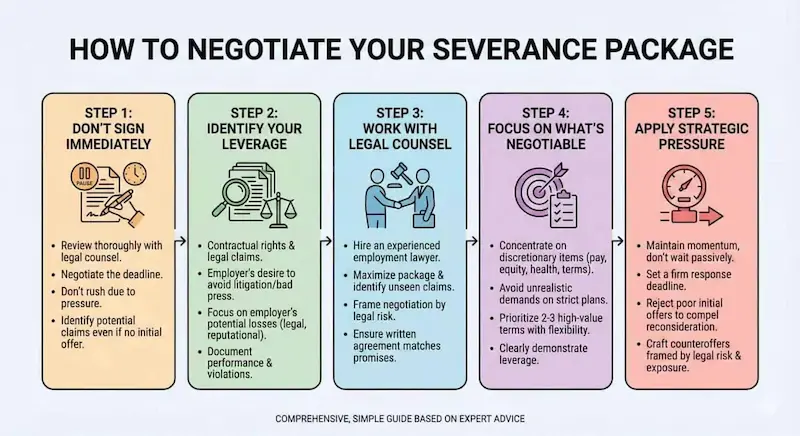
Step 1: Don’t Sign Immediately
The first rule in negotiating severance pay is to never sign the initial offer without reviewing it thoroughly with legal counsel. Employers typically provide a deadline to accept the severance agreement, but this timeline is almost always negotiable. Rushing to sign because you feel pressured or uncertain only reduces your leverage.
Even if your employer doesn’t offer severance automatically, you may still be able to negotiate an exit package if you can identify potential legal claims or contractual violations that create liability. Wrongful termination, discrimination, retaliation, or breach of contract claims give you leverage to demand better severance terms, even when the company’s initial position is that they don’t offer severance.
Step 2: Identify Your Leverage
Leverage in severance discussions comes from three main sources: contractual rights in your employment agreement, potential legal claims based on how the termination occurred, and the employer’s desire to avoid litigation or negative publicity. Directors and executives often have stronger leverage than they realize, especially if they’ve been with the company for multiple years, have documented performance achievements, or can point to violations of employment laws.
The rule of thumb for executive severance is that there’s room to negotiate when the employer has something to lose by refusing. That might be legal exposure, the cost of replacing you during a critical transition, or reputational damage from a contentious departure. Your negotiation strategy should focus on making it clear that litigation is a real possibility unless the company is willing to revise the severance terms to better reflect your contributions and legal rights.
Step 3: Work with Legal Counsel
Hiring an experienced employment lawyer isn’t optional if you want to maximize your severance package. Companies take severance negotiations more seriously when demands come from attorneys with a track record of employment litigation. A skilled lawyer can identify potential legal claims you might not recognize, frame the negotiation in terms of legal risk rather than personal grievances, and apply strategic pressure that keeps the employer engaged in the process.
Legal counsel also ensures that the written severance agreement matches what was verbally promised. Many executives make the mistake of assuming informal commitments will be reflected in the final document, only to discover critical terms have been revised or removed. Having a lawyer review every clause protects your rights and prevents costly errors in equity vesting, tax treatment, or restrictive covenant language.
Step 4: Focus on What Can Actually Be Negotiated
Not every term in a severance package is negotiable, and pushing for unrealistic demands weakens your position. The most effective severance negotiations focus on items the employer has discretion to change: the amount of severance pay, equity vesting acceleration, the scope of non-compete and non-solicitation restrictions, the duration of health insurance coverage, and the terms of references and outplacement services.
Demanding benefits that are governed by strict plan documents—like unvested stock that has no acceleration provision in the plan—usually won’t work unless you can demonstrate a legal claim that creates pressure to settle. The better approach is to identify two or three high-value terms where the employer has flexibility and concentrate your negotiation efforts there.
Step 5: Apply Strategic Pressure
Severance package negotiation requires momentum. If you present a demand and then wait passively for a response, the employer controls the timeline and can drag out discussions indefinitely. Setting a firm response deadline signals that you’re serious and prepared to escalate if the company refuses to engage.
Rejecting the initial severance offer outright is often necessary to force the employer to reconsider their position. Unless the offer is unusually generous, accepting it immediately sends the message that you’re not willing to fight for better terms. A well-crafted counteroffer that frames your demands in terms of legal risk, contractual obligations, and the cost of potential litigation creates pressure for the employer to settle quickly and avoid further exposure.
Common Mistakes in Severance Agreement Negotiation
Overestimating Loyalty
Relying on your years of service or past job performance as the basis for negotiation rarely works. Employers don’t increase severance payments out of gratitude. They respond to legal and reputational risk. If your argument is “I’ve been a loyal employee for 10 years,” you’re likely to get a polite rejection. If your argument is “the termination violates the employment agreement and creates potential legal claims,” you’re far more likely to see movement in the negotiation.
Failing to Verify Calculations
Many executives assume the company’s financial calculations in the severance offer are accurate, only to discover errors after signing. Incorrect severance multiples, miscalculated prorated bonuses, and vague equity acceleration language can substantially reduce the value of your package. Before you sign a severance agreement, have your lawyer verify that the numbers match your contractual entitlements and that the payment terms comply with Section 409A regulations to avoid unexpected tax penalties.
Accepting Restrictive Covenants Without Compensation
Non-compete clauses, non-solicitation agreements, and non-disparagement provisions limit your future opportunities, and you should be compensated for accepting them. If the severance agreement includes restrictions that weren’t in your original employment agreement, those new terms should be reflected in higher severance pay, extended benefits, or other valuable considerations. Don’t sign away your ability to work in your industry without negotiating for something meaningful in return.
When to Walk Away from a Severance Offer
Not every severance package is worth accepting, especially if the terms include severe restrictions that limit your future earning potential. If the non-compete clause prevents you from working in your field for an extended period without adequate compensation, or if the release of claims requires you to waive legitimate legal rights without fair value, you may be better off rejecting the offer and pursuing legal action.
Walking away doesn’t mean you lose everything. In many cases, refusing a lowball severance offer signals to the employer that you’re serious about protecting your rights and prepared to sue the company if necessary. This often leads to a revised offer that includes better severance terms, especially when the employer realizes the potential cost of litigation exceeds what they’d pay in an improved severance package.
What Makes an Executive Severance Package Fair

A fair executive severance package reflects your tenure, level of responsibility, the difficulty of finding comparable employment, and any legal or contractual rights you’re waiving by signing the agreement. For directors and senior executives, a reasonable starting point is often one to two weeks of pay per year of service, but this can increase significantly based on leverage and negotiation.
Higher severance packages may include 12 to 24 months of base salary continuation, full vesting of equity compensation, lump sum bonus payments, extended health insurance coverage, and buyouts of restrictive covenants. The most important part of any severance agreement isn’t the dollar amount alone—it’s ensuring the terms protect your financial security and don’t unfairly restrict your ability to move forward with a new job.
FAQs
Can I negotiate a severance package even if my employer says it’s non-negotiable?
Yes. Employers often present the initial offer as final to discourage negotiation, but there’s almost always room to negotiate if you can identify leverage such as potential legal claims, contractual violations, or company policies that support higher compensation. Working with legal counsel to present a strong demand letter can shift the employer’s position significantly.
What should I do if I’m asked to sign a severance agreement immediately?
Don’t sign under pressure. Request additional time to review the agreement with an employment lawyer, and understand that the deadline to accept is usually negotiable. Rushing to sign without understanding the terms can cost you significant compensation and restrict your future employment options.
How do I know if my severance offer is fair?
Compare the offer to industry standards for your level and tenure, verify that all calculations for base pay, bonus, and equity are accurate, and assess whether the restrictive covenants are reasonable given the compensation provided. An experienced employment lawyer can evaluate whether the package reflects your contractual rights and potential legal claims.
What leverage do I have if I was terminated without cause?
Termination without cause often triggers specific severance entitlements in employment agreements, and may create grounds to negotiate for equity acceleration, bonus payments, and other benefits that wouldn’t be forfeited if the termination were performance-based. You may also have claims based on how the termination was communicated or documented, especially if it violates company policy or suggests discriminatory or retaliatory motives.
Should I hire a lawyer to negotiate my severance?
Yes, especially for director-level and executive positions where the financial stakes are high and the severance agreement includes complex provisions around equity, deferred compensation, and restrictive covenants. Legal counsel provides leverage that individual negotiations rarely achieve and ensures the final agreement protects your rights.
Conclusion
Getting a better outcome in director severance negotiation isn’t about demanding more because you deserve it. It’s about understanding where your leverage exists and using it strategically before you sign anything. If you’re facing a layoff or termination and the severance offer doesn’t reflect your actual value, don’t accept it as final.
Book your free 15-minute strategy session with Layoff Lifeline to discuss your specific situation. We’ll help you identify the leverage points that matter and build a negotiation strategy that protects your financial security while you transition to what’s next.
Keep Reading
More practical guidance for the financial, career and emotional side of a layoff.


