
Job Assistance
Employment Gap Cover Letter: Your Complete Guide

Facing an employment gap can feel overwhelming when you’re ready to return to the workforce. Whether your gap was due to a layoff, personal reasons, or caring for a sick family member, I understand the anxiety about addressing it in your cover letter. An employment gap doesn’t have to derail your job search when you know how to explain it effectively.
Key Takeaways
- Address employment gaps directly and confidently in your cover letter rather than trying to hide them or hoping potential employers won’t notice
- Focus on growth and value by highlighting skills gained, volunteer work completed, or personal projects undertaken during your career break
- Use strategic positioning to turn your employment gap into a strength that demonstrates resilience, adaptability, and readiness to return to the workforce
Understanding Employment Gaps: Why They Happen

Employment gaps are more common than you might think, especially in today’s dynamic job market. The pandemic alone created unprecedented periods of unemployment for millions of workers. Understanding that gaps in your work history are normal can help reduce the anxiety around addressing them.
Common Reasons for an Employment Gap
There are many acceptable reasons for gaps in employment, and most hiring managers understand this reality:
- Company restructuring or layoffs where your position was eliminated
- Personal health issues or due to illness requiring extended recovery time
- Family caregiving responsibilities including caring for children or elderly parents
- Educational pursuits like going back to school or completing an online course
- Career transition planning to explore new industries or roles
- Economic downturns affecting entire sectors during events like the pandemic
The key isn’t avoiding these topics but learning the best way to explain your specific situation in a way that demonstrates your value to prospective employers.
The Layoff Letter: How to Address Employment Gaps in Cover Letters
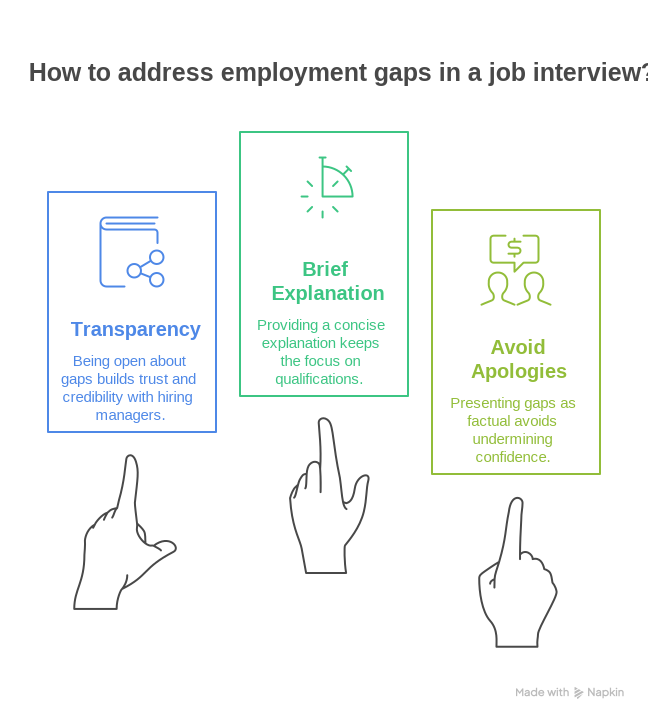
When writing your cover letter, addressing the gap directly shows confidence and transparency. I’ve found that honesty, paired with a focus on what you gained during your time away, creates the strongest impression with recruiters and hiring managers.
Template for Addressing Employment Gaps
Here’s a framework I recommend for explaining employment gaps in your cover letter:
Step 1: Acknowledge the gap briefly “After my position was eliminated due to company restructuring in [month/year], I took some time to [specific reason].”
Step 2: Highlight productive activities “During this period, I used the time to [specific activities that maintained or enhanced your skills].”
Step 3: Demonstrate readiness “I’m now ready to work and excited to bring my experience and renewed perspective to [company name].”
Best Way to Explain Different Types of Gaps
For Layoffs: I always recommend being straightforward about layoffs since they reflect business decisions, not your performance. You might write: “Following the elimination of my role due to budget cuts, I focused on enhancing my skills through professional development courses and staying current with industry trends.”
For Personal Reasons: When your gap was due to personal reasons, keep it brief but honest: “I took an extended period to care for a family member, which reinforced my organizational and problem-solving abilities.”
For Health Issues: If your gap due to illness, focus on your recovery and readiness: “After addressing a health matter, I’m fully prepared to return to my career with renewed energy and focus.”
Strategies for Minimizing Employment Gap Impact
Focus on Your Relevant Experience
Rather than drawing attention to employment gaps, spotlight your most relevant work experience and achievements. Your cover letter should emphasize how your background makes you the ideal candidate for the job, regardless of when that experience occurred.
Highlight Volunteer Work and Personal Projects
Any volunteer work or personal projects during your career break can demonstrate continued engagement and skill development. These activities show potential employers that you stayed active and maintained your professional capabilities.
Address Red Flags Proactively
If you’re concerned about red flags on your resume, your cover letter is the perfect place to provide context. By explaining your employment gap upfront, you control the narrative rather than leaving recruiters to make assumptions.
What Not to Do When Explaining Employment Gaps
Don’t Try to Hide the Gap
Trying to hide employment gaps on your resume rarely works and can damage your credibility. Experienced hiring managers will notice inconsistencies in your employment history, so transparency is always the better approach.
Avoid Over-Explaining
While you should address the gap, don’t spend excessive time justifying it. A brief, honest explanation followed by a focus on your qualifications works best.
Don’t Apologize Excessively
You don’t need to apologize repeatedly for your employment gap. Present it as a factual part of your work history and move on to discussing your value proposition.
Crafting Your Resume and Cover Letter Together
Your resume and cover letter should work together to tell a cohesive story. If you’re using a functional resume format to emphasize skills over chronology, ensure your cover letter complements this approach by highlighting relevant accomplishments.
Focus on Raising Your Profile
Use your cover letter to demonstrate your fit for the job by connecting your experience directly to the role requirements. This shifts attention away from any gaps in your work history toward your potential contributions.
Industry-Specific Considerations
Different industries may view employment gaps differently. In rapidly evolving fields like technology, staying current with industry trends becomes crucial. In more traditional sectors, demonstrating stability and commitment might take priority.
Staying Current During Extended Periods
If you had a large gap in employment, showing that you kept busy with relevant activities becomes especially important. This might include:
- Completing online courses in your field
- Attending industry conferences or webinars
- Participating in professional organizations
- Maintaining certifications or licenses
Preparing for the Job Hunt
Demonstrating Eagerness to Return
Your cover letter should convey genuine enthusiasm for returning to work. Share what excited you about the specific opportunity and how you’re prepared to contribute immediately.
Showing You’re Ready to Work
Address any concerns about your commitment by emphasizing your motivation and availability. If your gap was due to personal reasons that have been resolved, make this clear.
Special Situations: Extended Absence from the Workforce
For those with particularly long gaps, additional strategies can help:
Focus on Transferable Skills
Even during extended periods away from traditional employment, you likely developed or maintained transferable skills. Whether through volunteer work, managing household finances, or organizing community events, these experiences can demonstrate valuable capabilities.
Consider Professional Development
If you’re looking for a job after an extended absence, investing in professional development shows initiative and commitment to your field. Mention any recent training or certification in your cover letter.
Modern Challenges: Post-Pandemic Job Searching
The pandemic created unique challenges for jobseekers, but it also normalized employment gaps. Many employers now understand that gaps due to health concerns, family obligations, or economic disruption reflect broader societal challenges rather than individual shortcomings.
Leveraging Pandemic Experiences
If your gap occurred during the pandemic, you can often frame it within this broader context while still highlighting productive activities you pursued during that time.
Formatting Your Employment Gap Cover Letter
Keep It Professional
Maintain a professional format while being conversational in tone. Your cover letter should feel personal without being overly casual.
Length and Structure
A standard cover letter format works well for addressing employment gaps. Aim for three to four paragraphs that cover your interest in the role, relevant experience (including gap explanation), and enthusiasm for the opportunity.
Working with Recruiters
When working with recruiters, be upfront about any employment gaps during initial conversations. This allows them to represent you accurately to potential employers and prevents awkward surprises during the interview process.
Building Recruiter Relationships
Experienced recruiters understand that employment gaps happen and can often help position your background effectively. Don’t let concerns about gaps prevent you from engaging with recruiting professionals.
FAQs
Should you mention your employment gap on your cover letter?
Yes, if you have a significant gap (typically 6+ months), it’s better to address it briefly in your cover letter rather than leave employers wondering.
How long is too long for an employment gap?
There’s no magic number, but gaps over two years may require more detailed explanation. Focus on demonstrating that you stayed current with your field and are ready to contribute.
Can I use a functional resume to hide employment gaps?
While functional resumes emphasize skills over chronology, most employers still want to see your work history. It’s better to address gaps honestly than try to hide them.
What if my employment gap was due to personal issues I’d rather not discuss?
You can keep explanations general while still being honest. Phrases like “due to personal reasons” or “to address family obligations” provide context without oversharing.
Should I mention unemployment benefits in my cover letter?
Generally no. Focus on productive activities and your qualifications rather than financial support you may have received during your gap.
Conclusion
Remember, an employment gap doesn’t define your worth as a professional or your potential contributions to an organization. The key is addressing it confidently while focusing on the value you bring. Your career break might have given you new perspectives, skills, or priorities that actually make you a stronger candidate.
If you’re feeling overwhelmed about navigating your job search after an employment gap, you don’t have to figure it out alone. At Layoff Lifeline, we understand the unique challenges you’re facing and can provide personalized guidance to help you present your best self to potential employers. Schedule a consultation to explore your options together.
Keep Reading
More practical guidance for the financial, career and emotional side of a layoff.


