
Job Assistance
Facing Layoff as a Senior? Why Entrepreneurship Works Now

Getting laid off after decades in the workforce feels devastating, especially when you’re over 55. I’ve seen countless professionals face this challenge, wondering if their best career years are behind them. But here’s what I’ve learned: a layoff can actually be the catalyst for the most fulfilling chapter of your professional life through entrepreneurship.
Key Takeaways
- Senior entrepreneurs bring decades of experience, established networks, and financial stability that younger founders often lack
- The wave of mass layoffs in 2023 created unprecedented opportunities for experienced professionals to pursue entrepreneurship full-time
- Starting a business after 55 requires different strategies than those of younger entrepreneurs, focusing on leveraging existing expertise rather than chasing trendy markets
The New Wave of Senior Entrepreneurship After Layoffs

The pandemic and subsequent economic disruption created a perfect storm. Tens of thousands of experienced professionals found themselves suddenly unemployed, many from tech companies and traditional corporations that underwent massive downturn-driven layoffs. Instead of scrambling for similar positions, many laid-off employees chose a different path: starting their own businesses.
Recent surveys show that older entrepreneurs are launching ventures at record rates. Unlike their younger counterparts who might pursue the latest tech startup trends, senior founders typically focus on solving real problems they understand deeply. This approach often proves more profitable than chasing the next big disruption.
The entrepreneurial ecosystem has evolved to support this demographic shift. Where once the startup world seemed exclusively young, we now see successful businesses started by founders well into their 60s and beyond. These aren’t hobby projects – they’re serious business ventures that leverage decades of experience.
Leveraging Your Network and Experience After Job Loss
Your layoff might feel like a professional setback, but you’re actually entering entrepreneurship with significant advantages. Years of experience mean you understand industry pain points that newer entrepreneurs might miss. Your professional network, built over decades, becomes invaluable for finding customers, partners, and even investors.
I’ve watched laid-off executives transform their LinkedIn connections into their first customer base. That colleague who always came to you for advice? They might become your first client. The industry contacts you’ve maintained? They understand your expertise and trust your judgment.
Your strength lies in knowing what doesn’t work just as much as what does. While younger entrepreneurs might waste time and money on obvious pitfalls, your experience helps you avoid common mistakes. This wisdom translates directly into more efficient use of startup capital and faster path to profitability.
The key is reframing your experience as an asset, not a liability. Age discrimination in traditional hiring is real, but in entrepreneurship, experience commands respect. Business owners and potential clients value working with someone who’s been through multiple business cycles and industry changes.
Startup Considerations for Older Entrepreneurs
Starting a business after a layoff requires different planning than traditional entrepreneurship. You likely have financial obligations that a 25-year-old founder doesn’t face – mortgage payments, family responsibilities, maybe even elderly parents to support. This means your business strategy needs to account for generating income relatively quickly.
Consider your runway carefully. Unemployment benefits provide some cushion, but they won’t last forever. Unlike younger entrepreneurs who might pursue venture capital for explosive growth, senior founders often benefit from focusing on businesses that can become profitable quickly, even if they grow more modestly.
The tech landscape offers particular opportunities for experienced professionals. Many laid-off workers from major corporations possess specialized knowledge that smaller companies desperately need but can’t afford to hire full-time. Consulting represents a natural bridge between employment and full entrepreneurship.
Don’t overlook the financing advantages you might have. While you may not appeal to venture capitalists looking for the next unicorn, you likely have access to personal savings, home equity, or retirement funds that can provide startup capital. Many successful senior entrepreneurs bootstrap their ventures rather than seeking external investment.
Business Ideas That Work for Senior Founders
The most successful senior entrepreneurs typically pursue ventures that build on their existing expertise rather than trying to enter completely new fields. If you spent decades in manufacturing, you understand supply chain challenges that create consulting opportunities. Former HR executives often launch specialized recruiting firms targeting their industry niche.
Professional services businesses work particularly well for laid-off professionals. Your decades of experience solving specific problems positions you perfectly to help other companies facing similar challenges. The overhead is typically low, and you can start while still exploring other opportunities.
Many senior founders discover that the disruption they experienced – whether technological change or industry consolidation – creates opportunities to serve businesses struggling with similar transitions. Your firsthand experience navigating change becomes valuable intellectual property.
Consider businesses that can leverage your professional network immediately. If your former colleagues trust your judgment, they might hire your new venture even before they’d risk working with an unknown startup. This built-in customer base significantly reduces the typical challenges of business launch.
Training and education represent another fertile area. Industries constantly need experienced professionals to help train the next generation. Whether through formal consulting or developing educational content, your knowledge has commercial value.
Overcoming Chronic Conditions and Health Challenges
One reality many senior entrepreneurs face is managing health concerns while launching a business. Chronic conditions after layoff can feel overwhelming when you’re also dealing with the stress of starting over professionally. The loss of employer-provided health insurance compounds these concerns.
However, entrepreneurship can actually offer more flexibility to manage health needs than traditional employment. You control your schedule, work environment, and stress levels in ways that weren’t possible as an employee. Many successful senior entrepreneurs report better work-life balance running their own business than they had in corporate roles.
The key is building health management into your business plan from the beginning. If you need regular medical appointments, structure your business to accommodate that reality. If certain activities exacerbate health issues, design your venture to minimize those stressors.
Consider businesses that align with your energy levels and physical capabilities. Consulting work often allows more flexibility than businesses requiring extensive travel or physical demands. Many senior entrepreneurs find that remote or hybrid business models work better for managing both health and family obligations.
Don’t let health concerns prevent you from pursuing entrepreneurship, but do factor them into your planning. A sustainable business that accommodates your needs will be more successful long-term than one that ignores your health realities.
Building Your Business Network
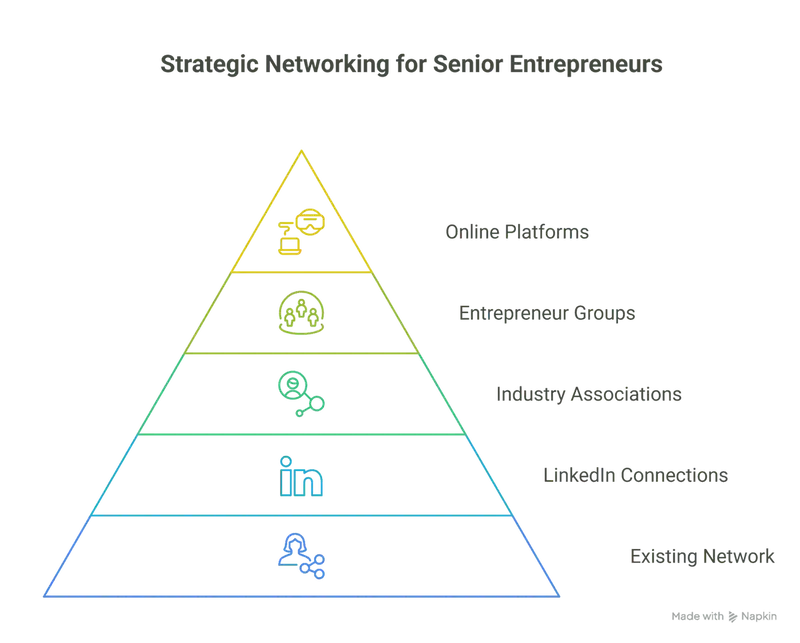
Your existing professional network is your greatest entrepreneurial asset, but you’ll need to expand it strategically. The network that supported your corporate career might not connect you with potential customers or business partners. LinkedIn becomes particularly valuable for making these new connections.
Start by identifying where your potential customers spend time. Industry associations, professional groups, and business organizations offer networking opportunities specifically designed for business development. Unlike job hunting, where networking can feel desperate, business networking is expected and welcomed.
Consider joining entrepreneur-focused groups specifically for senior founders. These communities understand the unique challenges of starting businesses later in career and often provide both practical advice and emotional support. The isolation of entrepreneurship can be particularly challenging after decades of corporate collaboration.
Don’t neglect online networking opportunities. Many industries have moved significant networking activity to virtual platforms, making it easier to connect with potential customers and partners regardless of geographic location. This can be particularly valuable if your business serves a national or international market.
Remember that networking as an entrepreneur is different from networking as a job seeker. You’re offering value, not asking for help. This shift in perspective makes networking feel more natural and productive.
Financial Planning and Investment Strategy
Most senior entrepreneurs have financial advantages that younger founders lack, but they also have different constraints. You might have accumulated savings or home equity that can fund a startup, but you also have less time to recover from financial setbacks.
Conservative financial planning becomes crucial. While a 30-year-old entrepreneur might risk everything on a high-growth venture, senior founders typically benefit from strategies that preserve capital while building sustainable income. This doesn’t mean avoiding risk entirely, but rather taking calculated risks with money you can afford to lose.
Consider staged investment in your business. Start with minimal capital to test your concept, then invest more as you validate market demand. This approach reduces risk while allowing you to learn and adjust your strategy based on real market feedback.
Don’t overlook the tax advantages available to business owners. Depending on your business structure, you might be able to deduct expenses that weren’t possible as an employee. However, the complexity of business taxes means investing in professional accounting advice early in your entrepreneurial journey.
If you’re drawing Social Security or approaching eligibility, understand how business income might affect your benefits. The rules can be complex, and proper planning can help you maximize both your business success and your retirement benefits.
Mental Health and Adapting to Entrepreneurial Life
The psychological adjustment from employee to entrepreneur can be challenging at any age, but senior professionals often face unique mental health considerations. After decades of corporate structure, the freedom of entrepreneurship can feel overwhelming rather than liberating.
Many newly laid-off professionals experience a crisis of professional identity. If you defined yourself by your corporate role, losing that identity can trigger anxiety or depression. Entrepreneurship offers the opportunity to rebuild your professional identity around your own values and goals, but this transition takes time.
The isolation of working alone can be particularly difficult if you’re accustomed to corporate collaboration. Consider co-working spaces, business incubators, or entrepreneur meetups to maintain social professional connections. Many successful senior entrepreneurs report that finding their “tribe” of fellow business owners was crucial for mental health.
Don’t underestimate the stress of financial uncertainty, especially if you have family depending on your income. Having a clear financial plan and maintaining emergency reserves can reduce anxiety and allow you to focus on building your business rather than worrying about immediate survival.
Celebrate small wins along the entrepreneurial journey. Unlike corporate employment with regular performance reviews and clear advancement paths, entrepreneurship requires you to recognize and acknowledge your own progress. This becomes particularly important during the inevitable challenging periods.
Technology and Digital Adaptation
One concern many senior entrepreneurs face is keeping up with rapidly evolving technology. While you don’t need to become a tech expert overnight, understanding digital tools can significantly improve your business efficiency and reach.
Start with the basics that directly impact your business. Most industries now require some level of digital presence, whether through social media, email marketing, or basic websites. Many successful senior entrepreneurs partner with younger professionals or hire freelancers to handle technical aspects while focusing on their core expertise.
Don’t let technology intimidation prevent you from pursuing entrepreneurship. Many of the most successful senior-founded businesses succeed because they solve fundamental problems better than tech-focused competitors, not because they use the latest digital tools.
Consider your target market’s technology preferences. If you’re serving other senior professionals or traditional industries, you might not need cutting-edge digital strategies. However, if your potential customers expect modern digital experiences, invest in learning or hiring the necessary skills.
Remember that technology should serve your business goals, not drive them. The most successful senior entrepreneurs typically use technology to enhance their existing strengths rather than trying to compete purely on technological innovation.

FAQs
Is it too late to start a business if I’m over 55?
Absolutely not. Research shows that successful entrepreneurs are actually more likely to be older than younger. Your experience, network, and financial stability provide significant advantages. Many of the most successful businesses were founded by entrepreneurs over 50.
How do I compete with younger entrepreneurs who seem more tech-savvy?
Focus on your strengths rather than trying to match younger entrepreneurs’ technical skills. Your decades of experience, established credibility, and deep understanding of customer needs often matter more than technical prowess. Consider partnering with tech-savvy younger professionals when necessary.
Should I pursue venture capital funding for my startup?
Most senior entrepreneurs benefit more from bootstrapping or seeking smaller-scale funding rather than traditional venture capital. VCs typically look for explosive growth potential that might not align with your business goals. Focus on building profitable, sustainable businesses rather than chasing unicorn valuations.
How do I handle the loss of employer benefits like health insurance?
Research marketplace health insurance options early in your planning process. Many entrepreneurs find that the flexibility of running their own business allows better work-life balance that can positively impact health. Factor insurance costs into your business financial planning from the beginning.
What if my business fails and I can’t find traditional employment again?
Age discrimination in hiring is real, but entrepreneurship provides an alternative path that values experience over age. Even if your first business doesn’t succeed, the skills and network you build will enhance future opportunities. Many successful senior entrepreneurs tried multiple ventures before finding the right fit.
Conclusion
Your layoff doesn’t have to be the end of your career story – it can be the beginning of your most fulfilling professional chapter. The combination of your experience, network, and the current entrepreneurial ecosystem creates unprecedented opportunities for senior founders. The key is approaching entrepreneurship strategically, leveraging your strengths while planning for the realities of starting a business later in your career.
Ready to explore how your unique experience can become the foundation for entrepreneurial success? Layoff Lifeline specializes in helping experienced professionals navigate this transition. We’ll help you identify opportunities, develop strategies, and create the roadmap for your entrepreneurial journey. Schedule a consultation today and discover how to turn your career challenge into your greatest opportunity.
Keep Reading
More practical guidance for the financial, career and emotional side of a layoff.


