
Financial Guidance
Financial Advice for Job Loss After 50: Protect Savings!

Losing a job after 50 can feel like your world has turned upside down. I understand the panic that sets in when you’re staring at bills, wondering how you’ll make ends meet without tapping into the retirement savings you’ve worked decades to build. The good news? There are proven strategies to navigate this challenging period while keeping your retirement goals intact. Let me walk you through the essential steps that can help protect your financial future.
Key Takeaways
- Protect your retirement savings by exploring all other financial options first, including unemployment benefits, COBRA coverage, and emergency funds, before considering early withdrawals with penalties
- Create a strategic financial plan that prioritizes essential expenses, negotiates with creditors, and maximizes available benefits to stretch your savings during the job search
- Leverage your professional network and consider alternative income sources while maintaining health insurance coverage to avoid devastating financial setbacks
Understanding the Reality of Job Loss After 50

The statistics are sobering: 56% of older workers suffer at least one layoff or other type of involuntary job separation between turning 50 and reaching retirement. Even more concerning, only 1 in 10 ever earns as much as they had previously. This means your financial strategy needs to be both defensive and realistic.
When facing unexpected job loss at this stage of life, your instinct might be to immediately consider your retirement accounts as a safety net. However, this should be your absolute last resort. Early withdrawals from retirement accounts typically come with significant penalties and tax implications that can permanently damage your long-term financial security.
First Steps: Securing Immediate Financial Stability
Apply for Unemployment Benefits Without Delay
Your first priority should be filing for unemployment benefits in your state. Benefits typically cover about 50% of your previous income for around 26 weeks. Don’t let pride get in the way – you’ve paid into this system, and it’s designed to help you during exactly this type of transition.
Each state has different requirements and benefit amounts, so research your unemployment benefits in your state immediately. The application process can take several weeks, so starting early ensures you don’t miss out on crucial income replacement.
Evaluate Your Severance Package
If your former employer offers a severance package, carefully consider the structure. Taking severance pay in a lump sum may give you control over your money, but you may lose some employee benefits, such as group health insurance. The timing of payments can also have significant tax implications if the severance pushes you into a higher tax bracket.
Managing Health Insurance and Essential Expenses
Navigate COBRA Coverage Strategically
COBRA gives workers and their families who lose their health benefits the right to choose to continue group health benefits provided by their group health plan for limited periods of time. For covered employees, COBRA lasts for eighteen months after job termination.
However, COBRA can be expensive since you’ll pay the full premium plus up to 2% administrative costs. You could say that COBRA is aptly named because this is an expensive way to pay for health insurance, and your finances and budget may feel squeezed. Consider alternatives like joining your spouse’s plan or exploring marketplace coverage through the Affordable Care Act.
Reassess and Prioritize Your Monthly Expenses
This is a good time to review your budget for categories where you can cut back. Start by identifying your essential expenses – mortgage or rent, utilities, food, and transportation. Then scrutinize discretionary spending like entertainment subscriptions and dining out.
Create a bare-bones budget that covers only necessities. Even small adjustments, such as negotiating a less pricey cell phone plan or a better deal on your homeowner insurance, can add up.
Protecting Your Retirement Savings
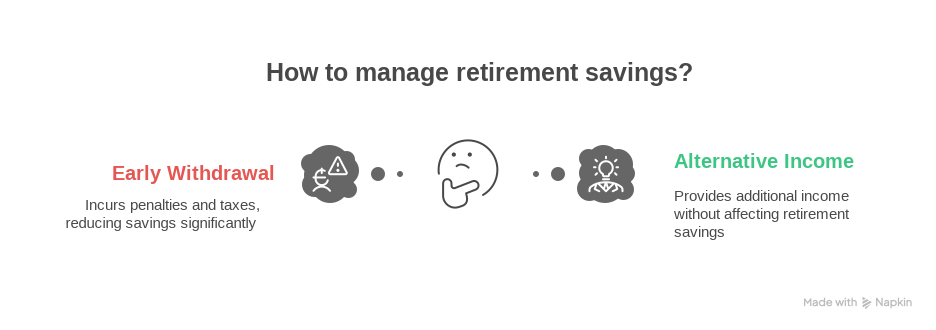
Understand the True Cost of Early Withdrawals
Before you consider touching your retirement accounts, understand the financial impact. Traditional IRA and 401(k) withdrawals before age 59½ typically incur a 10% penalty plus ordinary income tax on the withdrawn amount. This can easily cost you 30-40% of the withdrawal in taxes and penalties.
There are some exceptions for older workers. Clients can also turn to the “age 55 rule,” which allows individuals between the ages of 55 and 59½ who are laid off, fired or quit a job to draw from their 401(k) without penalty. However, this only applies to 401(k)s from your most recent employer, not IRAs.
Consider Alternative Income Sources
Before tapping retirement savings, explore ways to diversify your income. Explore ways to bring in extra cash, such as unloading all of your garage and attic clutter on eBay or picking up work on the side. Consider consulting work in your field, part-time employment, or even starting a small LLC for freelance services.
Be mindful of how additional income might affect your unemployment benefits. In some states, you can still receive partial benefits provided that your earnings are less than your benefit payout.
Building Your Financial Bridge Strategy
Maximize Your Emergency Fund
If you have an emergency fund, this is exactly what it’s for. However, be strategic about how you use it. Set aside enough to cover three to six months of essential expenses, and use any additional emergency savings to help manage the transition without touching retirement accounts.
Negotiate with Creditors
Explain that you’ve recently experienced a job loss and that you need some flexibility, in the form of more time to pay, for example. Many companies are willing to work with customers facing financial hardships and have programs in place to help, but you usually have to call and ask for help in order to receive it.
Don’t wait until you’re behind on payments. Proactively contacting your mortgage lender, credit card companies, and other creditors shows good faith and often results in temporary payment reductions or deferrals.
Leverage Your Professional Network
Your career path at this stage requires a strategic approach. Advisers should be pushing middle-aged clients to join networking groups and take other steps to prepare ahead of time for the possibility of losing their job. Reach out to former colleagues, attend industry events (many are now virtual and free), and consider working with a career transition specialist.
While ageism remains a challenge in the job market, the current strength of the job market somewhat eases that concern. Focus on positions that value your experience and skills rather than competing solely on energy or willingness to work long hours.
Long-term Financial Recovery Planning

Reassess Your Retirement Goals
This unexpected job loss might require you to reassess your retirement timeline and goals. Work with a financial professional to understand how this career gap might affect your long-term financial security. You may need to consider working a few years longer than originally planned or adjusting your retirement lifestyle expectations.
Consider Professional Financial Guidance
Financial advisers are a valuable resource during trying times, and are in a unique position to help clients navigate the situation while minimizing the financial damage. A qualified financial planner can help you create a comprehensive strategy that balances immediate needs with long-term financial goals.
Explore New Career Paths
Sometimes an unexpected job loss opens doors to opportunities you hadn’t considered. Whether it’s pursuing certification in a new field, exploring remote work options, or even considering entrepreneurship, this transition period might be the perfect time to pivot your career path in a direction that better suits this stage of your life.
Maintaining Financial Stress Management
Losing a job is inherently stressful, especially when you’re approaching traditional retirement age. The financial stress can impact your decision-making ability and overall health. Remember that this situation is temporary, and with careful planning, you can navigate it without permanently damaging your financial future.
Consider seeking support from career counselors, financial advisors, or even support groups for people experiencing similar transitions. The emotional toll of job loss can be just as challenging as the financial impact, and addressing both aspects will help you make better decisions.
FAQs
Should I take my 401(k) as a lump sum if I’m laid off after 50?
Generally, no. While the age 55 rule allows penalty-free withdrawals from your most recent employer’s 401(k), you’ll still owe income taxes. It’s better to roll it to an IRA and preserve it for retirement while exploring other income sources first.
How long should I wait before considering early retirement if I can’t find another job?
Exhaust all other options first, including unemployment benefits, part-time work, consulting opportunities, and using emergency savings. Only consider early retirement if you can bridge the gap to age 62 (earliest Social Security eligibility) without severely compromising your financial security.
Can I get health insurance if I can’t afford COBRA?
Yes, you have several options including marketplace plans through the Affordable Care Act, joining a spouse’s plan, or potentially qualifying for Medicaid if your income is low enough. Explore all options before going without coverage.
Will unemployment benefits affect my Social Security later?
No, unemployment benefits don’t count as earned income for Social Security purposes and won’t affect your future benefits. However, if you start collecting Social Security before full retirement age while working, there are earnings limits to consider.
Should I move to a less expensive area if I can’t find work?
This depends on your personal situation, but it can be a smart strategy. Consider areas with lower living costs but still accessible to your industry or with good remote work infrastructure. Factor in the costs of moving against the potential savings.
Conclusion
Losing your job after 50 is undoubtedly challenging, but it doesn’t have to derail your retirement dreams. By taking immediate action to secure benefits, carefully managing expenses, and protecting your retirement savings, you can weather this storm while keeping your long-term financial goals on track. Remember, this is a temporary setback, not a permanent defeat.
The key is having a solid plan and expert guidance to help you navigate these choppy waters. If you’re feeling overwhelmed by the financial decisions ahead, you don’t have to figure it all out alone. Layoff Lifeline specializes in helping people just like you turn unexpected career challenges into opportunities for a stronger financial future. Schedule a consultation with Layoff Lifeline today and let’s build your roadmap to recovery together.
Keep Reading
More practical guidance for the financial, career and emotional side of a layoff.


