
Uncategorized
Financial Recovery After Job Loss: A Guide

That gut-wrenching moment when you get the news. The stack of bills on your kitchen table. The late-night worries about what comes next. At Layoff Lifeline, we’ve sat with thousands of professionals just like you, helping them navigate the maze of financial recovery after job loss. It’s not just about the numbers—it’s about your future, your family, and your peace of mind. Let’s walk through this together, starting with the steps that can make all the difference right now.
Key Takeaways
- Understanding your financial position and available resources is crucial immediately after a job loss
- Creating a comprehensive emergency fund and benefits strategy helps maintain stability
- Balancing immediate needs with long-term financial security requires strategic planning
1. Immediate Financial Assessment
The first 48 hours after job loss are crucial. Begin by calculating your complete financial position, including all savings, investments, and debts. Review your most recent pay stub to understand exactly what benefits you’re losing and when. Create a detailed list of all recurring expenses and identify which ones are tied to your employer.
Research has shown that understanding your financial resources is essential during this transition. A study on coping with job loss found that individuals with adequate financial resources are more likely to secure reemployment, as effective financial management reduces stress and enhances job search motivation. This underscores the importance of a thorough financial assessment immediately after job loss.
Key items to document:
- Current account balances
- Upcoming bill due dates
- Employee benefit end dates
2. File for Unemployment Benefits
Don’t let pride prevent you from claiming benefits you’ve earned through your years of employment. Unemployment benefits can provide crucial bridge income while you search for your next opportunity. File immediately – most states have online portals making the process straightforward. Remember that benefits typically begin from your filing date, not your last day of work.
3. Healthcare Coverage Planning
Healthcare coverage requires immediate attention as you typically have only 60 days to make COBRA elections. Carefully evaluate all options:
| Coverage Type | Monthly Cost | Benefits | Considerations |
|---|---|---|---|
| COBRA | $$$ | Same coverage | Usually expensive |
| Spouse’s Plan | $$ | Good coverage | Must qualify |
| ACA Marketplace | $-$$$ | Variable | Income-based pricing |
4. Emergency Fund Optimization
Your emergency fund management strategy should reflect your current situation. Evaluate your monthly expenses and create a realistic timeline for job searching in your industry. Consider your skill set, market conditions, and local job market when determining how long your savings need to last.
5. Debt Management Strategy
Contact your creditors proactively to discuss hardship options. Many lenders offer programs specifically designed for unemployment, but you must reach out before missing payments. Write a clear explanation of your situation and what specific accommodations you’re requesting. Document all communications and get any agreements in writing.

6. Retirement Account Decisions
While it might be tempting to tap into retirement savings, carefully consider the long-term implications. Your 401(k) typically needs attention within 60-90 days of leaving your employer. Consider these options carefully:
- Leave the money with your former employer if allowed
- Roll over to an IRA to maintain tax advantages
- Evaluate the impact of any withdrawals on long-term goals
7. Income Generation Plan
Develop multiple streams of income while searching for your next full-time position. This isn’t just about survival – it’s about maintaining professional momentum. Consider consulting in your field, leveraging existing skills for freelance work, or exploring temporary positions that align with your career goals.
8. Budget Restructuring
Create a revised budget that reflects your new financial reality. This isn’t about deprivation – it’s about strategic allocation of resources. Categorize expenses as essential, important, and optional. Look for areas where you can reduce expenses without significantly impacting quality of life.
9. Professional Development Investment
Use this transition period strategically. Invest time in updating your skills and credentials. Many professional certifications can be completed in 3-6 months and may open new career opportunities. Research growing sectors in your industry and align your skills accordingly.
10. Long-term Financial Planning
Don’t let short-term pressure derail your long-term financial goals. Work with a financial advisor to adjust your investment strategy and create a revised long-term plan. Consider this an opportunity to reassess your career path and financial objectives.
How We Support Your Financial Recovery Journey
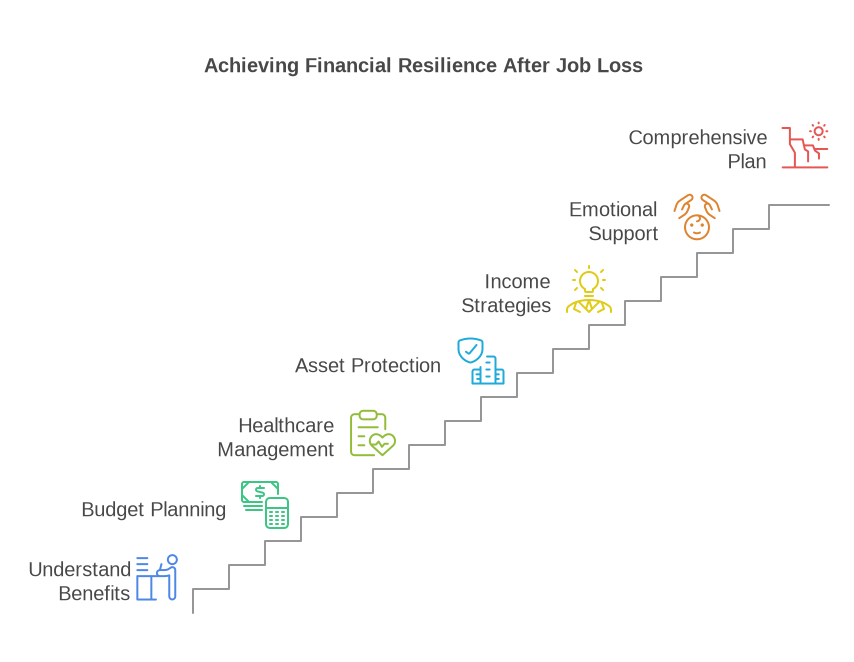
At Layoff Lifeline, we believe financial recovery after job loss requires more than just generic advice. Our approach combines practical financial guidance with emotional support because we understand the human side of career transitions. Our team includes financial advisors, career counselors, and mental health professionals who work together to provide comprehensive support.
We offer personalized guidance for:
- Navigating unemployment benefits and severance packages
- Creating sustainable emergency budgets
- Managing healthcare transitions
- Protecting retirement assets
- Developing alternative income strategies
But most importantly, we’re here to listen. Every financial situation is unique, and every career transition brings its own challenges. We’ll help you develop a recovery plan that reflects your specific needs and goals, drawing from our experience supporting thousands of professionals through similar transitions.
Whether you need immediate crisis support or long-term financial planning, our team is ready to walk alongside you on this journey. We believe that with the right support and strategy, job loss can become a stepping stone to greater financial resilience.
FAQs
What should I do immediately after experiencing job loss?
Immediately after losing a job, evaluate your current financial situation. Determine how much money is going out for bills and expenses, and consider adjusting your budget to make ends meet during this tough time.
How can I adjust my budget after losing a job?
Adjusting your budget involves identifying essential expenses, such as utilities and debt repayment, and cutting non-essential subscriptions or services. This will help you manage your finances while unemployed.
What are some sources of income I can explore while unemployed?
While unemployed, you can consider freelance work, part-time jobs, or temporary positions as additional financial support. You may also explore gig economy jobs or online platforms that pay for services you can provide.
Should I tap into my retirement plan after losing a job?
It’s generally advisable to avoid tapping into your retirement plan if possible, as it can impact your long-term financial security. However, if you’re facing extreme financial hardship, consult a financial advisor to understand the implications and repayment options.
How can I manage debt repayment during job loss?
During job loss, communicate with your creditors about your situation. Many are willing to offer temporary relief or adjust repayment plans, which can help you manage your financial challenges more effectively.
Conclusion
At Layoff Lifeline, we’ve witnessed countless professionals transform their job loss into an opportunity for financial growth. Whether you need immediate guidance on managing your severance package or want to create a comprehensive financial recovery plan, our team is here to help. Let’s work together to protect your financial future and navigate this transition successfully.
Keep Reading
More practical guidance for the financial, career and emotional side of a layoff.


