
Job Assistance
Insurance License Career Change Guide after Layoff

Here’s something most laid-off professionals don’t realize: While other career changes require months or years of preparation, getting your insurance license opens doors to immediate income opportunities. I’ve seen professionals transform unexpected layoffs into thriving insurance careers, often earning more than in their previous positions. While employers typically require a high school diploma, they may prefer but don’t require a bachelor’s degree, and a degree is not required to get an insurance license or to sell insurance. Your existing skills are probably more valuable than you think in this recession-resistant field.
Key Takeaways
• Getting an insurance license offers a recession-resistant career path with high earning potential and flexible work arrangements
• Most insurance positions require only a high school diploma and state licensing, making career transition accessible within weeks
• Your existing transferable skills from previous roles can position you for immediate success in insurance sales and services
The Insurance License Fast Track: Your Gateway to Financial Services

Why Insurance Offers the Perfect Career Change Opportunity
When considering a career change after a layoff, the insurance industry stands out for several compelling reasons. According to the Bureau of Labor Statistics, insurance sales agents are expected to grow steadily, with many positions offering six-figure earning potential. Unlike other industries that might require years of additional education, becoming an insurance agent typically requires only completing a pre-licensing course and passing your state exam.
The insurance career path offers something unique: immediate entry into a recession-resistant field. While other industries contract during economic downturns, people still need life insurance, health insurance, and property protection. This stability makes insurance an ideal choice when you’re looking for a career change that provides both security and growth opportunities.
Understanding Your Insurance License Options
When exploring an insurance career, you’ll encounter several licensing paths. The most common starting point is obtaining your life and health insurance license, which allows you to sell life insurance policies and health coverage. This combination opens doors to working with insurance agencies, becoming an independent agent, or joining an insurance company’s sales team.
Property and casualty insurance represents another lucrative area of insurance. These agents help clients protect their homes, vehicles, and businesses. Many successful insurance agents eventually obtain licenses in multiple areas, expanding their earning potential and career options.
The licensing requirements vary by state, but most require completing a state-administered pre-licensing course followed by passing the licensing exam. Many companies provide on-the-job training and mentorship programs to help new agents succeed in their insurance job.
Leveraging Your Transferable Skills
One advantage of making a career change into insurance is how well your existing skills translate. If you’ve worked in sales, customer service, or any role requiring communication skills, you already possess many important attributes for success as an insurance agent.
Problem-solving abilities from your previous career directly apply to helping clients make informed decisions about insurance policies. Time management skills become crucial when managing multiple clients and building your insurance sales pipeline. Even backgrounds seemingly unrelated to insurance often provide valuable perspectives that help agents connect with diverse clientele.
The Earning Potential in Insurance
Let’s address what you’re probably most curious about: the financial opportunity. The median salary for insurance sales agents varies significantly based on experience, location, and area of insurance specialization. Many entry-level positions offer base salaries plus commission structures that reward performance.
Successful insurance agents often report high earning potential, with top performers earning well into six figures. The entrepreneurial nature of many insurance positions means your income directly correlates with your effort and skill development. This performance-based structure appeals to many professionals making a career change who want control over their financial recovery.
Breaking Into the Insurance Industry
Landing your first insurance job involves several strategic steps. Start by researching insurance agencies and insurance companies in your area. Many organizations actively recruit professionals with diverse backgrounds, recognizing that industry experience isn’t always necessary for success.
The interview process typically focuses on your communication abilities, work ethic, and motivation for considering a career in insurance. Prepare to discuss why you’re looking for a career change and how your background positions you to succeed as an insurance agent.
Consider both traditional insurance companies and independent agencies. Each offers different advantages: insurance companies often provide more structured training programs and established lead systems, while independent agencies might offer greater flexibility and the chance to work with multiple insurance products.
Training and Professional Development
Most insurance positions include comprehensive training programs. These programs cover product knowledge, sales techniques, and regulatory requirements. Many companies invest heavily in new agent development because they understand that supporting career transition leads to long-term success.
The pre-licensing course prepares you for the state exam, but ongoing education continues throughout your insurance career. This commitment to professional development appeals to many professionals seeking a fulfilling career with continuous learning opportunities.
Building Your Insurance Career Path
Starting as an insurance agent opens numerous career advancement opportunities. Many agents eventually become service managers, overseeing teams of other agents. Others choose to open their own agencies, building entrepreneurial businesses within the insurance industry.
The insurance field also offers specialization opportunities. You might focus on serving specific demographics, like young families needing life insurance or businesses requiring commercial coverage. Some agents develop expertise in annuity products or become specialists in risk management for particular industries.
Work-Life Balance and Flexibility
One attractive aspect of an insurance career is the potential for flexible work arrangements. While building your client base requires initial time investment, established agents often enjoy significant freedom to work on their own schedules. This flexibility particularly appeals to professionals whose previous careers demanded rigid schedules.
Many insurance agents work from home offices, traveling to meet clients at their convenience. This arrangement offers excellent work-life balance while maintaining professional relationships and serving clients effectively.
Industry Growth and Job Security
The insurance industry offers remarkable stability during economic uncertainty. While other sectors experience volatility, the need for insurance protection remains constant. This recession-resistant quality provides the job security many professionals seek after experiencing layoffs in other industries.
Industry professionals consistently report high job satisfaction, particularly appreciating the chance to make a real impact in people’s lives. Helping families secure financial protection through life insurance or ensuring businesses continue operating after property damage creates meaningful work beyond just earning commissions.
Getting Started: Your Next Steps
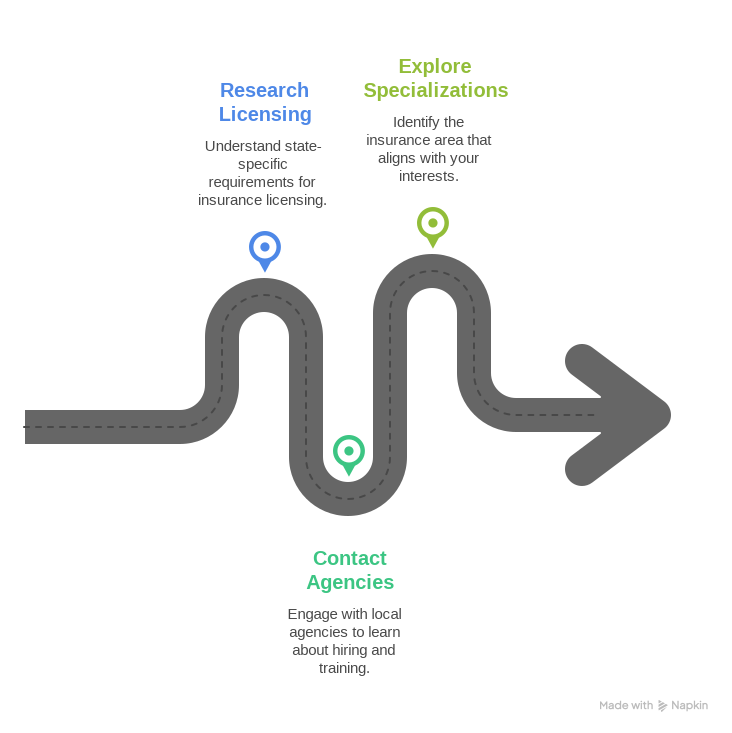
If you’re ready to explore this career opportunity, begin by researching licensing requirements in your state. Contact your state’s department of insurance for specific information about pre-licensing courses and exam schedules.
Consider reaching out to local insurance agencies to learn about their hiring practices and training programs. Many agencies welcome conversations with professionals considering a career change, especially those bringing valuable transferable skills from other industries.
Research different areas of insurance to identify which aligns best with your interests and career goals. Whether you’re drawn to helping individuals and families with life and health insurance or excited about protecting businesses through commercial coverage, there’s likely an insurance specialization that fits your personality and objectives.
FAQs
How long does it take to get an insurance license?
Most people complete pre-licensing requirements and pass their state exam within 2-4 weeks of dedicated study. Some states offer accelerated programs that can be completed even faster.
Do I need a college degree to become an insurance agent?
Most insurance positions require only a high school diploma, though some companies prefer college graduates. Your experience and skills often matter more than formal education.
How much can I expect to earn starting out in insurance?
Entry-level insurance positions typically offer base salaries ranging from $35,000-$50,000 plus commission opportunities. High performers often exceed these figures significantly in their first year.
Is insurance sales too competitive for career changers?
While insurance is competitive, the industry actively seeks professionals with diverse backgrounds. Your unique experience and perspective can actually provide advantages over traditional industry candidates.
What ongoing support is available for new insurance agents?
Most insurance companies and agencies provide mentorship programs, continuing education, and supportive networks to help new agents build successful practices.
Conclusion
Your layoff doesn’t have to derail your financial future. The insurance industry offers a genuine fast track back to professional success, with licensing requirements that can be completed in weeks rather than years. The combination of immediate earning potential, career flexibility, and recession-resistant stability makes this path particularly attractive for professionals navigating unexpected career transitions.
Ready to explore how an insurance license could transform your career prospects? Schedule a consultation with Layoff Lifeline to create your roadmap back to financial stability and professional fulfillment.
Keep Reading
More practical guidance for the financial, career and emotional side of a layoff.


