
Financial Guidance
Layoff Action Plan Timeline: Your Month-by-Month Guide

Getting laid off feels overwhelming, but having a structured approach makes all the difference. I’ve seen professionals navigate this transition successfully by following a clear timeline that adapts to their specific situation. Whether you’re dealing with a minimal severance package or have several months of financial cushioning, the key is knowing exactly what to prioritize and when. Let me walk you through a month-by-month action plan that transforms uncertainty into opportunity.
Key Takeaways
- Immediate priorities matter most: Focus on securing unemployment benefits, understanding your severance package, and maintaining health insurance coverage during your first 30 days.
- Timeline varies by severance: Your action plan should adapt based on whether you have 3 months, 6 months, or longer financial runway from severance pay.
- Strategic phases maximize success: Early months focus on emergency planning, middle months emphasize active job searching and skill development, while extended periods allow for career pivoting.
Understanding Your Severance Timeline

Before diving into monthly strategies, you need to assess your financial runway. Most severance packages offer two to four weeks of severance pay for every year of service, typically capping at eight weeks total. This determines everything from your job search intensity to your career pivot options.
Your timeline also depends on factors like unemployment benefits eligibility, COBRA health insurance coverage costs, and emergency savings. I recommend calculating your total available funds and dividing by your monthly expenses to determine your realistic job search window. Add an extra month or two as a buffer – career transitions often take longer than expected, especially in competitive job markets.
Employee Layoff Recovery: Months 1-3
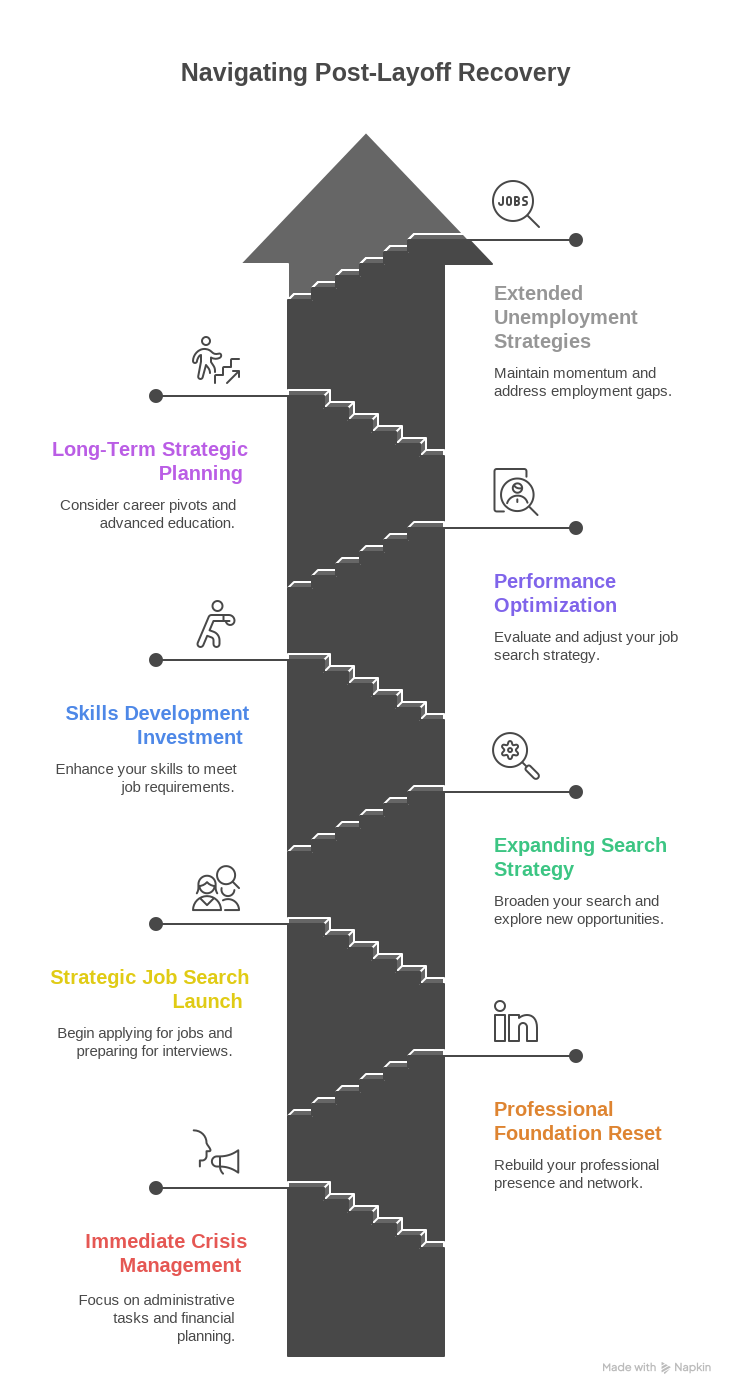
Month 1: Immediate Crisis Management
The first 30 days require swift action on administrative priorities. File for unemployment benefits immediately, even if you’re receiving severance pay. Many states allow partial benefits during severance periods, and you’ll want to establish your claim early in the layoff process.
Review your exit paperwork and severance agreement thoroughly before signing anything. If you’re over 40, the Older Workers Benefit Protection Act (OWBPA) gives you 21 days to consider severance offers. Don’t feel pressured to sign immediately – this is your opportunity to negotiate better terms, extended health insurance coverage, or favorable equity arrangements.
Secure your insurance plan next. COBRA continuation can be expensive, often costing $600-800 monthly for individual coverage. Compare this with Health Insurance Marketplace options in your state, which might offer more affordable alternatives. Some severance packages include extended health benefits, making this decision easier for affected employees.
Update your budget immediately. Calculate exactly how long your severance, unemployment benefits, and savings will last. This timeline drives every other decision you’ll make during your career transition.
Month 2: Professional Foundation Reset
Focus on rebuilding your professional presence. Update your LinkedIn profile with a strategic headline that showcases your skills rather than advertising unemployment. Instead of “Seeking new opportunities,” try “Digital Marketing Manager | SaaS Growth | B2B Content Strategy.”
Craft your layoff narrative for when you navigate the job market. Practice explaining your situation professionally: “The company underwent restructuring and implemented a reduction in force, eliminating several roles including mine.” Keep it factual, brief, and forward-looking.
Begin networking systematically. Reach out to former colleagues, industry contacts, and professional acquaintances. Most successful job searches happen through referrals, making early relationship-building crucial during this transition period.
Month 3: Strategic Job Search Launch
Month three marks your transition from reactive to proactive mode. By now, you’ve handled the administrative chaos and established your foundation. Start applying to positions strategically, targeting your next role that matches your experience level and career goals.
Research shows that customizing applications significantly improves response rates. Tailor your resume and cover letter for each job description, incorporating keywords from target roles. This investment of time pays off in higher callback rates when seeking your next job.
Begin interview preparation with a career coach if possible. Practice common questions, research target companies thoroughly, and prepare compelling stories that demonstrate your value proposition. Mock interviews help rebuild confidence following the layoff.
Strategic Job Search Acceleration: Months 4-6
Month 4: Expanding Your Search Strategy
If you have longer severance coverage, month four allows for strategic expansion. Consider broadening your geographic search radius or exploring adjacent industries where your skills transfer well to potential target roles.
Investigate contract and consulting opportunities with the help of recruiters. These often convert to full-time roles and provide income during extended searches. Many companies prefer trying before committing, especially in uncertain economic climates.
Deepen your networking efforts and update your LinkedIn regularly. Attend industry events, join professional associations, and engage actively in online communities. Consistent visibility increases your chances of being recommended for opportunities by former colleagues.
Month 5: Skills Development Investment
With financial pressure slightly reduced, invest in professional development during this appropriate time. Online courses, certifications, or workshops can strengthen your candidacy and demonstrate commitment to growth in your next career move.
Focus on skills gaps you’ve noticed in job descriptions. If data analysis keeps appearing in target roles, complete a relevant course. If industry knowledge seems lacking, attend webinars or read trade publications extensively.
Consider informational interviews with professionals in companies or job titles you’re targeting. These conversations provide insider insights and often lead to referrals or advance notice of openings from departing employees.
Month 6: Performance Optimization
Six months in, evaluate your search performance honestly. Track application-to-callback ratios, interview-to-offer conversion rates, and feedback patterns. Low response rates might indicate resume problems, while frequent rejections after interviews suggest you need personalized guidance on presentation skills.
Adjust your strategy based on data. If applications aren’t generating interviews, update your resume or expand your target criteria. If interviews aren’t converting to offers, work with support resources like career coaches on presentation skills.
This is also prime time for salary negotiation preparation. Research current market rates for your target roles using sites like Glassdoor, PayScale, and industry reports. Strong negotiation skills become crucial when offers for your next job finally arrive.
Months 7-12: Long-Term Strategic Planning
Extended Timeline Advantages
Longer severance periods or substantial emergency savings create unique opportunities. You can afford to be more selective about opportunities, potentially holding out for roles that offer significant career advancement or better company culture fits.
This timeframe allows for deeper skill development during your post-layoff period. Consider pursuing advanced certifications, completing degree programs, or even starting passion projects that demonstrate your capabilities to potential employers.
Career Pivot Considerations
Extended timelines make career pivoting more feasible. If you’ve been considering switching industries, job classifications, or even starting your own business, months 7-12 provide the financial runway for exploration during this career transition.
Research your target field extensively. Complete relevant coursework, volunteer in the space, or take on projects that build credible experience. Career changers need to demonstrate commitment and capability convincingly when leaving the company behind.
Network heavily in your target area with general guidelines in mind. Attend industry events, join relevant professional groups, and seek mentorship from established professionals. Building relationships takes time but proves essential for successful transitions.
Beyond 12 Months: Extended Unemployment Strategies
Maintaining Professional Momentum
Extended unemployment requires different strategies to maintain credibility. Consider consulting projects, volunteer work, or part-time roles that keep your skills sharp and your resume active.
Address employment gaps proactively in applications and interviews. Frame extended searches positively: “I’m being selective about opportunities that align with my career goals” sounds better than “I’ve been looking for over a year.”
Financial Reassessment
Evaluate whether your financial assumptions remain valid. Market conditions, personal expenses, or family situations might have changed, requiring budget adjustments or expanded search criteria.
Consider geographic relocation if local opportunities remain limited. Some markets offer better prospects for your skill set, and remote work options have expanded possibilities significantly.
Industry-Specific Timeline Adjustments
Technology and startups often move quickly, making 3-6 month searches typical. Traditional corporate roles might require 6-12 months, especially for senior positions. Government and academic positions frequently take 12-18 months due to bureaucratic processes.
Adjust your expectations and planning accordingly. Research shows that senior-level searches take approximately one month for every $10,000 in target salary, providing a rough guideline for timeline planning.
Maintaining Mental Health Throughout Your Timeline
Job searching can be emotionally draining, regardless of your financial situation. Establish routines that maintain your mental health, including regular exercise, social connections, and hobbies that provide fulfillment beyond career concerns.
Set realistic weekly goals rather than focusing solely on the ultimate outcome. Celebrating small wins – like networking conversations or skills acquired – helps maintain momentum during challenging periods.
Consider professional counseling if anxiety or depression interferes with your search effectiveness. Many severance packages include employee assistance programs that provide free counseling services.
FAQs
How do I know if my layoff action plan timeline is realistic?
Base your timeline on industry standards (typically one month per $10K salary), add 1-2 months buffer, and factor in current market conditions. If you’re consistently missing milestones by wide margins, reassess your approach or consider expanding your search criteria.
Should I accept lower-paying positions to get back to work quickly?
This depends on your financial situation and career stage. If severance is minimal, accepting a lower-paying role might make sense temporarily. However, if you have adequate runway, holding out for appropriate compensation often pays off long-term.
What if I can’t find work within my severance period?
Prepare backup plans early, including freelance opportunities, part-time work, or extending your search geographically. Many professionals successfully find roles after severance ends, but having alternatives reduces stress and maintains momentum.
How do I explain long unemployment gaps to potential employers?
Frame extended searches positively, emphasizing selectivity about cultural fit and growth opportunities. Highlight any skills development, volunteer work, or consulting projects you completed during the gap.
When should I consider changing careers entirely?
Career pivots work best when you have extended financial runway (6+ months) and can invest time in building credibility in your target field. Consider this option if your industry faces long-term decline or if you’ve been contemplating change for years.
Conclusion
Having a structured layoff action plan timeline removes much of the uncertainty from this challenging transition. Remember, your timeline should adapt to your specific severance situation, industry norms, and personal circumstances. Focus on consistent progress rather than perfect execution, and don’t hesitate to adjust your strategy based on what you learn along the way.
The key is starting immediately with the right priorities for your timeframe. Whether you have three months or a full year of runway, following a structured approach dramatically improves your chances of landing not just any job, but the right opportunity for your career growth.
If you’re feeling overwhelmed by creating your personalized action plan, consider scheduling a consultation with Layoff Lifeline. Our career transition experts help you build a customized timeline that maximizes your specific situation and guides you toward your next opportunity with confidence.
Keep Reading
More practical guidance for the financial, career and emotional side of a layoff.


