
Job Assistance
The Complete 2025 Salary Research Guide You Need

Knowing your worth in today’s job market isn’t just helpful—it’s essential for career success. Whether you’re recovering from a layoff, pursuing a promotion, or simply ensuring you’re fairly compensated, conducting thorough salary research can make the difference between settling and thriving. This comprehensive salary research guide will walk you through leveraging two of the most powerful tools available: Glassdoor and Salary.com. By the end, you’ll have the confidence and data needed to negotiate from a position of strength.
Key Takeaways
- Learn to leverage Glassdoor’s anonymous reviews and Salary.com’s comprehensive database to build a complete salary picture for any role or industry.
- Discover advanced research techniques, including location-based adjustments, company size considerations, and experience level filtering for accurate compensation data.
- Apply strategic negotiation tactics using your research findings to secure better offers, promotions, and career advancement opportunities.
Importance of Salary Research

Salary research serves as your financial compass in the labor world. When you understand market rates for your position, industry, and location, you’re equipped to make informed decisions about job offers, promotion requests, and career pivots. This knowledge becomes particularly crucial during career transitions, where understanding your value proposition can accelerate your path back to financial stability.
Many professionals skip this critical step, leaving money on the table or accepting employment below their market value. Comprehensive compensation research helps you avoid these pitfalls while positioning yourself as a knowledgeable candidate who understands industry standards.
Why Salary Research Matters After a Layoff
Layoffs reset your negotiation power—research shows professionals who benchmark salaries earn 10-20% more in new roles. Use data to counter lowball offers and identify undervalued skills in your field. This guide equips you with tools to reclaim financial momentum, turning job loss into a compensation upgrade opportunity.
Getting Started with Glassdoor Guide
Glassdoor revolutionized salary transparency by creating a platform where employees anonymously share compensation details, company reviews, and interview experiences. This crowdsourced approach provides real-world insights that traditional salary surveys often miss.
Begin your Glassdoor research by creating a detailed profile. While you can browse some information without an account, registered users have access to more comprehensive data. The platform operates on a “give to get” model, encouraging users to contribute their own salary information or company reviews to unlock additional insights.
When searching for salary information, start broad with your job title, then narrow down by location, company size, and experience level. Glassdoor’s salary tool displays base salary ranges, bonuses, stock options, and total compensation packages. Pay attention to the sample size—data based on more responses tends to be more reliable.
The platform’s strength lies in its user-generated content. Employee reviews often mention satisfaction with compensation, work-life balance, and advancement opportunities, providing context that raw numbers can’t capture. Look for patterns in reviews regarding pay equity, promotion frequency, and bonus structures.
Maximizing Salary.com for Comprehensive Data
Salary.com takes a more traditional approach to compensation data, utilizing surveys from HR departments and compensation consultants. This methodology often provides more standardized information across industries and job functions.
The platform excels at breaking down total compensation into its components. Beyond base salary, you’ll find detailed information about variable pay, benefits packages, and equity compensation. This granular view helps you understand the complete value proposition of different opportunities.
Salary.com’s job description matching feature proves particularly valuable. The platform analyzes job responsibilities and requirements to suggest appropriate salary ranges, helping you understand how specific skills and qualifications impact earning potential. This feature becomes invaluable when evaluating positions with unique titles or responsibilities.
The geographic adjustment tools on Salary.com deserve special attention. Cost of living varies dramatically across regions, and raw salary numbers without location context can be misleading. The platform’s geographic filters help you understand how location impacts compensation, crucial information for remote work negotiations or relocation decisions.
Advanced Research Techniques
Effective salary research goes beyond checking a few numbers on popular websites. Develop a systematic approach that incorporates multiple data sources and considers various factors affecting compensation.
Start by creating a research spreadsheet to track your findings. Include columns for job titles, companies, locations, experience requirements, and compensation ranges. This organized approach helps you identify patterns and outliers in your research.
Cross-reference data between platforms to validate your findings. Glassdoor and Salary.com use different methodologies, so discrepancies are normal. Look for overlapping ranges rather than exact matches. When you find consistent patterns across multiple sources, you can have greater confidence in the data.
Consider industry-specific resources alongside general platforms. Professional associations, industry publications, and specialized recruitment firms often publish compensation surveys for their sectors. These resources provide deeper insights into industry trends and emerging roles.
Don’t overlook networking as a research tool. Informational interviews with professionals in your target roles can provide current market insights that published data might miss. Approach these conversations professionally, focusing on industry trends rather than specific salary numbers.
Interpreting Compensation Data
Raw salary data tells only part of the story. Learning to interpret and contextualize this information transforms numbers into actionable insights for your career decisions.
Pay attention to data freshness and sample sizes. Salary information from two years ago might not reflect current market conditions, especially in rapidly evolving industries. Similarly, averages based on small sample sizes can be skewed by outliers.
Consider the full compensation package when evaluating opportunities. A lower base salary might be offset by generous benefits, stock options, or performance bonuses. Calculate the total value of compensation packages rather than focusing solely on base pay.
Experience level significantly impacts salary ranges. Entry-level, mid-level, and senior positions can have dramatically different compensation structures. Ensure you’re comparing appropriate experience levels when researching salary data.
Company size and type affect compensation patterns. Startups might offer lower base salaries but higher equity potential, while established corporations typically provide more predictable compensation with comprehensive benefits. Understanding these patterns helps you evaluate opportunities appropriately.
Leveraging Research for Negotiations
Your salary research becomes most valuable when applied strategically in negotiations. Preparation and presentation of your findings can significantly impact negotiation outcomes.
Document your research methodology and sources when preparing for salary discussions. Hiring managers and HR professionals respect candidates who demonstrate thorough preparation and realistic market understanding. Present your findings as ranges rather than specific numbers, showing flexibility while establishing your market knowledge.
Time your negotiations strategically. During initial interviews, focus on demonstrating value rather than discussing compensation. Once you’ve established mutual interest, your research provides the foundation for productive salary discussions.
Consider the broader context when negotiating. Company financial health, industry trends, and timing all influence negotiation success. Your research should inform not just your salary expectations but also your negotiation strategy and timing.
Common Research Pitfalls to Avoid
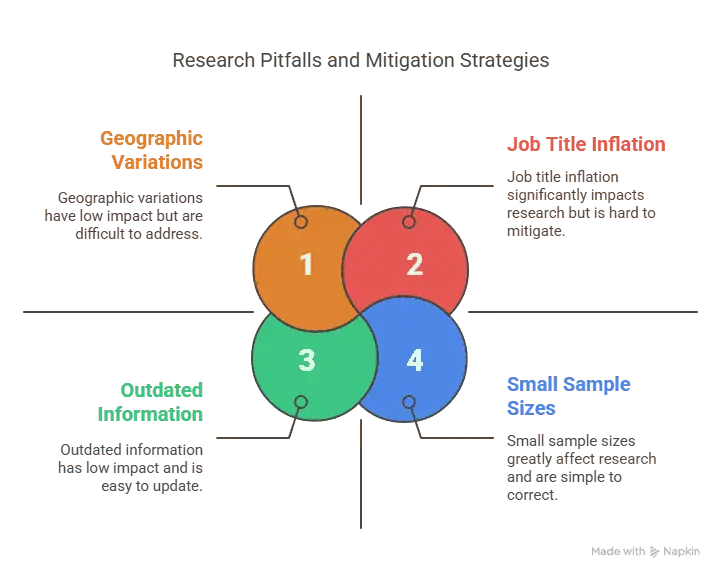
Even thorough researchers can fall into traps that undermine their findings. Awareness of these common mistakes helps you maintain research accuracy and credibility.
Avoid relying on outdated information or small sample sizes. Technology roles, for example, can see significant salary movements in short periods. Always prioritize recent data and look for consistent patterns across multiple sources.
Don’t ignore geographic variations in your research. A software engineer’s salary in San Francisco differs dramatically from the same role in smaller markets. Always adjust your research for relevant geographic markets.
Beware of job title inflation when conducting research. Companies sometimes use inflated titles as alternatives to higher compensation. Focus on job responsibilities and requirements rather than titles alone when researching comparable positions.
Preparing Salary Data for Job Interviews
Document 3-5 sources showing your target range (e.g., $95K-$115K for mid-level marketers in DC). Practice phrases like “Glassdoor shows 75th percentile at $110K for this role with my experience.” Track company-specific data from recent postings to demonstrate research depth, increasing your leverage by proving market awareness.
Building Long-term Salary Intelligence
Salary research shouldn’t be a one-time activity tied to job searches or performance reviews. Developing ongoing market awareness helps you make informed career decisions and recognize opportunities for advancement.
Set up Google Alerts for salary surveys and compensation reports in your industry. Many consulting firms and professional associations publish annual compensation studies that provide valuable market insights.
Maintain relationships with recruiters in your field. They possess current market intelligence and can provide insights into compensation trends and emerging opportunities. These relationships prove valuable for ongoing career development, not just active job searches.
Track your compensation growth over time. Document your salary progression, bonus history, and benefit improvements. This personal data helps you understand your career trajectory and identify areas for improvement.
FAQs of Salary Guide
How often should I conduct salary research?
Which platform provides more accurate salary data: Glassdoor or Salary.com?
How do I research salaries for remote positions?
Should I share my salary research during interviews?
How do I research compensation for career changes or new industries?
Conclusion
Mastering salary research using Glassdoor and Salary.com empowers you to make informed career decisions and negotiate from a position of strength. Whether you’re recovering from a career setback or pursuing new opportunities, this knowledge becomes your competitive advantage in today’s dynamic job market.
At Layoff Lifeline, we believe that informed professionals are empowered professionals. Take action today by connecting with us for a more detailed search, or researching your current role’s market value—you might be surprised by what you discover about your worth in the marketplace.
Keep Reading
More practical guidance for the financial, career and emotional side of a layoff.


