
Job Assistance
The Best Salary Research Tools You Should Know

Walking into a salary negotiation without proper research is like playing poker without looking at your cards; you need tools for 2025 to navigate effectively. Whether you’re negotiating a new offer after a layoff or evaluating your market worth, having accurate salary data transforms guesswork into strategy. The right salary research tools can mean the difference between accepting less than you deserve and confidently securing fair compensation for your skills and experience.
Key Takeaways
- Use multiple salary research tools like Glassdoor, PayScale, and industry-specific platforms to verify compensation ranges.
- Consider total compensation including benefits, bonuses, and equity – not just base salary when evaluating offers.
- Cross-reference recent data from various sources and account for location, experience, and market conditions
Understanding Salary Research Tools

Salary research tools have evolved from simple salary surveys to sophisticated platforms that analyze millions of data points across industries, locations, and experience levels. These digital resources aggregate compensation information from various sources including employee-reported data, employer submissions, and recruitment databases to provide comprehensive salary insights.
The modern salary research landscape offers multiple approaches to gathering compensation data. Some tools focus on crowdsourced information where employees anonymously share their salaries, creating vast databases of real-world compensation. Others partner with employers and HR departments to access official salary ranges and compensation structures. Advanced platforms combine both approaches, using artificial intelligence and machine learning to validate data accuracy and identify compensation trends, ultimately enhancing compensation management and salary strategies.
Understanding which tools suit your needs requires recognizing their different strengths. While some excel at providing detailed breakdowns by specific job titles and locations, others offer broader industry insights or focus on particular sectors like technology or healthcare. The key lies in combining multiple tools to create a comprehensive picture of your market value.
How To Use Salary Research Tools Step-by-Step
Start by defining a specific job title, seniority level, and location so each tool returns relevant ranges instead of broad national averages. Use at least two different tools to cross-check numbers and focus on the overlap between them as your realistic market range. Then refine with filters like company size, hybrid or remote roles, and required skills. This turns scattered data into a clear target band you can confidently reference in applications and interviews.
Types of Salary Research Tools
The salary research ecosystem includes several distinct categories of tools, each serving different purposes in your compensation research journey. General salary websites like Glassdoor and Salary.com provide broad coverage across industries and positions, making them excellent starting points for initial research. These platforms typically offer basic free access with premium features available for more detailed insights.
Industry-specific salary tools cater to particular sectors where compensation structures differ significantly from general market patterns. Technology professionals might turn to Levels.fyi for detailed compensation breakdowns at major tech companies, while healthcare workers could use specialized medical salary databases that account for specialties and practice settings. These focused tools often provide more accurate data for specific fields but have limited coverage outside their niche.
Government resources like the Bureau of Labor Statistics Occupational Employment and Wage Statistics provide authoritative data based on employer surveys. While these sources might not offer the same user-friendly interfaces as commercial platforms, they provide reliable baseline data that are particularly useful for understanding regional variations and long-term compensation trends.
Professional associations and trade organizations frequently conduct member salary surveys, offering another valuable data source. These surveys often include nuanced information about benefits, bonuses, and working conditions that general platforms might miss, though they’re typically available only to members or for purchase.
Popular Salary Research Platforms
Glassdoor
Glassdoor revolutionized salary transparency by creating a platform where employees could anonymously share compensation information alongside company reviews. The platform’s strength lies in its massive database of employee-reported salaries, with millions of data points covering positions across virtually every industry and location. Users can filter results by company size, location, years of experience, and specific job titles to find relevant compensation benchmarks.
Beyond basic salary information, Glassdoor provides insights into company culture, interview experiences, and benefit packages. This holistic approach helps job seekers understand not just what they might earn but also what it’s like to work at specific companies. The platform’s “Know Your Worth” tool uses machine learning to provide personalized salary estimates based on your specific background and experience.
However, Glassdoor’s reliance on self-reported data means accuracy can vary. Some entries might be outdated or reflect unusual circumstances, making it important to look at salary ranges rather than individual data points. The platform also tends to skew toward larger companies and urban areas where more employees contribute data.
Salary.com
Salary.com takes a more structured approach to salary research, combining multiple data sources including employer-reported information and compensation surveys. The platform offers detailed job descriptions and skill requirements alongside salary data, helping users ensure they’re comparing appropriate positions. Their Salary Wizard tool provides quick estimates while more detailed reports break down compensation by base salary, bonuses, and benefits.
The platform excels at providing percentile breakdowns, showing where specific salaries fall within the overall distribution for a role. This statistical approach helps users understand whether they’re looking at entry-level, median, or senior compensation ranges, which is crucial for determining a starting salary. Salary.com also offers cost-of-living calculators that adjust salaries between different locations, particularly useful when considering relocations.
Premium features include detailed compensation reports and personalized salary negotiation advice. While the free version provides basic salary ranges, paid subscriptions unlock more granular data including benefit values and variable compensation details. The platform’s CompAnalyst tool serves HR professionals, but individual users can access simplified versions for personal research on the company’s compensation structures.
PayScale
PayScale positions itself as a compensation management platform that serves both employers and employees. Their database combines crowdsourced data with employer partnerships, creating what they claim is one of the most comprehensive compensation databases available. The platform’s unique PayScale Index tracks wage growth across different job categories and locations, providing macro-level insights into compensation trends.
Individual users can complete detailed profiles including education, skills, certifications, and experience to receive personalized salary reports. PayScale’s algorithm considers numerous factors beyond job title and location, including company size, industry, and specific skill sets. This granular approach often produces more accurate estimates for specialized roles or unique skill combinations.
The platform offers extensive resources on salary negotiation, including scripts and strategies for different scenarios. Their research center publishes regular reports on compensation trends, gender pay gaps, and industry-specific insights. While basic salary information is free, detailed reports and negotiation guides require paid subscriptions.
LinkedIn Salary Insights
LinkedIn leverages its vast professional network to provide salary insights based on member-provided data. The platform’s unique advantage lies in connecting salary information with detailed professional profiles, allowing for highly specific comparisons based on education, experience, and career progression. Users can see how salaries vary not just by job title but also by specific career paths and educational backgrounds.
The LinkedIn Salary tool provides breakdowns of base salary, bonuses, and equity compensation where available. It also shows which skills and certifications correlate with higher salaries in specific roles, helping professionals identify valuable areas for development. The platform’s integration with job postings allows users to see salary ranges for current openings alongside historical data.
Privacy considerations receive particular attention on LinkedIn, with data aggregation rules ensuring individual salaries remain anonymous. The platform requires users to contribute their salary information to access detailed insights, creating a give-and-take system that encourages data sharing while maintaining privacy.
Indeed Salary Search
Indeed’s salary search tool draws from both job postings and employee-reported data to provide compensation insights. As one of the world’s largest job boards, Indeed has access to salary information from millions of job postings, including many that specify compensation ranges. This real-time data provides current market insights that complement historical salary information.
The platform’s strength lies in its simplicity and accessibility. Users can quickly search salaries by job title and location without creating accounts or providing personal information. Indeed also shows salary trends over time and provides related job titles with their corresponding compensation ranges, helpful for exploring career progression options.
Indeed’s Career Explorer tool goes beyond basic salary searches, showing potential career paths and the salary progression associated with different trajectories. This forward-looking approach helps professionals plan long-term career strategies rather than focusing solely on immediate compensation.

Specialized Industry Salary Tools
Tech Industry: Levels. fyi
Levels.fyi has become the go-to resource for technology professionals seeking detailed compensation information at major tech companies. The platform specializes in breaking down total compensation packages including base salary, bonuses, stock options, and other benefits specific to the tech industry. Their unique leveling system helps users compare equivalent positions across companies that use different title structures.
The platform’s anonymous data collection process encourages detailed sharing of compensation packages, including vesting schedules and performance-based components often critical in tech compensation. Users can filter by specific technologies, years of experience, and even visa status, addressing the unique needs of the international tech workforce.
Regular updates capture the dynamic nature of tech compensation, including special adjustments, retention bonuses, and market corrections that can significantly impact total compensation. The platform also tracks compensation trends following major events like IPOs or acquisition announcements that affect equity values.
Healthcare: Salary Surveys and Associations
Healthcare compensation research requires specialized tools due to the industry’s complex structure spanning different practice settings, specialties, and employment models. Organizations like the Medical Group Management Association (MGMA) and specialty-specific associations conduct detailed compensation surveys that capture nuances general salary tools miss.
These specialized resources often differentiate between employed physicians, partners in group practices, and solo practitioners. They also account for geographic variations in reimbursement rates, patient volumes, and cost structures that significantly impact healthcare compensation. Many surveys include productivity metrics like RVUs (Relative Value Units) that help contextualize salary data.
Healthcare salary tools frequently include benefits information particularly relevant to medical professionals, such as malpractice insurance coverage, continuing education allowances, and loan repayment programs. While accessing comprehensive healthcare salary data often requires association membership or survey purchases, the detailed insights justify the investment for serious negotiations.
Finance and Consulting Tools
Finance and consulting professionals often turn to specialized platforms like Wall Street Oasis or Management Consulted for industry-specific compensation insights. These resources understand the importance of bonus structures, carry allocations, and profit-sharing arrangements that can dwarf base salaries in these industries.
Compensation in finance and consulting varies dramatically by firm tier, with bulge bracket investment banks and MBB consulting firms commanding premium packages. Specialized tools capture these distinctions while also covering boutique firms and regional players. They often include detailed breakdowns by position level, from analyst to managing director, with corresponding compensation ranges.
These platforms also address the significant geographic variations in finance and consulting compensation, where identical roles might command vastly different packages in New York versus regional markets. Exit opportunity information helps professionals understand long-term earning potential beyond immediate compensation.
Free vs Paid Salary Tools: What Really Matters
Free tools give a quick ballpark range, which is usually enough for job seekers preparing for interviews or performance reviews. Paid platforms often add deeper filters, global data, or HR-grade analytics that matter more to employers than individuals. Prioritize tools that show recent data, allow filtering by location and experience, and clearly explain how they calculate ranges. That transparency matters more than the total number of data points or brand name.
How to Use Salary Data Effectively
Data Validation and Cross-Referencing
Effective salary research requires treating no single source as a definitive truth. Start by gathering data from multiple platforms, looking for convergence points where different sources agree on salary ranges. When sources diverge significantly, investigate why—it might reveal important factors like industry segments, company sizes, or regional variations you hadn’t considered.
Pay attention to data recency, as salary information can become outdated quickly in dynamic industries. Most platforms indicate when salary data was submitted or updated. Prioritize recent information while using older data to understand longer-term trends. Consider economic cycles and industry-specific events that might impact the current validity of historical data.
Statistical concepts matter when interpreting salary data. Understanding the difference between mean and median salaries helps identify when outliers skew averages. Percentile distributions show where specific salaries fall within the overall range, crucial for realistic positioning. Sample sizes also matter—be skeptical of precise figures based on limited data points.
Understanding Regional Variations
Geographic location dramatically impacts compensation, but the relationship isn’t always straightforward. While cost of living certainly influences salaries, other factors like local talent supply, industry concentration, and state regulations create complex compensation landscapes. A software engineer in Austin might earn less than one in San Francisco but enjoy higher purchasing power after adjusting for living costs.
Use cost-of-living calculators alongside raw salary data to understand real compensation value. Consider factors beyond housing costs, including state income taxes, transportation expenses, and healthcare costs. Some platforms provide adjusted salary figures, but calculating these adjustments yourself ensures you’re using assumptions relevant to your situation.
Remote work has complicated geographic salary calculations. Some companies maintain location-based pay scales while others offer uniform compensation regardless of employee location. Understanding a company’s remote work philosophy and compensation approach becomes crucial when researching salaries for distributed positions.
Accounting for Experience and Skills
Raw salary averages often obscure the impact of experience and specialized skills on compensation. Entry-level positions might show wide salary ranges because some “entry-level” roles require specific degrees or certifications while others don’t. Similarly, senior positions might encompass everything from individual contributors to team leaders, each commanding different compensation.
Create detailed profiles when using salary research tools, including all relevant skills, certifications, and experience. Pay attention to which qualifications correlate with higher salaries in your field. Sometimes niche skills command premium compensation despite being peripheral to core job functions. Understanding these patterns helps in both negotiations and professional development planning.
Consider career trajectory when interpreting salary data. A position offering lower immediate compensation but faster advancement opportunities might prove more valuable long term. Some platforms show salary progression paths, helping visualize potential earnings throughout your career rather than focusing solely on immediate compensation.
Negotiation Strategies Using Salary Research
Building Your Compensation Case
Transform salary research into negotiation ammunition by creating a comprehensive compensation case. Document salary ranges from multiple sources, highlighting convergence points that support your target compensation. Include relevant factors like your specific experience, unique skills, and measurable achievements that justify positioning yourself toward the upper end of typical ranges.
Present data professionally, avoiding emotional arguments about personal needs or financial obligations. Instead, focus on market realities and your value proposition. Create visual summaries showing salary ranges from different sources, making it easy for decision-makers to understand your research. Include information about total compensation packages, not just base salaries, when relevant to your industry.
Anticipate counterarguments by researching potential objections to your salary expectations. If you’re seeking compensation above typical ranges, prepare specific justifications based on unique qualifications or market conditions. Understanding why certain positions command premium compensation helps argue for similar treatment when applicable.
Timing and Approach
Salary negotiations require strategic timing and a thoughtful approach. In post-layoff situations, balance immediate financial needs with long-term career objectives. Sometimes accepting slightly lower compensation to re-enter the workforce quickly makes sense, while other situations warrant holding out for appropriate packages.
Present salary research at appropriate negotiation stages. Initial applications might require salary requirements, but detailed negotiations typically occur after demonstrating mutual interest. Avoid revealing your research too early, which might anchor discussions at lower ranges. Instead, let employers make initial offers before presenting counter-proposals backed by research.
Consider the full compensation package when negotiating. While salary research tools focus on base compensation, benefits, bonuses, equity, and other perks significantly impact total value. Sometimes accepting lower base salaries makes sense when offset by superior benefits or growth opportunities. Understand which compensation elements are negotiable at your target companies.
Common Pitfalls to Avoid
Over-Reliance on Single Sources
The most common salary research mistake involves anchoring expectations to single data points or sources. One platform showing high salaries for your role doesn’t establish market reality if other sources disagree. Similarly, outdated information or small sample sizes can create unrealistic expectations that damage negotiation credibility.
Avoid confirmation bias when conducting salary research. It’s tempting to focus on sources showing the highest compensation while dismissing lower estimates as outdated or irrelevant. An honest assessment of all available data creates realistic expectations and stronger negotiation positions. Consider why different sources might show varying ranges rather than simply choosing the figures you prefer.
Geographic arbitrage attempts can backfire when based on incomplete research. While some professionals successfully maintain big-city salaries while relocating to lower-cost areas, many companies adjust compensation based on location. Research company-specific policies rather than assuming universal approaches to remote work compensation.
Ignoring Total Compensation
Focusing exclusively on base salary while ignoring total compensation packages leads to poor career decisions. Industries like technology and finance often provide substantial compensation through bonuses, equity, and other incentives that dwarf base salaries. Conversely, public sector or non-profit roles might offer superior benefits and job security that offset lower salaries.
Research total compensation structures common in your industry and target companies. Understand vesting schedules for equity compensation, bonus determination criteria, and benefit values. Some platforms provide total compensation breakdowns, but you might need to research these elements separately for a comprehensive understanding.
Consider compensation timing when evaluating offers. Front-loaded signing bonuses might create impressive first-year compensation that doesn’t reflect ongoing earnings. Similarly, back-loaded equity vesting might mean waiting years for advertised compensation levels. Understanding payment schedules helps make informed decisions about opportunity costs and career timing.
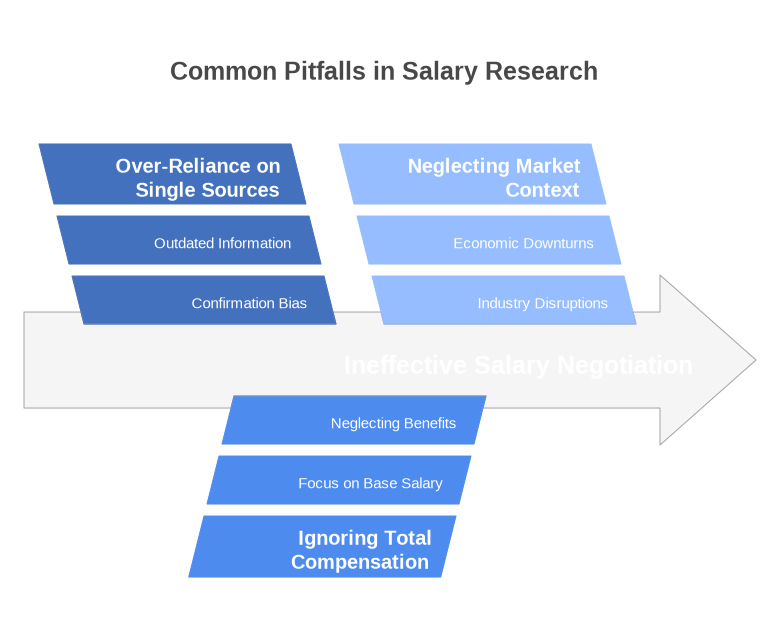
Neglecting Market Context
Salary research without market context creates dangerous blind spots. Economic downturns, industry disruptions, or company-specific challenges might temporarily depress compensation below historical norms. Conversely, talent shortages or competitive markets might create temporary spikes that prove unsustainable.
Research industry trends alongside specific salary data. Understand whether your field faces talent shortages or oversupply, how automation might impact future compensation, and which skills command premium pay. This broader context helps interpret current salary data and anticipate future trends that impact long-term earnings.
Consider company lifecycle stages when researching compensation at specific organizations. Startups might offer lower salaries but substantial equity upside, while mature companies provide stability and predictable compensation growth. Understanding where target companies fall on this spectrum helps them interpret their compensation strategies and negotiate appropriately.
How Layoff Lifeline Can Help
At Layoff Lifeline, we understand that salary research becomes particularly critical when recovering from job loss. Our guides and resources are designed to help you effectively research compensation and approach negotiations with confidence after experiencing a layoff.
Curated Salary Research Resources
We provide comprehensive guides on using popular salary research tools effectively, with specific strategies for professionals in career transition. Our content covers advanced techniques for gathering and interpreting compensation data, including how to handle career gaps, industry changes, and current market conditions that affect post-layoff negotiations.
Our blog features regular updates on salary trends across industries, helping you stay informed about market changes that might impact your earning potential. We break down complex compensation packages, particularly in industries where equity, bonuses, and benefits significantly impact total compensation.
We also provide templates and checklists for organizing your salary research, making it easier to track data from multiple sources and build compelling cases for negotiations. These practical tools help transform raw salary data into actionable insights you can use during job searches.
Negotiation Guidance and Support
Our guides include detailed strategies for salary negotiations specifically tailored to post-layoff situations. We address common concerns like explaining employment gaps, handling questions about previous compensation, and rebuilding confidence after job loss. Our content helps you separate personal worth from previous salaries, enabling objective discussions based on current market value.
We provide scripts and conversation guides for various negotiation scenarios, helping you practice responses to common questions and objections. Our resources cover industry-specific negotiation tactics, recognizing that approaches vary significantly between sectors.
Educational Content and Best Practices
Through our blog and resource library, we offer in-depth articles on salary research best practices, including how to:
- Combine multiple data sources effectively
- Understand statistical concepts relevant to salary data
- Account for regional variations and remote work considerations
- Evaluate total compensation packages beyond the base salary
- Avoid common pitfalls in salary research and negotiation
We regularly feature expert insights and success stories from professionals who’ve successfully navigated salary negotiations after layoffs, providing real-world examples and inspiration.
Community Support
While we don’t offer direct salary research tools, our community forums and support groups connect you with other professionals facing similar challenges. Members share experiences, salary research tips, and negotiation strategies, creating a supportive environment for those rebuilding their careers.
Our mission is to provide practical, actionable guidance that helps you navigate the complex world of salary research and negotiation during career transitions. We believe that access to quality information and support can make the difference between accepting less than you deserve and securing fair compensation for your skills and experience.
Future of Salary Research Tools
The salary research landscape continues evolving with technological advances and changing workplace dynamics. Artificial intelligence increasingly powers compensation predictions, analyzing vast data sets to provide more accurate, personalized salary estimates. Machine learning algorithms identify subtle patterns in compensation data that human analysis might miss, improving prediction accuracy.
Real-time salary data becomes increasingly available as more companies embrace transparency and job boards require salary disclosures. Legislative changes in various jurisdictions mandate salary range disclosure in job postings, fundamentally altering how professionals research compensation. These requirements create more reliable, current data sources while reducing information asymmetries in negotiations.
Integration between salary research tools and broader career platforms continues to deepen. Future tools might automatically suggest career moves optimizing for compensation growth, identify skill gaps limiting earning potential, or predict industry disruptions affecting future salaries. Blockchain technology might enable verified, anonymous salary sharing that combines transparency with privacy protection.
Remote work’s persistence reshapes geographic salary considerations. Tools increasingly account for distributed workforces, helping users understand how location flexibility impacts compensation options. Some platforms now show “remote salary” ranges distinct from location-specific data, reflecting this fundamental shift in work arrangements.
Gig economy growth requires new approaches to compensation research. Traditional salary tools struggle with freelance and contract work where compensation varies by project. Emerging platforms address this gap by tracking hourly rates, project fees, and utilization rates relevant to independent professionals.
FAQs
What is a salary calculator and how can it benefit job seekers?
How can I use a salary benchmarking tool effectively?
What is the importance of salary survey data in salary negotiations?
How can I access salary information for jobs in 2025?
What is global salary benchmarking and why is it important?
Conclusion
Mastering salary research tools transforms one of career management’s most challenging aspects into a strategic advantage. Whether recovering from job loss or planning career advancement, understanding your market value empowers confident negotiations and informed career decisions. The combination of multiple research platforms, careful data analysis, and strategic application creates a powerful framework for optimizing compensation throughout your career.
Take control of your compensation journey today. Start by exploring the free salary research tools discussed in this guide, then develop systematic approaches to gathering and analyzing compensation data. Whether you’re negotiating your next role or planning long-term career strategies, solid salary research provides the foundation for financial success and career satisfaction.
Need personalized guidance navigating salary research and negotiations after a job loss? Contact Layoff Lifeline today. Our team can help you understand compensation trends in your industry and develop effective negotiation strategies tailored to your unique situation.
Keep Reading
More practical guidance for the financial, career and emotional side of a layoff.


