
Financial Guidance
Seniors’ Guide to Managing Chronic Conditions After a Layoff

When a layoff hits, managing chronic conditions as a senior can feel overwhelming. I’ve seen too many people skip medications or delay treatments because they’re unsure about their health coverage options. However, you have more choices than you might realize, and there are proven strategies to maintain your health without breaking your budget during this transition.
Key Takeaways
- Health insurance continuity is critical – COBRA, marketplace plans, and Medicare options can bridge coverage gaps without interrupting chronic care management
- Financial assistance programs exist – Multiple resources help cover medication costs, specialist visits, and ongoing treatment during unemployment
- Stress management prevents health deterioration – Proactive mental health support reduces the risk of chronic condition complications during job transitions
The Hidden Health Effects of Job Loss

Losing a job affects more than your paycheck. Research shows that unemployment significantly impacts both physical and mental health, particularly for those with preexisting conditions. The stress of job loss can worsen chronic conditions like hypertension, diabetes, and heart disease, while symptoms of depression and anxiety resulting in medical consultation become more common.
Studies consistently show that displaced workers experience worse health outcomes compared to their employed counterparts. Job loss disrupts more than income – it affects social status, daily structure, and sense of purpose, creating both acute stress from the immediate disruption and chronic stress from ongoing economic strain. For those already managing chronic conditions, this stress can trigger flare-ups and complicate disease management.
The economic instability following a layoff often leads people to make difficult health decisions. Those without health insurance are more likely to have undetected and unmanaged conditions, while continuous care access becomes crucial for preventing disease progression. Understanding your options is the first step toward maintaining your health during this challenging period.
COBRA: Your First Line of Defense
COBRA continuation coverage often provides the most seamless transition for managing chronic conditions after a layoff. This federal law allows you to continue your employer-provided health insurance for up to 18 months after job loss, typically at the employer-negotiated group rate plus a small administrative fee.
The key advantage of COBRA is continuity. You keep the same doctors, specialists, and treatment protocols that have been working for your chronic condition management. You’ll pay the full premium yourself, but because you’re paying the employer’s negotiated group rate rather than individual market prices, you typically save money compared to buying coverage independently.
Important COBRA considerations for chronic condition management:
- Timing matters: You have 60 days from your qualifying event to elect COBRA coverage, and benefits are retroactive to your last day of employment
- Medication continuity: COBRA maintains your existing pharmacy benefits and prescription coverage
- Specialist networks: You won’t need new referrals or face network changes that could disrupt ongoing treatment
- Cost planning: Budget for 102% of your former employer’s group premium cost
For many with chronic conditions, COBRA serves as crucial bridge coverage while exploring longer-term options. You can compare COBRA costs with marketplace plans and switch during open enrollment or if you experience another qualifying life event.
Medicare and Health Insurance Bridge Strategies for Seniors
Seniors facing layoffs have unique advantages when managing chronic conditions, particularly if they’re Medicare-eligible or approaching age 65. If you’re 65 or older when your job ends, you can transition from employer coverage to Medicare without penalty, ensuring continuous coverage for your chronic care needs.
Pre-Medicare strategies (ages 55-64):
For seniors not yet Medicare-eligible, the marketplace often provides better value than COBRA for chronic condition management. Marketplace plans base subsidies on income, and unemployment typically qualifies you for significant premium tax credits and cost-sharing reductions. This can dramatically lower your costs for medications, specialist visits, and ongoing monitoring.
Medicare transition planning:
You have an 8-month special enrollment period when your employer coverage ends to sign up for Medicare Part B without late enrollment penalties. This timing is crucial for chronic condition management because gaps in coverage can be dangerous.
Medicare Advantage considerations for chronic conditions:
Many Medicare Advantage plans now offer specialized benefits for chronic conditions, including transportation to medical appointments, in-home support services, and care coordination. However, research plan networks carefully to ensure your specialists participate.
Medicare’s chronic care management services cover comprehensive care planning for people with two or more serious chronic conditions expected to last at least a year. This includes medication reviews, care coordination, and support transitions between healthcare settings.
Marketplace Plans and Medicaid Expansion
The Health Insurance Marketplace provides critical options for managing chronic conditions during unemployment. Job loss triggers a 60-day special enrollment period, allowing you to explore new coverage options and potentially qualify for subsidies based on your reduced income.
Marketplace advantages for chronic condition management:
All marketplace plans must cover essential health benefits, including chronic disease management programs as required by the Affordable Care Act. This ensures comprehensive coverage regardless of which plan you choose.
When comparing options, pay attention to:
- Prescription drug formularies: Ensure your current medications are covered
- Provider networks: Verify your specialists and preferred hospitals participate
- Cost-sharing structures: Compare deductibles, copays, and out-of-pocket maximums
Medicaid eligibility during unemployment:
Many states have expanded Medicaid to cover adults with incomes up to 138% of the federal poverty level. Unemployment often drops your income into this range, potentially qualifying you for comprehensive coverage with minimal costs.
Medicaid provides robust chronic condition management, including:
- Prescription drug coverage with minimal copays
- Specialist care without referral requirements in many states
- Care coordination services
- Transportation assistance for medical appointments
Managing Chronic Conditions on a Tight Budget
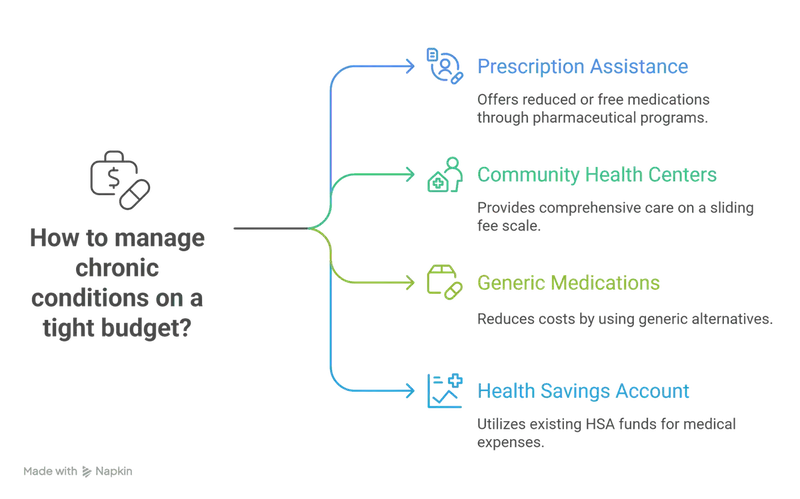
Financial constraints during unemployment don’t have to compromise your health. Multiple programs and strategies can help maintain chronic condition management without breaking your budget.
Prescription assistance programs:
Most major pharmaceutical companies offer patient assistance programs for people experiencing financial hardship. These programs can provide medications at significantly reduced costs or even free for qualifying individuals. Contact your medication manufacturers directly or use resources like NeedyMeds.org to find applicable programs.
Community health centers:
Federally qualified health centers provide comprehensive care on a sliding fee scale based on income. Research shows that community health centers serve many patients with chronic conditions, with 77% having two or more conditions requiring ongoing management.
Generic medication strategies:
Work with your healthcare provider to identify generic alternatives for brand-name medications. Generic drugs contain the same active ingredients but cost significantly less. Many pharmacies also offer $4 generic prescription programs for common chronic condition medications.
Health savings account considerations:
If you had a health savings account through your employer, these funds remain available for medical expenses during unemployment. HSA funds never expire and can cover qualified medical expenses tax-free, including prescription medications, medical devices, and healthcare services.
Stress Management and Mental Health Support
The psychological impact of job loss can significantly affect chronic condition management. Research shows unemployment increases stress levels, which can worsen symptoms of diabetes, hypertension, and other chronic conditions.
Evidence-based stress reduction techniques:
Relaxation techniques such as deep breathing, meditation, and yoga serve as powerful stress antidotes while teaching you to stay calm during challenging situations. These practices directly benefit chronic condition management by reducing inflammation and improving immune function.
Sleep and health maintenance:
Getting 7-8 hours of sleep nightly helps control stress levels and maintain focus, which is crucial for both job searching and health management. Poor sleep can worsen chronic conditions and interfere with medication effectiveness.
Professional mental health support:
Many insurance plans, including COBRA and marketplace options, cover mental health services. Unemployment significantly increases rates of depression and anxiety, making professional support particularly important for those managing chronic conditions.
Consider these mental health resources:
- Employee assistance programs (often available for several months post-layoff)
- Community mental health centers with sliding fee scales
- Telehealth therapy options that may be more affordable
- Support groups for both unemployment and chronic condition management
Building Your Support Network During Job Transition
Social support plays a crucial role in both job searching success and chronic condition management. Research shows that individuals with stronger family and friend support networks cope better with job loss stress and maintain better health outcomes.
Healthcare team communication:
Inform your healthcare providers about your employment situation and insurance changes. Many doctors’ offices have social workers or patient advocates who can help identify resources and adjust treatment plans based on your current financial situation.
Family and friend involvement:
Be transparent about your health needs and financial constraints. Family members can help with prescription pickup, appointment transportation, and emotional support during this transition period.
Professional networking for health needs:
Your professional network might include healthcare workers, insurance professionals, or others who’ve navigated similar situations. Don’t hesitate to reach out for advice and recommendations.
Online communities and resources:
Join online support groups for your specific chronic conditions and unemployment support communities. These groups often share valuable information about resources, assistance programs, and coping strategies.
Planning Your Next Career Move with Health in Mind

As you navigate the labor market and plan your return to work, consider how different employment options might affect your chronic condition management.
Evaluating health benefits packages:
When considering job offers, carefully review health insurance options. Look beyond premium costs to understand:
- Coverage for your specific chronic conditions
- Prescription drug benefits and formularies
- Provider network access to your current specialists
- Annual out-of-pocket maximums and deductibles
Timing employment transitions:
If you have multiple job opportunities, consider timing your start date to minimize coverage gaps. Planning employment changes around your chronic condition management schedule can prevent treatment disruptions.
Remote work considerations:
The shift toward remote work can benefit those with chronic conditions by reducing commute stress, providing more flexible scheduling for medical appointments, and potentially offering better work-life balance for health management.
Building health considerations into salary negotiations:
Factor healthcare costs into salary negotiations. A job with slightly lower pay but excellent health benefits might provide better overall value for someone managing chronic conditions.
FAQs
Can I lose COBRA coverage if I find a part-time job?
No, part-time employment typically doesn’t affect COBRA eligibility since most part-time positions don’t offer health benefits. You can maintain COBRA until you secure full-time employment with health benefits or reach the 18-month limit.
What happens to my chronic condition management if there’s a gap in coverage?
Even short coverage gaps can be dangerous for chronic conditions. Contact your healthcare providers immediately to discuss medication samples, payment plans, or temporary assistance programs. Many pharmacies offer prescription discount programs for uninsured patients.
How do I know if marketplace insurance will cover my current specialists?
Use the insurance company’s online provider directory or call their customer service line with your doctors’ names and practice information. Verify network participation before enrolling, as out-of-network costs can be substantial for chronic condition management.
Can unemployment affect my Medicare eligibility or timing?
Unemployment doesn’t directly affect Medicare eligibility, which is primarily based on age or disability status. However, if you lose employer coverage before age 65, you may want to enroll in Medicare sooner to avoid coverage gaps.
Are there special protections for people with chronic conditions during job transitions?
The Affordable Care Act prohibits insurance companies from denying coverage or charging higher premiums based on preexisting conditions. This protection applies to all marketplace plans and most employer-sponsored insurance, ensuring your chronic condition won’t affect your ability to obtain coverage.
Conclusion
Managing chronic conditions after a layoff requires planning, but you have more options than you might realize. From COBRA continuation to marketplace subsidies and Medicare transitions, maintaining your health during unemployment is achievable with the right strategy. The key is acting quickly to understand your options and avoid coverage gaps that could compromise your care. Remember, your health is an investment in your future employability and quality of life. Don’t let temporary financial challenges derail years of chronic condition management progress.
Layoff Lifeline specializes in helping people navigate exactly these situations. Our experts understand both the financial and health challenges of job loss and can help you develop a comprehensive strategy that protects your health while positioning you for career success. Schedule a consultation today to explore your options and regain control of your transition.
Keep Reading
More practical guidance for the financial, career and emotional side of a layoff.


