
Job Assistance
All The Steps You Need to Take After Being Laid Off

Receiving news of a layoff can feel like having the wind knocked out of you, including tips on severance pay negotiations. But knowing the steps you can take can help ease the transition. At Layoff Lifeline, we understand this moment isn’t just about losing a job—it’s about navigating uncertainty while maintaining your professional identity and financial stability. Whether you’re feeling overwhelmed, anxious, or unsure about your next steps, remember: this is a transition, not a definition of your worth or capabilities. Let’s transform this challenge into an opportunity for growth, starting with practical steps that put you back in control.
Key Takeaways
- Act swiftly but strategically within the first 48 hours
- Build a comprehensive financial and professional transition plan
- Leverage your network and available resources effectively
Laid Off Today, Now What?

After reading a recent Reddit post in r/careerguidance, I found valuable insights from someone who faced a sudden layoff without severance. Their situation mirrors what many face – being the primary earner, supporting family, and navigating unemployment for the first time. The community’s response provided practical, actionable advice that reinforces our guide’s key points.
Top suggestions from the thread included:
“File for unemployment immediately. Don’t let pride get in the way – it’s insurance you’ve paid into,” one commenter advised. Others emphasized creating a structured daily routine: “Make job searching your full-time job, but maintain work-life balance.”
Several experienced professionals shared success stories: “When I was laid off last year, I used the first week to process, then treated my job search like a 9-5. I landed a better position within two months.“
A particularly insightful comment noted: “Update your LinkedIn profile thoughtfully. Don’t just switch on ‘Open to Work’ – instead, engage with your industry network and contribute meaningful insights to discussions.“
The thread highlighted three critical action items:
- Take immediate practical steps (unemployment filing, benefit reviews)
- Maintain emotional well-being through structure and support
- Use the transition period for strategic career planning
I know those first moments after hearing “laid off” can feel like the floor just dropped out from under you. Take a deep breath – what comes next is a journey many of us have walked before.
We’ve gathered proven strategies, real success stories, and practical next steps to help you navigate this transition. This isn’t just an ending – it’s the first page of your next chapter. Let’s turn this challenge into your comeback story, starting with the essential steps below.
Secure Your Immediate Benefits and Paperwork
Request a formal layoff letter from HR documenting the circumstances—this proves eligibility for unemployment and protects your professional reputation. Confirm details on final paycheck timing, unused PTO payout, and severance package terms. Ask about COBRA health insurance continuation and outplacement services if offered. File for unemployment benefits within 24-48 hours of eligibility in most states to start payments quickly. These actions preserve cash flow and provide a safety net during your transition.
1. The Emotional Compass: Your First Step
A layoff represents a pivotal moment in your career journey. At Layoff Lifeline, we understand this isn’t just about finding your next role—it’s about strategically positioning yourself for long-term success. The current job market dynamics require a calculated approach to career transitions, and we’re here to guide you through each step.
Processing a layoff requires both emotional intelligence and strategic thinking, especially when navigating health coverage options. While it’s natural to experience uncertainty, successful transitions demand a balanced approach.
2. Immediate Actions: Your 48-Hour Game Plan
The initial days post-layoff are crucial for protecting your interests. Secure your layoff letter and examine your severance package with careful attention to detail. Many professionals miss critical negotiation opportunities for severance pay during this phase. Remember, this documentation serves as the foundation for your unemployment benefits and future employment discussions.
Healthcare Coverage Analysis is crucial when you lose your job.
| Option | Monthly cost of health plans can vary significantly based on coverage levels. | Coverage Quality | Transition Impact can be mitigated by understanding your health insurance coverage options. |
|---|---|---|---|
| COBRA | High ($$$) | Excellent | Seamless |
| ACA Marketplace provides various health insurance plans to help you qualify for better coverage. | Moderate ($$) | Good | Network Change |
| Private Insurance | Variable | Variable | New System |
| Professional Associations | Moderate ($$) | Good | Group Rates |
3. Financial Strategy Implementation
Your financial planning approach needs immediate refinement. Consider your severance as a strategic resource rather than just a safety net. This mindset shift helps create a more sustainable transition plan.
Critical Financial Actions
| Priority | Action | Timeline | Expected Outcome |
|---|---|---|---|
| Immediate | Budget Review | Week 1 | Cash Flow Plan |
| High | Benefits Transfer | 30 Days | Coverage Security |
| Medium | Investment Reallocation | 60 Days | Portfolio Protection |
| Ongoing | Expense Optimization | Monthly | Extended Runway |
4. Professional Development and Career Transition
In today’s competitive market, a layoff can become a catalyst for meaningful career advancement. Start by conducting a thorough skills assessment. What core competencies have you developed? Which emerging industry trends align with your expertise? This analysis forms the foundation of your professional reinvention and the steps you can take to find a new job.
Industry networking takes on heightened importance during career transitions. Rather than broadcasting your job search, focus on meaningful connections. Share industry insights, engage in professional discussions, and contribute value to your network. This approach naturally leads to opportunities without appearing desperate.
5. Digital Presence Optimization
Your online presence serves as your 24/7 professional ambassador. Begin with a strategic LinkedIn profile overhaul. Focus on quantifiable achievements rather than job descriptions. For example, “Increased department efficiency by 35% through process automation” carries more weight than “Responsible for process improvement.”
Professional Portfolio Development
| Asset Type | Purpose | Impact Level | Update Frequency |
|---|---|---|---|
| LinkedIn Profile | Network Engagement | High | Weekly |
| Personal Website | Brand Control | Medium | Monthly |
| Portfolio | Skills Showcase | High | Project-based |
| Industry Blog | Thought Leadership can help you stand out when you are trying to get laid off. | Medium | Bi-weekly |
6. Strategic Job Search Implementation
Transform your job search from a numbers game into a targeted campaign. Research potential employers thoroughly, understand their challenges, and position yourself as a solution provider. Your application materials should reflect this strategic approach.
Application Success Metrics
| Component | Target Goal | Quality Indicators | Review Cycle |
|---|---|---|---|
| Resume Response | 15-20% | Interview Requests | Weekly |
| Network Referrals from former employers can be valuable. | Follow-up Rates for health insurance inquiries can significantly impact your overall success. | Quality Conversations | Monthly |
| Interview Success | 25% conversion | Offer Generation | Per Interview |
| Follow-up Rate for health insurance inquiries can significantly impact your overall success. | 100% | Engagement Level in discussions about health plans can lead to valuable networking opportunities. | 48 Hours |
7. Professional Brand Rebuilding
Your professional brand needs immediate attention during this transition. Update your LinkedIn profile thoughtfully – avoid the “Open to Work” banner initially and focus on highlighting quantifiable achievements. Create compelling stories around your contributions that demonstrate value rather than just listing responsibilities.
When rebuilding your resume, focus on impact rather than tasks. Think about each role through the lens of problem-solving: what challenges did you address? What measurable improvements did you drive? Consider developing a personal website that showcases your portfolio and thought leadership.
8. Networking Strategy Development
Networking after a layoff requires finesse. Instead of broadcasting your job search, focus on meaningful reconnections. Reach out to former colleagues with specific talking points about shared experiences or industry trends. I’ve found that asking for advice rather than directly asking for job leads often yields better results.
Join industry-specific groups and contribute valuable insights rather than immediately highlighting your job search. Quality engagement matters more than the quantity of connections, especially when seeking health insurance coverage after losing your job.
Networking Strategy Development Steps
- Reconnect with Former Colleagues: Reach out to your previous coworkers and managers. Use specific talking points about shared experiences or industry trends to initiate conversations. This personal touch can make your outreach feel more genuine.
- Ask for Advice: Instead of directly asking for job leads, consider asking for advice on navigating your career transition. People are often more willing to help when they feel their expertise is valued.
- Join Industry-Specific Groups: Engage in relevant professional groups where you can contribute insights and learn from others. This helps you build relationships without the immediate pressure of job hunting.
- Utilize LinkedIn Effectively: Update your LinkedIn profile to reflect your current status and skills. Join industry-related groups and participate actively by sharing valuable content and engaging in discussions.
- Attend Networking Events to connect with recruiters who can help you find a new job.: Look for local or virtual networking events in your industry. These gatherings provide opportunities to meet new people and expand your professional circle.

Websites to Join
The largest professional networking site, LinkedIn allows you to connect with former colleagues, join industry groups, and participate in discussions that can enhance your visibility and credibility.
Meetup
This platform helps you find local events and groups based on your interests, including professional networking events, workshops, and industry meetups.
Professional Associations
American Marketing Association
Joining a professional association related to your field can provide access to resources, networking opportunities, and industry insights that are beneficial during your job search.
Ivy Exec
A career networking platform tailored for professionals seeking executive-level positions. It offers networking opportunities, job postings, and career advice tailored to high-level professionals.
FlexJobs
While primarily a job board for flexible work arrangements, FlexJobs also includes resources for networking and building connections in various industries.
9. Skill Assessment & Development
Now’s the time to honestly evaluate your skillset against current market demands. Look at job postings in your target roles – what skills appear consistently? Identify gaps in your expertise and create a focused development plan.
Consider online courses, certifications, or volunteer projects that demonstrate practical application of new skills. I recommend choosing one major certification and two minor skill developments to pursue during your transition period.
Free Online Courses and Certifications
HubSpot Inbound Marketing Certification
This course covers the fundamentals of inbound marketing, including content strategy, SEO, and social media promotion. Completing this certification can demonstrate your ability to help organizations grow through effective marketing strategies.
Google Digital Garage: Fundamentals of Digital Marketing
This free course includes 26 modules on various digital marketing topics, such as analytics, SEO, and email marketing. It provides practical exercises to apply your knowledge and culminates in a certification upon completion.
FreeCodeCamp Certifications
Offers numerous free coding certifications in languages like HTML, CSS, JavaScript, and Python. The platform also allows you to work on open-source projects for nonprofit organizations, providing practical experience alongside theoretical learning.
CS50’s Introduction to Computer Science
This entry-level course from Harvard University covers the basics of computer science and programming. It’s a self-paced course that includes various programming languages and problem-solving techniques, culminating in a certificate of completion.
Google IT Support Professional Certificate
A comprehensive program that covers IT support fundamentals. You can try the first week for free and then audit the course at no cost. Completing this program can prepare you for entry-level IT support roles.
Volunteer Projects
Catchafire
This platform connects professionals with nonprofits that need skilled volunteers. You can offer your expertise in areas like marketing, graphic design, or web development while gaining valuable experience and networking opportunities.
VolunteerMatch
A service that matches volunteers with nonprofit organizations based on their skills and interests. You can find local or remote volunteer opportunities that align with your career goals while contributing to meaningful causes.
Idealist
A platform for finding volunteer opportunities, internships, and jobs in the nonprofit sector. Idealist allows you to search by location and interest area, making it easier to find projects that resonate with you.
These resources provide excellent opportunities for skill development, professional growth, and community engagement without financial commitments.
10. Job Search Strategy Implementation
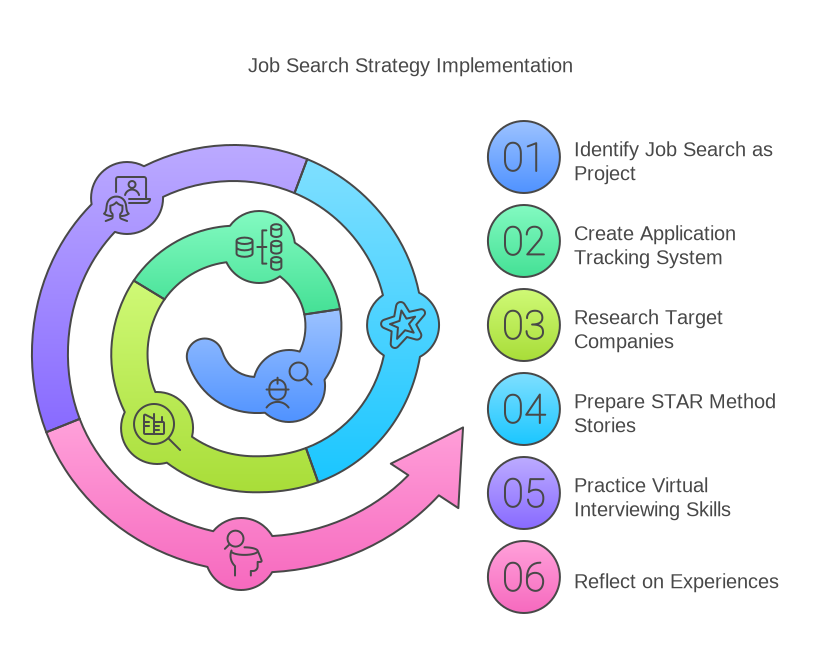
Transform your job search into a structured project. Create a tracking system for applications and follow-ups. Research target companies thoroughly – understand their challenges and craft your applications to position yourself as a solution provider.
Prepare STAR method stories for interviews that demonstrate your problem-solving abilities and leadership qualities. Practice virtual interviewing skills, as many initial interviews now happen remotely.
The STAR method is a powerful technique for answering behavioral interview questions by structuring your responses in a clear and concise manner. STAR stands for Situation, Task, Action, and Result. This method helps you articulate your experiences effectively, showcasing your problem-solving abilities and leadership qualities. Here’s how to use it:
How to Use the STAR Method
- Situation: Start by setting the context for your story. Describe a specific situation or challenge you faced in a previous job, volunteer experience, or academic project. Provide enough detail to help the interviewer understand the background of the scenario. Example of how to negotiate unused vacation time after a layoff.: “In my previous role as a sales associate, our team was facing declining sales during the holiday season.”
- Task: Explain your responsibility in that situation. What was the task you needed to accomplish? Clearly define your role and what you aimed to achieve. Example: “My goal was to increase our store’s sales by 20% compared to the previous year during this critical period.”
- Action: Detail the specific actions you took to address the situation and complete the task. Focus on your contributions and use “I” statements to emphasize your individual role. Example: “I developed a targeted marketing campaign that included social media promotions and in-store events, and I trained my team on upselling techniques.”
- Result: Conclude with the outcome of your actions. What happened as a result of your efforts? Highlight positive results, including any metrics or feedback that demonstrate your success. Example: “As a result, we exceeded our sales goal by 30%, significantly boosting our store’s performance during the holiday season.”
Tips for Preparing STAR Responses
- Reflect on Your Experiences: Identify several situations from your past that showcase relevant skills or achievements.
- Practice Your Stories: Rehearse delivering your STAR stories to ensure they flow naturally during interviews.
- Be Specific: Avoid vague statements; instead, provide concrete examples that clearly illustrate your capabilities.
- Stay Positive: Even if discussing a challenging situation, focus on what you learned and how you grew from the experience.
Using the STAR method not only helps you prepare for interviews but also allows you to present yourself as a thoughtful candidate who can effectively solve problems and contribute positively to an organization.
Bonus Boosters: Strategies to Elevate Your Job Search and Professional Profile
Reference Collection
- Ask for recommendations while relationships are fresh
- Target both managers and key colleagues
- Request specific examples of your impact
- Get written recommendations alongside contact details
Strategic Job Search Approach
Don’t just flood job boards. Create a targeted search strategy focusing on roles where your experience adds immediate value. When explaining your layoff situation, frame it professionally: “My position was eliminated during company restructuring, which has given me the opportunity to seek new challenges aligned with my career goals.”
Resume Enhancement
Transform your resume into a story of impact. Beyond listing responsibilities, showcase achievements:
- Revenue generated
- Projects completed ahead of schedule
- Team size managed
- Cost savings implemented
Compelling Cover Letters
Your cover letter shouldn’t just repeat your resume. Use it to:
- Bridge employment gaps confidently
- Highlight transferable skills
- Share success stories that demonstrate value
- Express enthusiasm for specific opportunities
Pro Tip: Create a master document with various achievement stories, metrics, and skills. This makes customizing applications faster while maintaining quality and relevance.
Remember: Many successful professionals have navigated layoffs successfully. Your experience and skills haven’t changed – only your employment status has.
FAQs
How do I file for unemployment benefits?
What should I include in my updated resume?
How can I stay motivated during my job search?
What are the best strategies for networking after a layoff?
How do you respond to being laid off?
Conclusion
A layoff can feel like hitting pause on your career, but let’s turn it into an opportunity to press play on something even better. At Layoff Lifeline, we’ve guided thousands through this exact transition, and we know your story doesn’t end here.
Take the first step toward your next chapter. Book a strategy session and let’s map out your comeback together. Our team has helped professionals just like you transform unexpected career breaks into breakthrough opportunities.
Don’t navigate this alone. Your next success story starts with a single conversation.
Keep Reading
More practical guidance for the financial, career and emotional side of a layoff.


