
Job Assistance
The 15 Best Side Hustles After Layoff 2025

Losing your job doesn’t have to mean losing your financial momentum. I’ve seen countless professionals transform unexpected layoffs into opportunities to build thriving side businesses. While applying for jobs remains important, smart job seekers are discovering that starting a side hustle after a layoff creates multiple income streams, maintains professional confidence, and often leads to better career opportunities than their previous corporate roles.
Key Takeaways
• Diversify your income streams immediately – Building a side hustle after layoff provides financial stability and prevents total dependence on unemployment benefits while job searching
• Leverage existing skills for quick monetization – Transform your professional expertise into freelance services, consulting, or digital products to generate income within weeks
• Scale strategically while applying for jobs – Start small with low-commitment gigs and gradually build toward sustainable income streams that complement your job search timeline
The Layoff Side Hustle Blueprint: 15 Ways to Generate Income While Job Searching

1. Start a Side Hustle with Freelance Writing and Content Creation
The demand for quality content has exploded across digital platforms. Companies need blog posts, social media content, email campaigns, and website copy. I recommend starting with platforms like Upwork, where you can build credibility while earning $25-75 per hour depending on your expertise.
Getting started: Create samples in your industry niche, set up profiles on freelance platforms, and reach out to small business owners in LinkedIn groups. Many entrepreneurs need copywriters but don’t know where to find them.
Pro tip: Focus on one content type initially – whether that’s blog writing, social media, or email marketing – then expand your services as you build your reputation.
2. Virtual Assistant Services
Remote work has created massive demand for virtual assistants. Business owners need help with email management, appointment scheduling, research, and basic business operations. This side gig offers flexible hours perfect for job searching.
Earning potential: $15-40 per hour, with specialized VAs commanding higher rates
Best platforms: Belay, Time Etc, and direct client outreach through LinkedIn
3. Online Tutoring and Course Creation
Transform your professional knowledge into teaching income. Whether you’re explaining digital marketing fundamentals or industry-specific skills, online education platforms make monetizing expertise straightforward.
Step-by-step approach:
- Identify your most valuable skills from previous jobs
- Research market demand on platforms like Udemy or Skillshare
- Create a simple course outline and test with a small audience
- Scale based on feedback and enrollment
4. Entrepreneur Consulting in Your Expertise Area
Don’t underestimate the value of your corporate experience. Small businesses desperately need guidance in areas where you might have years of expertise. Whether it’s SEO, business strategy, or operations management, consulting can replace your day job income.
Building credibility: Start with former colleagues’ networks, offer initial consultations at reduced rates, and ask for testimonials. Word-of-mouth remains the most powerful marketing tool for consultants.
5. Business Owner E-commerce and Dropshipping
Platforms like Shopify have simplified online selling dramatically. You can start dropshipping without inventory investment or create digital products related to your professional background.
Low-risk approach: Begin with digital products like templates, guides, or tools related to your industry expertise. Physical product dropshipping requires more market research but offers scalability.
6. Freelance Web Design and Development for Your New Career
Small businesses constantly need websites, and many can’t afford agency prices. If you have design skills or can learn basic Wix or WordPress development, this marketplace offers excellent earning potential.
Market demand: Research shows small businesses prioritize web presence, creating ongoing opportunities for freelancers who understand both design and basic SEO principles.
7. Social Media Management
Entrepreneurs often struggle with a consistent social media presence. Offering social media management services requires minimal startup costs and leverages skills many professionals already possess.
Service packages: Start with content planning and posting, then expand to include community management and paid advertising as you gain experience.
8. Airbnb Hosting and Property Management
If you have space in your home or can manage properties for others, Airbnb hosting provides passive income potential. This works especially well in tourist areas or business districts.
Scalability: Begin with your own space, then offer management services to other property owners who lack time for guest communication and property maintenance.
9. Online Reselling and Arbitrage
Flip products through online marketplaces by identifying price differences between platforms. This requires market research skills but can generate quick income while you’re between jobs.
Best practices: Focus on products you understand, start small to minimize risk, and use tools to track price trends across different platforms.
10. Digital Marketing Services
Small businesses need help with SEO, email marketing, and online advertising, but often can’t afford agencies. Offering focused digital marketing services fills this gap perfectly.
Specialization strategy: Pick one area initially – whether it’s local SEO for small businesses or email marketing for entrepreneurs – and become known as the go-to expert.
11. Financial Services
Many small business owners dread financial management. If you have an accounting background or can learn QuickBooks, services offer steady, recurring income.
Target audience: Focus on service-based businesses or online entrepreneurs who need help organizing their finances but don’t require full-time accounting support.
12. Food Delivery and Gig Economy Work
While not always the highest-paying option, gig economy platforms like DoorDash, Uber, or TaskRabbit provide immediate income without long-term commitments. This works well as a fall back while building other income streams.
Strategic approach: Use gig work to cover immediate expenses while developing higher-value skills for better-paying side hustles.
13. Voice-over and Audio Services
The podcast boom and video content explosion have created demand for voice-over artists, audio editing, and podcast production services.
Getting started: Invest in basic audio equipment, practice with free scripts online, and create samples showcasing different styles and tones.
14. Online Coaching and Mentoring
Share your professional journey by coaching others in career transitions, industry knowledge, or specific skills you’ve mastered in previous roles.
Building your practice: Start with discounted sessions to gather testimonials, focus on specific problems you can solve, and gradually increase rates as demand grows.
15. Affiliate Marketing and Digital Products
Create content around topics you know well and monetize through affiliate partnerships or selling digital products like guides, templates, or courses.
Long-term strategy: This requires patience as you build an audience, but successful affiliate marketers often replace their previous salaries entirely.
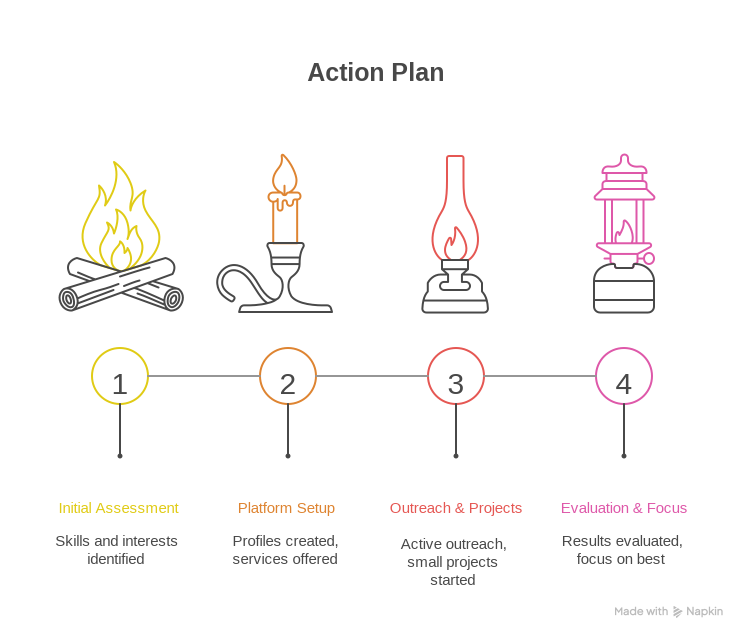
Getting Started: Your Action Plan
Week 1: Assess your skills and choose 2-3 side hustles that align with your background
Week 2: Set up profiles on relevant platforms and create initial service offerings
Week 3: Begin outreach and start taking on small projects
Week 4: Evaluate results and focus on the most promising opportunities
Remember to track all income for tax purposes and understand how earnings might affect unemployment benefits in your state.
Scaling Your Side Hustle While Job Searching
The beauty of building a side hustle during unemployment is the flexibility. Start with services requiring minimal time investment, then scale based on demand and your job search timeline. Some professionals discover that their side hustles become more lucrative than their previous corporate positions.
Consider whether you want to maintain your side hustle after finding employment, transition it into a full business, or use it as a safety net for future career uncertainty.
Managing Time and Expectations
Balancing side hustle development with job applications requires strategic time management. I recommend dedicating specific hours to job searching and separate time blocks for building your side income. This prevents either activity from suffering and maintains momentum in both areas.
Set realistic expectations – most side hustles take 2-4 weeks to generate meaningful income and 2-3 months to become substantial revenue sources.
FAQs
Can I collect unemployment benefits while running a side hustle?
Generally, yes, but you must report all income to your state unemployment office. Most states allow you to earn up to a certain percentage of your benefit amount before reducing payments. Always check your specific state regulations and report earnings honestly.
How much can I realistically earn from a side hustle during my job search?
This varies widely based on your skills, time investment, and chosen hustle. Entry-level freelancers typically earn $15-25 per hour, while specialized consultants can command $75-150 per hour. Most people generate $500-2000 monthly within their first 90 days.
Should I mention my side hustle during job interviews?
Absolutely. Side hustles demonstrate initiative, entrepreneurship, and adaptability – qualities employers value highly. Frame it as evidence of your proactive approach to challenges and your commitment to continuous skill development.
What if my side hustle becomes more profitable than job offers I receive?
This happens more often than you might expect. Many professionals use layoffs as launching pads for successful businesses. Consider factors beyond immediate income, such as benefits, long-term growth potential, and your personal goals before making this decision.
How do I choose which side hustle to pursue?
Start with skills you already possess, consider time availability, and evaluate market demand. The best side hustles combine something you’re good at, something people will pay for, and something that fits your schedule and interests.
Conclusion
Starting a side hustle after a layoff isn’t just about replacing lost income – it’s about taking control of your financial future and discovering new possibilities. The strategies in this blueprint have helped thousands of professionals not only survive job loss but emerge stronger and more financially resilient. Your layoff might feel devastating now, but it could become the catalyst for the best career move you’ve ever made. The key is taking action quickly and staying consistent with your efforts.
Ready to turn your career setback into your biggest opportunity? Layoff Lifeline specializes in helping professionals like you navigate this transition successfully. Our experts can help you identify the best side hustle opportunities for your situation and create a personalized roadmap for financial recovery. Schedule a consultation today and discover how to transform this challenge into your next breakthrough.
Keep Reading
More practical guidance for the financial, career and emotional side of a layoff.


