
Emotional Support
The Emotional Impact of Career Change After Layoff Explained

I’ve watched countless professionals face the shock of getting laid off and watched their initial panic transform into something unexpected: clarity. That wave of emotions you’re experiencing right now—the confusion, the self-doubt, the anger—is completely normal. A layoff isn’t just a job loss; it’s a disruption to your daily structure, your financial stability, and frankly, your sense of purpose.
But here’s what I want you to know: this emotional impact of a layoff can actually become the foundation for a meaningful career change. The key is understanding what you’re feeling and giving yourself space to process it.
Key Takeaways
- The emotional impact of job loss extends far beyond finances—it affects your self-worth, identity, and sense of purpose
- Processing the emotional weight of a layoff through distinct stages allows you to move forward with greater clarity and resilience
- Strategic career transitions after job loss require both emotional and financial recovery, supported by practical tools and community
Understanding the Emotional Impact of Job Loss

When you lose your job unexpectedly, it often feels like a full-on attack on your self-worth. That’s because your job represents more than just a paycheck—it’s been part of your identity, your routine, and your social connections. The psychological impact can feel overwhelming.
The Grief You Didn’t Expect
Most people don’t realize that job loss follows the stages of grief. You might experience denial (“This can’t be happening”), anger (“Why me?”), bargaining (“What if I had done things differently?”), depression, and eventually, acceptance. There’s no timeline for moving through these stages, and you might circle back to different emotions multiple times.
The emotional toll of unemployment isn’t something to minimize. Research consistently shows that the effects of being laid off extend to mental and physical health. You might struggle with sleep, feel unmotivated, or experience anxiety about the job market ahead.
Separating the Layoff from Your Identity
Here’s something your rational mind knows but your heart needs to hear: the layoff wasn’t about your worth. Economic decisions, restructuring, and market shifts cause layoffs. Yet the emotional impact of job loss often tells a different story. You might feel personally rejected, questioning your skills and relevance.
Give yourself the space to acknowledge these emotional reactions without letting them define your next chapter. This is where the real work begins.
Processing the Emotional Weight
Before you can navigate career change effectively, you need to process what you’re feeling. Rushing into a new job search without addressing the emotional impact of a layoff often leads to poor decisions and prolonged distress.
Creating Space to Feel
You’re not alone in this experience. Countless professionals have faced the emotional turmoil of job loss, and what they’ve discovered is that acknowledging these feelings—rather than pushing through them—helps you bounce back stronger.
Start by allowing yourself to feel whatever comes up. Anger, shame, relief, fear—they’re all valid. Many people find it helpful to talk to others who understand. Whether that’s friends, family, a mental health professional, or support groups specifically for people navigating career transitions, sharing your experience reduces the sense of isolation.
Managing Financial Stress Alongside Emotional Recovery
Here’s something often overlooked: the emotional and financial stress of job loss are intertwined. Uncertainty about the future intensifies both. This is where practical steps become emotionally grounding. Understanding your financial runway, exploring benefits, and creating a financial recovery plan can actually ease the psychological impact and give you the mental space to think clearly about career change.
The Emotional Dimensions of Career Transitions
A career transition after a layoff is different from choosing to change careers on your own terms. This involuntary shift adds layers of emotional complexity. You might feel defensive about your career decisions or uncertain about what comes next.
Redefining Your Career Identity
Part of processing the emotional impact of a layoff involves questioning: Who am I without that job title? What do I actually want moving forward? These questions, while uncomfortable, are also liberating.
This is where career guidance becomes valuable. A certified career coach can help you separate your professional skills from the job you lost, helping you move through the emotional fog and identify new career paths that align with both your capabilities and your values.
Your LinkedIn Profile as a Turning Point
Updating your LinkedIn profile after getting laid off feels vulnerable. You might worry about judgment or fear that you’re advertising failure. But your LinkedIn presence is often the first step in signaling that you’re open to new opportunities. Reframing this from “I lost my job” to “I’m exploring my next career chapter” shifts the emotional narrative.
Strategies for Moving Forward
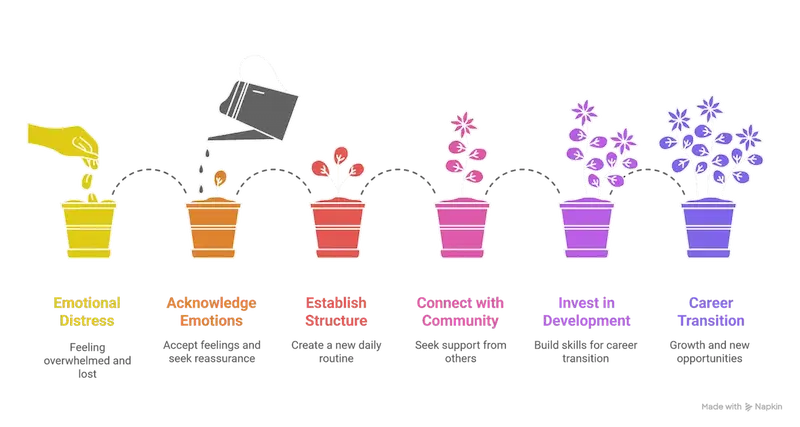
The goal isn’t to bypass the emotional impact of a layoff—it’s to move through it with intention.
Acknowledge the Emotional Reality
Don’t take it personally. Repeat that to yourself whenever shame creeps in. The rational mind knows the layoff was a business decision, but emotions need reassurance. Journaling, therapy, or conversations with trusted colleagues can help you anchor this truth.
Establish New Structure
Loss of your job means loss of structure. This can intensify emotional distress. Creating a new daily routine—even if it includes job hunting, skill development, or networking—provides psychological grounding and helps you regain a sense of control.
Connect with Community
Whether through support groups, professional networks, or alumni associations, connection matters. Knowing others have navigated the emotional impact of job loss and successfully pivoted their careers reminds you that this transition is possible.
Invest in Your Development
Taking a course, developing new skills, or exploring certifications can shift your emotional energy from loss to growth. This isn’t about distraction—it’s about actively building toward the career transition you want.
The Path Forward After Job Loss
Moving forward doesn’t mean you forget what happened or rush past your feelings. It means integrating the experience, learning from it, and using it as a foundation for intentional career change.
The emotional and financial recovery process takes time. Some days will feel harder than others. But as you process the psychological impact and take concrete steps toward your next opportunity, you’ll likely notice something shifting. The wave of emotions becomes less overwhelming. Your sense of purpose begins to rebuild.
You’re not bouncing back to where you were. You’re moving toward something new—something that might actually align better with who you want to become.

FAQs
How long does it typically take to emotionally recover from a layoff?
There’s no universal timeline. Most people report that the acute emotional impact lessens within 3-6 months, though processing continues longer. Seeking support—whether through therapy, career coaching, or community—can accelerate emotional recovery.
Is it normal to feel angry or resentful after a layoff?
Absolutely. Anger is a legitimate stage of grief. It’s a natural response to sudden disruption. The goal is to acknowledge it without letting it drive your decisions or damage professional relationships.
How can I rebuild my self-worth after getting laid off?
Start by separating the layoff from your professional identity. Journal about your accomplishments, seek feedback from former colleagues, and consider working with a career coach. Gradually taking action toward your next opportunity also rebuilds confidence.
Should I mention my layoff on my LinkedIn profile or in interviews?
Yes, but frame it as a transition, not a failure. A simple update like “Exploring new opportunities in [field]” signals openness without oversharing. In interviews, be honest but brief, then redirect focus to what you learned and where you’re headed.
What if I’m struggling with depression or anxiety related to my job loss?
Reach out to a mental health professional. The psychological impact of job loss is real, and there’s no shame in getting support. Many also benefit from combining therapy with career guidance for comprehensive recovery.
Conclusion
The emotional journey after a layoff isn’t one you need to navigate alone. Right now, your focus is on processing what happened, rebuilding your confidence, and thinking clearly about what comes next. That’s where support makes all the difference.
Layoff Lifeline is designed exactly for this moment. Beyond the financial strategy, we help you work through the emotional complexities of career transition, identify opportunities aligned with who you want to become, and move forward with intention. Schedule a consultation, and let’s talk about your next chapter.
Keep Reading
More practical guidance for the financial, career and emotional side of a layoff.


