
Uncategorized
Tips and Tricks in Understanding Your Severance Package

Understanding your severance package can feel overwhelming, especially during the emotional upheaval of a job loss. You’re not alone in navigating this transition. A severance package is more than just a final paycheck—it’s a bridge to your next opportunity, offering financial support, continued benefits, and resources to help you land on your feet. While each situation is unique, knowing what to expect can make this challenging time more manageable.
Key Takeaways
- Review severance package terms carefully before signing to protect your rights.
- Consider negotiating health insurance continuation alongside financial compensation.
- Get professional legal and tax advice to understand long-term implications.
Table of Contents
What is a Severance Package?
A severance package is essentially a form of compensation provided to employees when their employment ends. It can encompass various benefits, including financial assistance, continued healthcare coverage, job search support, and more. While not legally mandated in most cases, employers often offer severance packages for several reasons:
Compassion: Recognizing the impact of job loss, severance packages serve as a gesture of goodwill, particularly for employees with long service records. They help alleviate the financial burden and provide support during a difficult time.
Legal Protection: Offering severance can help mitigate the risk of legal disputes arising from termination. By providing compensation and benefits, employers aim to minimize potential claims and maintain a positive relationship with departing employees.
Brand Image: Severance packages contribute to a positive employer brand. They demonstrate a commitment to employee well-being, even during layoffs, which can enhance the company’s reputation and attract future talent.
The Future of Severance Packages
In today’s dynamic economic landscape, the role and prevalence of severance packages are constantly evolving. Some experts predict an increase in severance offerings as globalization and workforce restructuring become more common. Others suggest that companies might reduce severance benefits to control costs. This uncertainty underscores the importance of understanding your rights and options when faced with a layoff situation.
How Severance Pay is Calculated by Tenure and Role
Severance typically offers 1-2 weeks’ pay per year of service, with executives often receiving 6-12 months. Tech firms like Meta provide 16 weeks base plus 2 weeks per year served, uncapped. Review your employee handbook or offer letter for company-specific formulas, and factor in unused PTO, which many states require payout for. Use online calculators from sites like SeveranceCalculator.com to estimate your entitlement before signing.
Types of Severance Packages
Severance packages can take various forms, each with its own advantages and disadvantages. Some common types include:
Severance Pay
This is a one-time or ongoing payment provided to the employee upon termination. The amount is typically calculated based on factors like length of service, salary level, and company policy. While it offers immediate financial assistance, it’s essential to consider the tax implications and plan accordingly.
Continued Health Insurance
Employers may extend health insurance coverage for a specified period after termination. This can be invaluable for individuals with health concerns or those seeking continued coverage for their families. However, it’s crucial to understand the terms of coverage and explore alternative options like COBRA.
Outplacement Services
These services aim to support employees in finding new employment opportunities. They can include resume writing assistance, interview preparation, career counseling, and access to job search resources. For those seeking a quick return to the workforce, outplacement services can be highly beneficial.
Retirement and Pension Plans
Some severance packages address retirement benefits, allowing employees to roll over or retain access to their retirement accounts. This can be particularly important for long-term employees who have accumulated significant retirement savings.

Key Components of a Severance Package
A typical severance agreement outlines the terms of separation and includes various key elements:
- The names of the employer and employee
- The effective date of the agreement
- The employee’s employment period
- The severance pay amount
- Terms of continued benefits, if applicable
- Employee waiver of legal claims (within reasonable limits)
- Additional terms, such as the return of company property
- The dated signatures of both the employer and employee
How to Negotiate a Severance Package
While severance packages are often based on company policy, there’s often room for negotiation. Here are some strategies to help you secure a better agreement:
Research Company Practices
Before entering negotiations, gather information about your company’s typical severance offerings. Explore online resources, consult with colleagues or industry peers, or reach out to human resources to understand the company’s precedents.
Know Your Leverage
Recognize your value and contributions to the company. Highlight your achievements, skills, and experience to demonstrate your worth and justify your requests.
Be Prepared to Walk Away
While negotiation is encouraged, be willing to decline an offer if it doesn’t meet your needs. This demonstrates your seriousness and may prompt the employer to reconsider their initial offer.
Get Everything in Writing
Once you reach an agreement, ensure all terms and conditions are clearly documented in writing. This protects your interests and prevents misunderstandings later on.
Benefits and Drawbacks of a Severance Package
Severance packages offer several advantages:
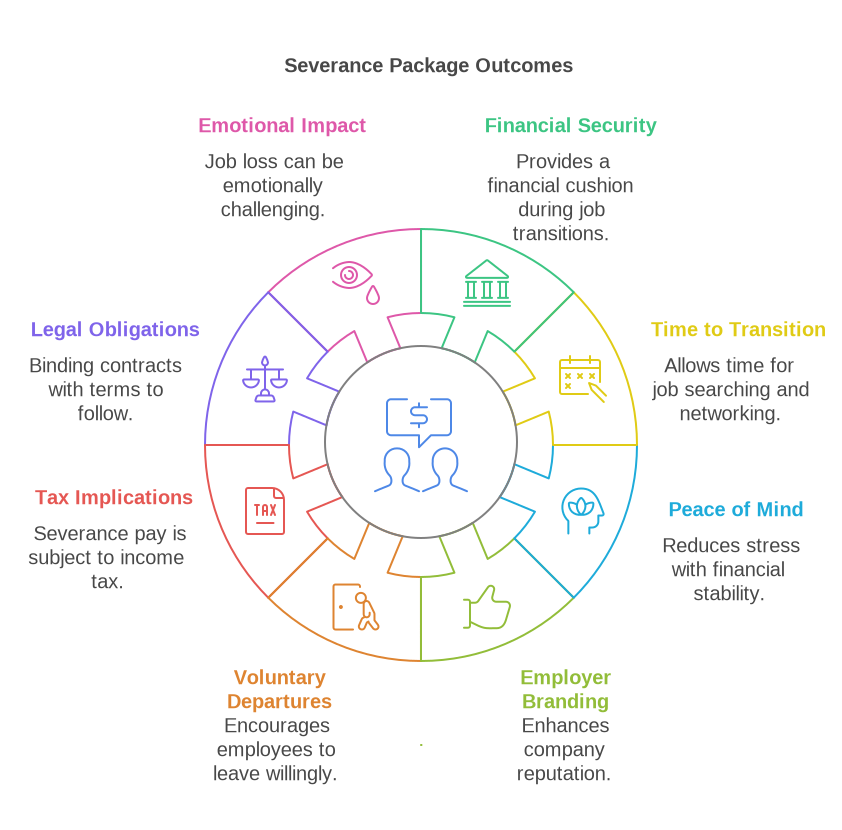
Financial SecuritySeverance pay provides a financial cushion to cover expenses while searching for new employment.
Time to Transition: A severance package allows time to explore career options, update resumes, and network without the immediate pressure of finding a job.
Peace of Mind: Knowing you have some financial stability and resources can reduce stress and provide peace of mind during a challenging transition.
Employer Branding: From the employer’s perspective, offering severance packages can enhance their brand image and protect their reputation.
Voluntary Departures: Severance packages can incentivize employees to leave voluntarily, potentially simplifying workforce restructuring for the company.
However, there are also potential drawbacks to consider:
Taxes: Severance pay is typically subject to income tax, which can reduce the overall amount received.
Legal Obligations: Severance agreements are legally binding contracts, and employees must adhere to the terms and conditions.
Emotional Impact: Even with a severance package, job loss can be emotionally challenging. It’s essential to acknowledge these emotions and seek support if needed.
COBRA, Health Benefits, and Outplacement Support
COBRA extends employer health coverage up to 18 months, but you pay full premiums (employer share ends). Severance often subsidizes 3-6 months—negotiate extensions. Outplacement services provide resume help and job search coaching, valued at $5K+, easing your transition. Vested 401(k) stays yours; unvested portions may forfeit. File for unemployment immediately after separation to bridge gaps.
Legal Implications of a Severance Package
Severance agreements are legally binding contracts, and it’s crucial to understand their implications before signing. Here are some key legal considerations:
Waiver of Legal Claims: Severance agreements often include clauses where employees waive their right to sue the company for certain claims, such as wrongful termination or discrimination. It’s essential to carefully review these clauses and understand their potential consequences.
WARN Act: The Worker Adjustment and Retraining Notification (WARN) Act mandates that employers provide advance notice of mass layoffs or plant closings. In some cases, it may require severance pay if adequate notice is not provided.
ERISA: The Employee Retirement Income Security Act (ERISA) sets standards for private-sector retirement and health plans. While one-time severance packages are generally not subject to ERISA, ongoing severance programs may be considered ERISA-covered welfare benefit plans, requiring compliance with specific regulations.
Understanding Severance Packages: What the Research Says
Severance packages are a critical aspect of employee relations, especially during times of downsizing. Recent studies shed light on current trends and employer practices regarding severance pay:
Prevalence of Severance Pay: A 2024 survey by the American Society of Employers (ASE) found that 58% of employers provided severance benefits in the past year. This indicates that while severance pay is not universal, it is a common practice among many organizations.
Downsizing Trends: Randstad RiseSmart’s Global Severance Research reveals a significant trend in downsizing activities. A staggering 96% of organizations have undertaken some form of downsizing in the past year, highlighting the prevalence of workforce restructuring in today’s dynamic business environment.
Support Resources
Layoff Lifeline is an organization dedicated to helping individuals navigate the challenges of job loss. They offer a range of services, including:
- Career counseling
- Resume writing assistance
- Job search training
- Professional networking support
Tax Implications and Lump Sum vs. Salary Continuation
Lump sums trigger immediate taxes at ordinary income rates (up to 37% federal); salary continuation spreads over pay periods, potentially lowering brackets. First $5K of severance may qualify for special treatment if age 40+. Withhold extra 22% federal on settlements over $5K to avoid underpayment penalties. Consult a tax pro before cashing out—strategic timing can save thousands. Report accurately on Form 1040; non-compete clauses don’t change taxability.
FAQs
What are the most common elements included in a severance package?
Under what circumstances might an employer be legally required to provide severance pay?
How is the amount of severance pay typically determined?
How do you structure a severance package?
What is the ideal severance pay?
Conclusion
A severance package can be a valuable asset when facing job loss, offering financial support, time for transition, and resources to help you move forward. However, it’s essential to approach it with a clear understanding of its components, implications, and rights. Carefully review the agreement, negotiate for better terms if needed, and seek professional advice from us to make informed decisions. Remember that a severance package is not just about the financial aspects; it’s also about navigating the emotional and career implications of job loss and planning for a successful future.
Keep Reading
More practical guidance for the financial, career and emotional side of a layoff.


